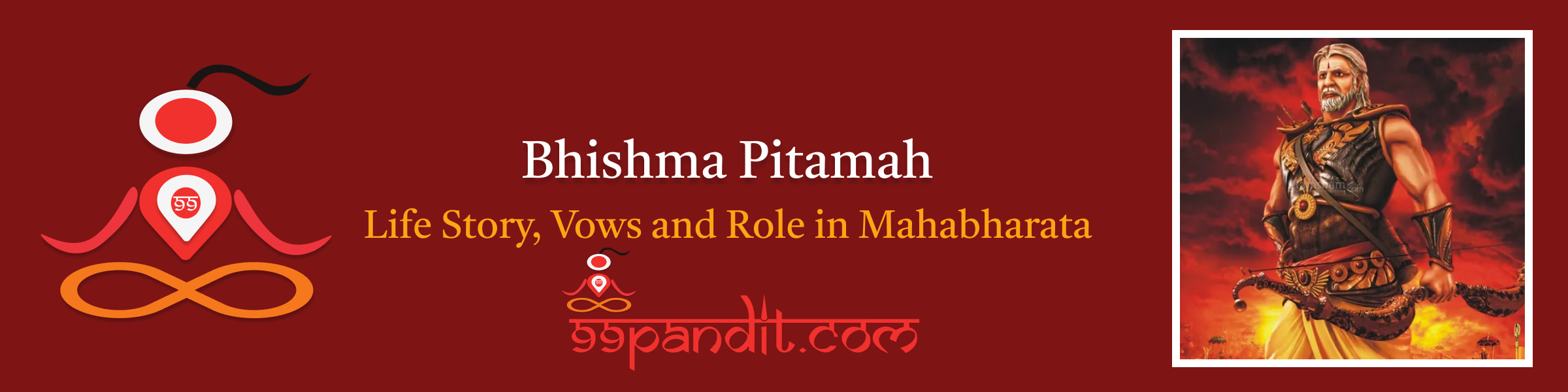
Bhishma Pitamah: Life Story, Vows and Role in Mahabharata
When we talk of sacrifice and duty, the first person whose name flies up is Bhishma Pitamah. His existence was…
 0%
0%
 Book Griha Pravesh Puja Online
Book Now
Book Griha Pravesh Puja Online
Book Now

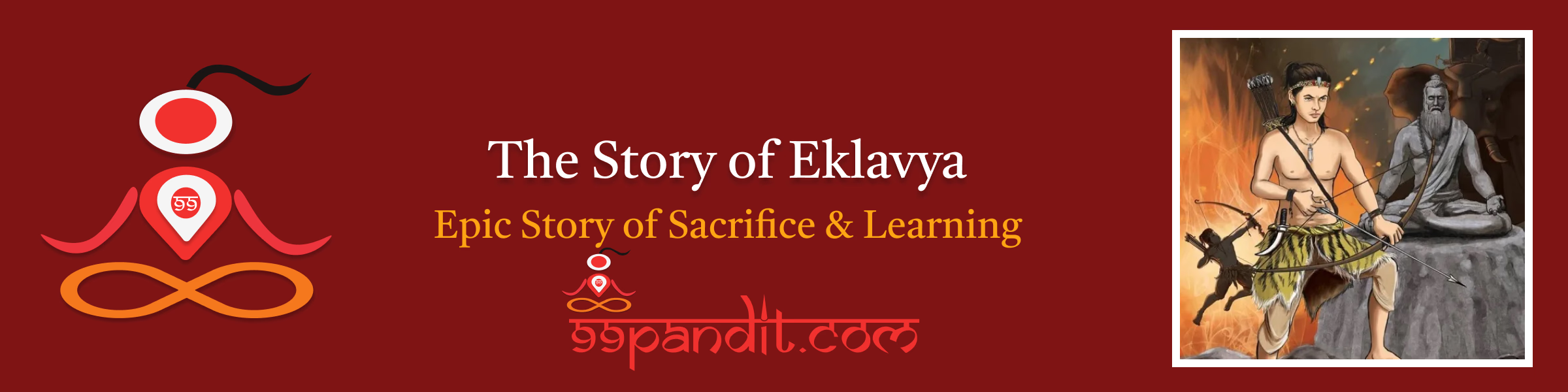


The Story of Eklavya is one of the most powerful tales from the Mahabharata, teaching timeless lessons about dedication, sacrifice, and the pursuit of excellence despite adversity.
Eklavya was a young tribal boy from the Nishada community who dreamed of becoming the greatest archer in the world but was denied formal training by Guru Dronacharya due to his lower social status.
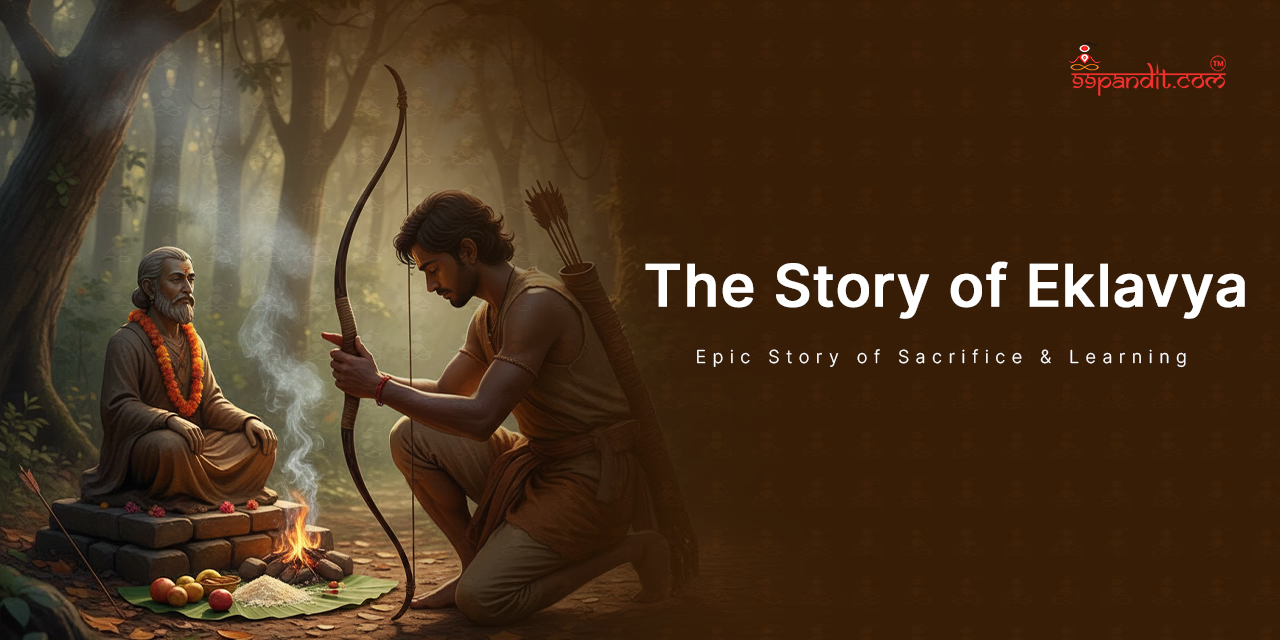
Undeterred, Eklavya created a clay statue of Dronacharya and practiced archery with such devotion that he surpassed even Arjuna in skill, all through self-learning and determination.
His story became legendary when Dronacharya asked for his right thumb as guru dakshina, a sacrifice Eklavya made without hesitation to honor his guru.
This epic tale teaches us about unwavering commitment to one’s goals, the true meaning of respect for teachers, and how talent combined with discipline can overcome any barrier.
Let’s explore Eklavya’s inspiring journey and the profound lessons it holds.
According to the Mahabharat story, Eklavya was the young son of King Hiranyadhanus. His father was the chief of the Nishada tribe.
Eklavya was born and grew up in an atmosphere filled with nature and weapons since he was the son of a hunter. Thus, since childhood, the boy has been interested in bows and arrows.
Though he was born in a basic forest community, he never gave up on the dream of becoming the best archer in the world.
At the time of the Mahabharata, the most prominent instructor of the art of archery was Guru Dronacharya.
Eklavya would always look up at him and aspire to learn from him to make his dream come true.
But during that period, people from the tribal or lower community were not allowed to learn from the royal guru. Due to this, Guru Dornacharya refuses the proposal of Eklavya.
Even after this, he never left her dreams and started self-learning. The character shows that everything can be achieved through dedication, even after limitations.
Even after being denied by Dronacharya due to the social rules of that time and his Nishadha heritage, Eklavya refused to accept the limits set by society. Rather than giving up, he decided to make a bold move that changed his life forever.
As per many stories, it is believed that he built a clay statue of Guru Dronacharya in the forests of Hastinapur. Each day, he visited that place and bowed to the statue to begin his archery practice.
With no guidance, no training, or any facilities, he put in his sweat to practice day and night to gain mastery in this skill.
The passing time and his dedication to hard work transform his ability into a beyond-imagination talent.
His self-control and honesty enable him to be a great archery warrior, even better than most of Dronacharya’s best talents, and even better than Arjun (one of the five brothers of the Pandavas).
This stage of his life indicates that privilege is not the key to true mastery; it is all about determination, hard labour, and unbending will to learn.
Let’s dive deeper into the story to know the union of Eklavya with Dhronacharya and the Pandavas.
Once roaming around the forest, Guru Dhronacharya and the Pandavas found something different.

It was a dog standing with a perfect eight arrow placed in its mouth, without any other injury. The flawless perfection shook all of them.
Seeing all of them followed the trail to know the person behind such precise archery. As they followed the path ahead, they reached a young boy from the tribal community practising archery.
Here’s what left Dronacharya and the Pandavas stunned:
That’s when Dronacharya stepped ahead and asked a young boy, “Who taught you archery?” Eklavaya bowed and said, “Guru, I have learned these skills from you,” while pointing to his clay idol.
The moment showcases the tremendous devotion of Eklavya and the power of dedication and self-learning.
Dronacharya, witnessing Eklavya’s phenomenal talent, was so surprised that he didn’t understand how to respond.
The reason is that he had made a promise to Arjun that he would be the greatest archer of all time.
However, Eklavya’s expertise was so brilliant that it was challenging for him to keep his promise.
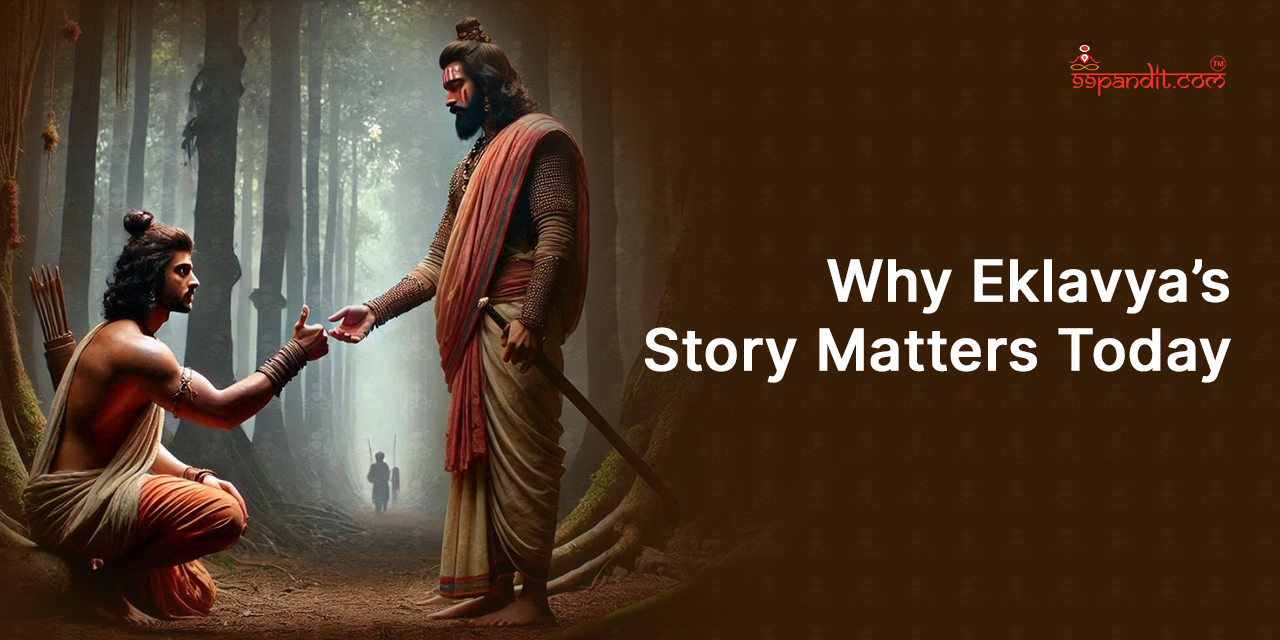
Hence, in order to save his promise, Dronacharya requested Eklavya to give him the Guru Dakshina.
He told him, “Eklavya, please hand over your right thumb to me as my Guru Dakshina. In archery, the right thumb is an important part of an archer’s hand.
What followed immediately after this truly shocked and has remained one of the greatest life lessons for people.
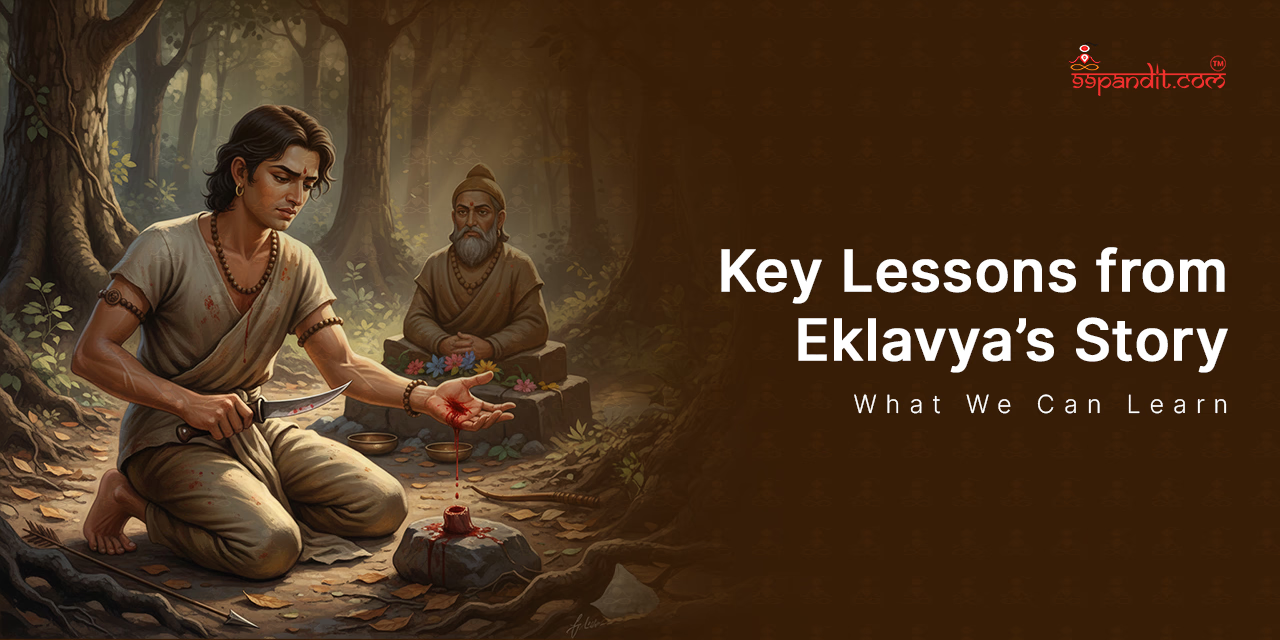
Eklavya bowed down to his Guru without any hesitation or inquiry and drew a knife. He put it on his right thumb and cut it off to pay his Guru dakshina to Dornacharya.
Despite knowing the importance of the right thumb in archery, his face shows peace rather than pain or anger.
The cat was not just a physical sacrifice but an act that showed the depth of his respect and loyalty for his guru.
The story of Ekalvya is not merely an old-time story from the past but rather a manual that shows the themes of giving, loving, and doing what is right.
Here are the life lessons from his story that still have significance for us today:
Eklavya demonstrates that it is not necessarily only famous institutions or teachers that can help a person learn, but also their willpower.
Self-belief and focus help one to master whatever skills they may have without the ideal situation.
The story of Eklavya also demonstrates that, regardless of everything, you must always hold great respect for your Guru or mentor.
He reminds us about the role of learning and the worth that teacher teacher-student relationship has.
The fact that Eklavya presents his right thumb as a sacrifice to his Guru or Guru Dakshina is a sign of his commitment to his values at a high level.
The life story tells that greatness is not just having skills, but also needs sacrifice and courage.
Even after having an exceptional talent, Eklavya reminds devotees to stay humble in every situation.
His modesty teaches us that you don’t need to speak everything yourself; sometimes your work speaks far better.
Without any guidance, support, or luxury, Eklavya gained mastery in archery just by practising every single day. It highlights that consistency is more important than perfect resources.
Even after not being accepted as a student due to society’s rules, his devotion to Dornacharya was so pure and genuine. Therefore, a real connection is not defined by the status but by your intent behind it.
There is a lot to learn from the story of Eklavya from an ancient epic, particularly in today’s busy and modern lifestyle. Here’s what his story conveys to different people:
The story of Eklavya is not merely a tale of the Mahabharata, but an effective illustration of how much a person can go by believing in himself and training to achieve it.
The journey of the young forest boy tells that one can master anything in their life despite hurdles.
His outstanding dedication, support, and sacrifice for his guruji are proof that true greatness comes from a person’s character, not circumstances.
In the modern world of today, where challenges and competition are all around us, his story keeps telling us to stay calm, keep working, and believe in our ability.
The Guru Dakshina of Eklavya to Dronacharya has transformed him from a mere learner with passion into a standard of being a disciple. So in the case of a word devotion comes, they remember Eklavya, not Arjun.
It is always in mind that, as long as you put the heart and the best intentions first and put efforts and commitments to the fullest, there is nothing that could prevent you.
Let his story inspire you to pursue whatever you want to do as resolutely and fearlessly as she did.
100% FREE CALL TO DECIDE DATE(MUHURAT)
Table Of Content
 Number.

Enter the OTP sent to
 number.
Filters by categories
All Pujas
Puja On Special Events
Upcoming Pujas
Dosha Nivaran Pujas
Mukti Karmas
Filters by Trending Topics
Filters by Regions
North Indian Pujas
South Indian Pujas
📅 Regular Muhurat - 07:05 - 07:30 PM
📅 Simha (Singh) Lagna - 02:00-04:02 AM
Participate Now

 Ontime Service.
 Certified & Verified Pandit.
 Transparency on every Step.