
Ashta Siddhi: Eight Divine Powers of Lord Hanuman Ji
“Ashta Siddhi Nau Nidhi Ke Data”, most of you have once in a while heard about this line. It is…
 0%
0%
 Book Griha Pravesh Puja Online
Book Now
Book Griha Pravesh Puja Online
Book Now

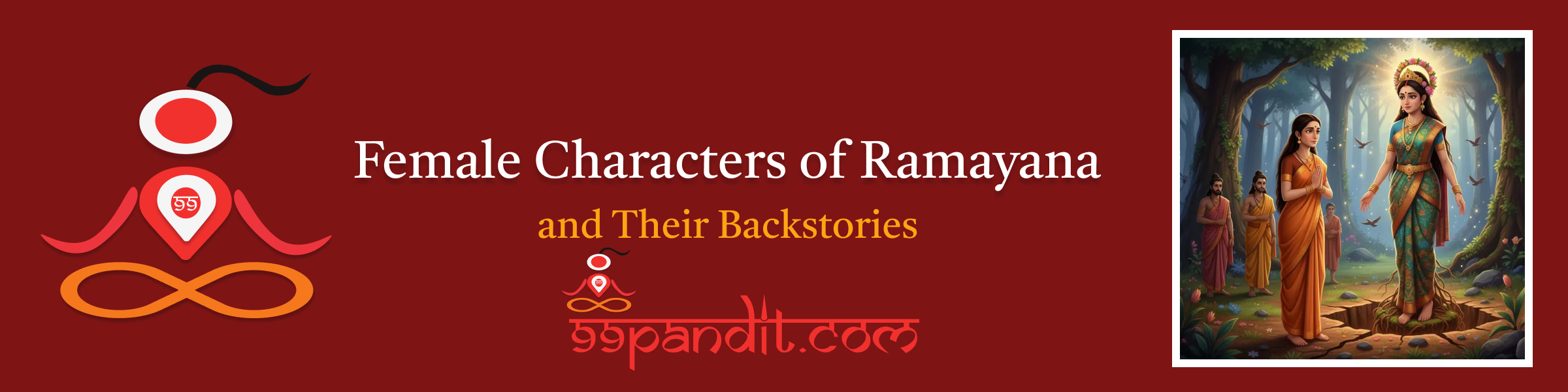


Major Female Characters of Ramayana: The Ramayana is not just an ancient tale of another kind of battles and brave fighters. It is a grand epic that deals with dharma, decisions, sacrifice, and the power that lies within the women.
While Lord Rama is the central hero of the story, the female characters of Ramayana were equally instrumental in shaping the ethical principles of the story.
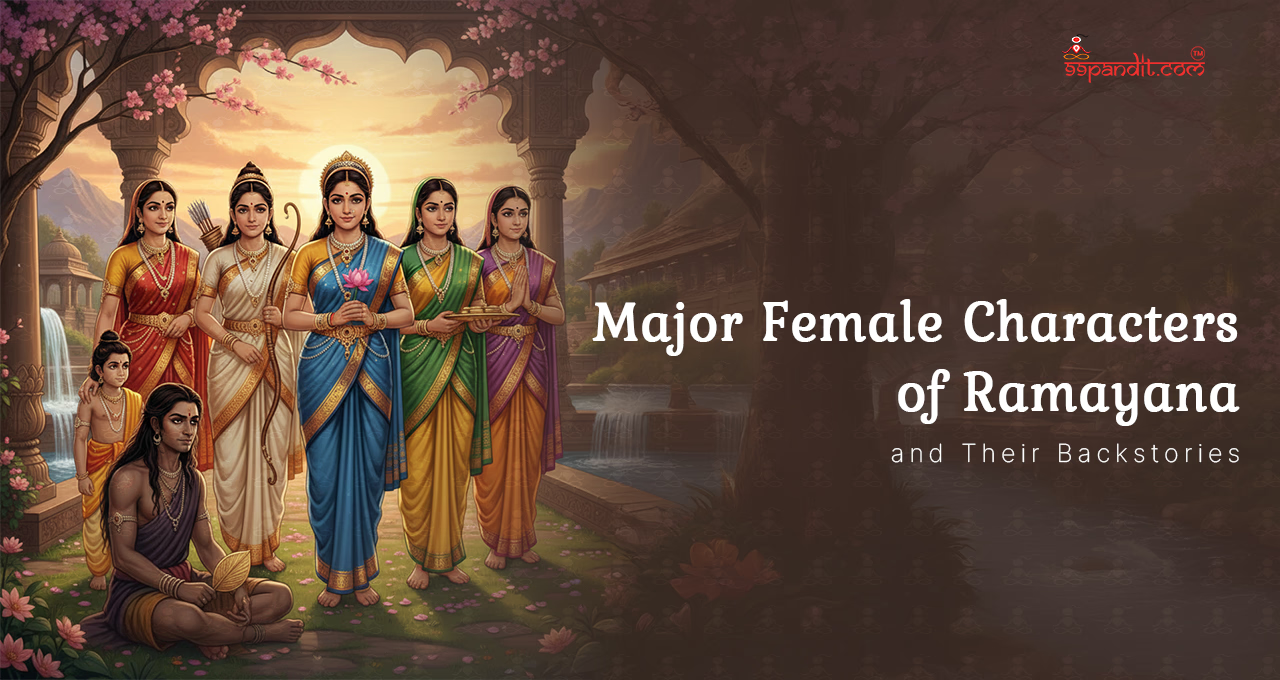
From Sita’s tireless strength to Kaikeyi’s life-changing decisions, the influence of these women is often not loud yet very transformative.
The insight into their backstories brings out the many layers of meaning that are usually missed in the simplified versions of the stories.
Their birth, upbringing, values they grew up with, and the major events of the Ramayana make it easier to understand their choices and sacrifices.
These stories help shed light on how loyalty, love, jealousy, and the divine will determine the destiny of the kingdoms and the gods walking among people.
In this article, we will explore the unsung stories of the major female characters of Ramayana and their background that keeps inspiring even today.
Females in Ramayana are not just supporting characters. All of them are key forces whose decisions, wisdom, and emotions have a direct impact on the epic.
Beyond the traditional boundaries, they serve as queens, mothers, devotees, advisors, and wives.
The sections bring down the females with different backgrounds, showcasing the wide range of feminine strength.
Here’s the list of the major female characters that we will discuss in more detail further:
Through the principle of sovereignty, motherly wisdom, and uncompromising faith, every woman in the ancient epic presents different aspects and values.
It also narrates how women in various social statuses play various roles in the ancient tale of Ramayana.
The following section will cover all the female characters, their full backstory, origin, and legacy that they have left.
Goddess Sita in the Ramayan is the wife of Lord Rama and is often seen as a symbol of devotion, unbreakable strength, and sacrifice.
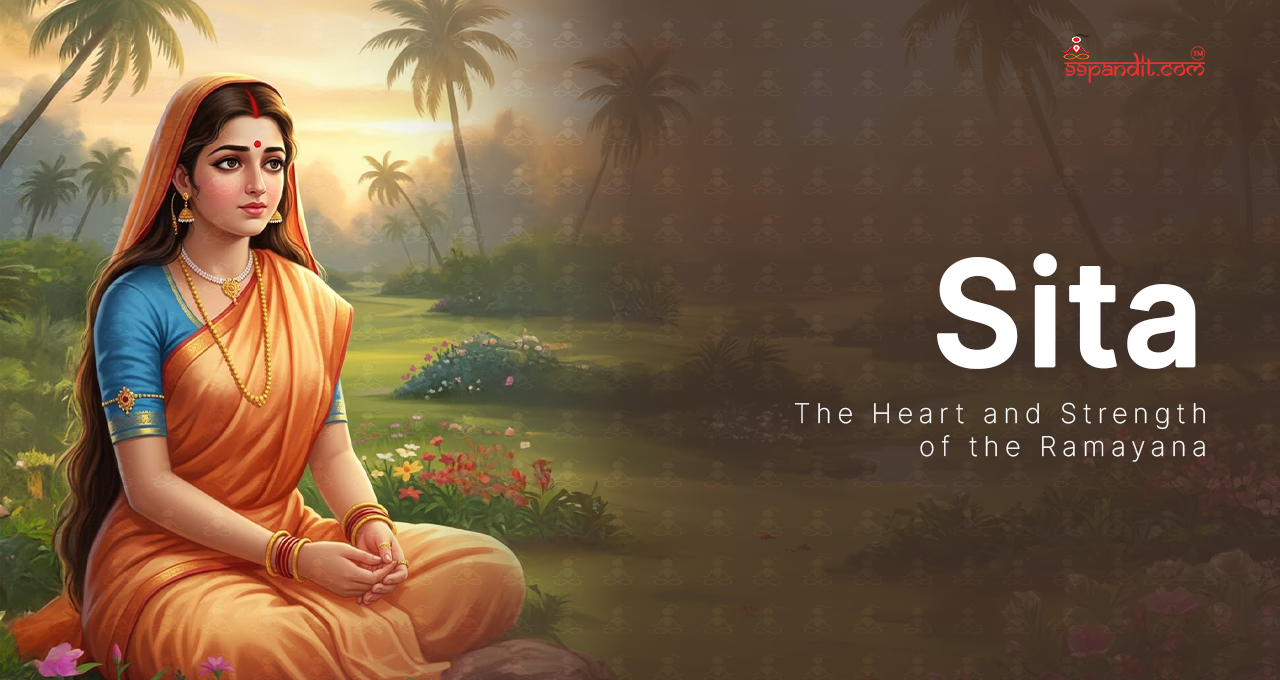
Her character goes beyond these traits, showing a true power is not about force but self-belief, patience, and respect.
Ayonija: Goddess Sita was not born from a worm but founded by King Janaka while ploughing the land, showcasing his connection with Mother Earth.
Symbolize: Her birth signifies a grounded, patient, fertile, and indestructible.
At the time of the exile of Lord Rama, his mother experienced the pain that her heart was being ripped open.
She blessed her son and demonstrated her silent power, patience, and motherly sacrifice instead of complaining about this unfairness.
Lesson: In a world that tends to question the integrity of women, Sita shows us that we should stay put, respect ourselves and never sacrifice self-worth.
Kaikeyi was a queen of Kekaya and one of the wives of King Dasharatha. The queen has gained the love of the king by once saving his life on the battlefield.
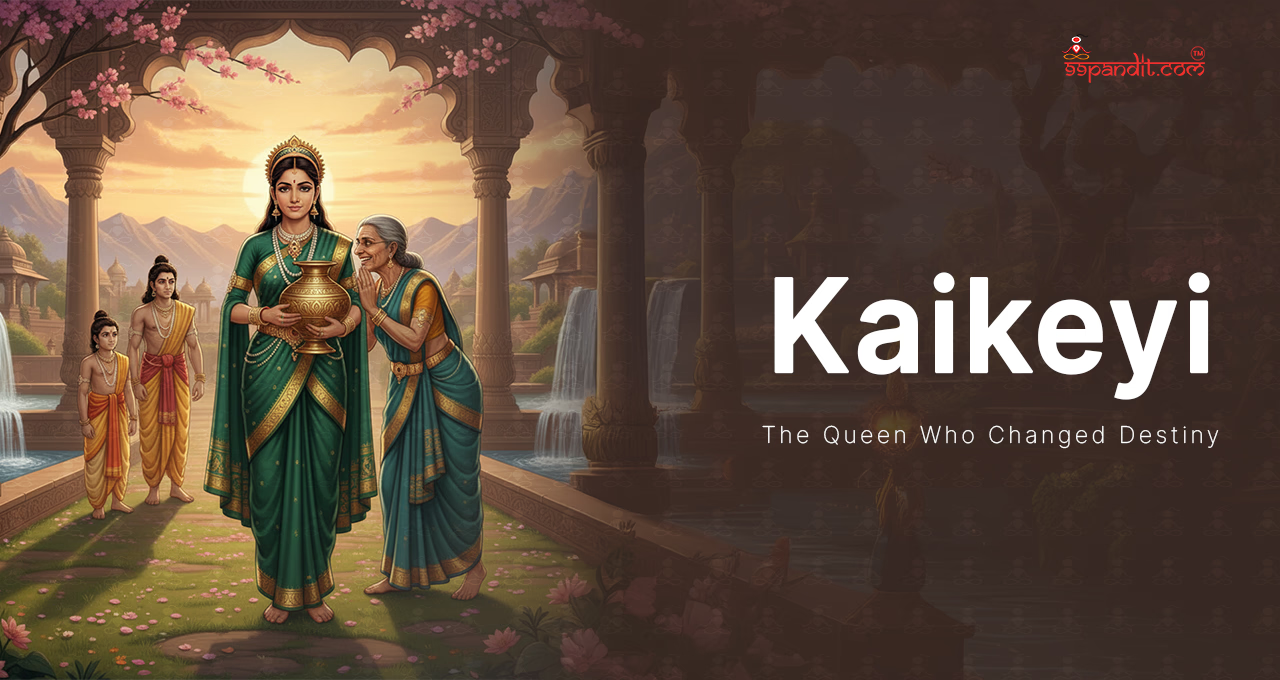
Her act of courage strengthens their bond and gains two boons from the kings, which he later regrets.
After years, Kaikeya demanded king fulfil his boons to crown Bhrata as king and send Lord Rama to fourteen years of exile.
Manthara, a maidservant of Kaikeya, influences her. She tells her about the coronation of Lord Rama, thereby frightening the future of Bharata.
Upon the death of King Dasharatha, and witnessing the king’s love for her son, she came to know of her mistake.
With regret in her heart, she later went on to help and encourage Bharata in the mission of bringing Lord Rama to Ayodhya.
Lesson: The story of Kaikeyi warns us about the evil influence of others, and also shows how love turned by fear can destroy everything we hold most dear.
Kaushalya, the wife of King Dasharatha, was the first queen and the most influential one in Ayodhya.
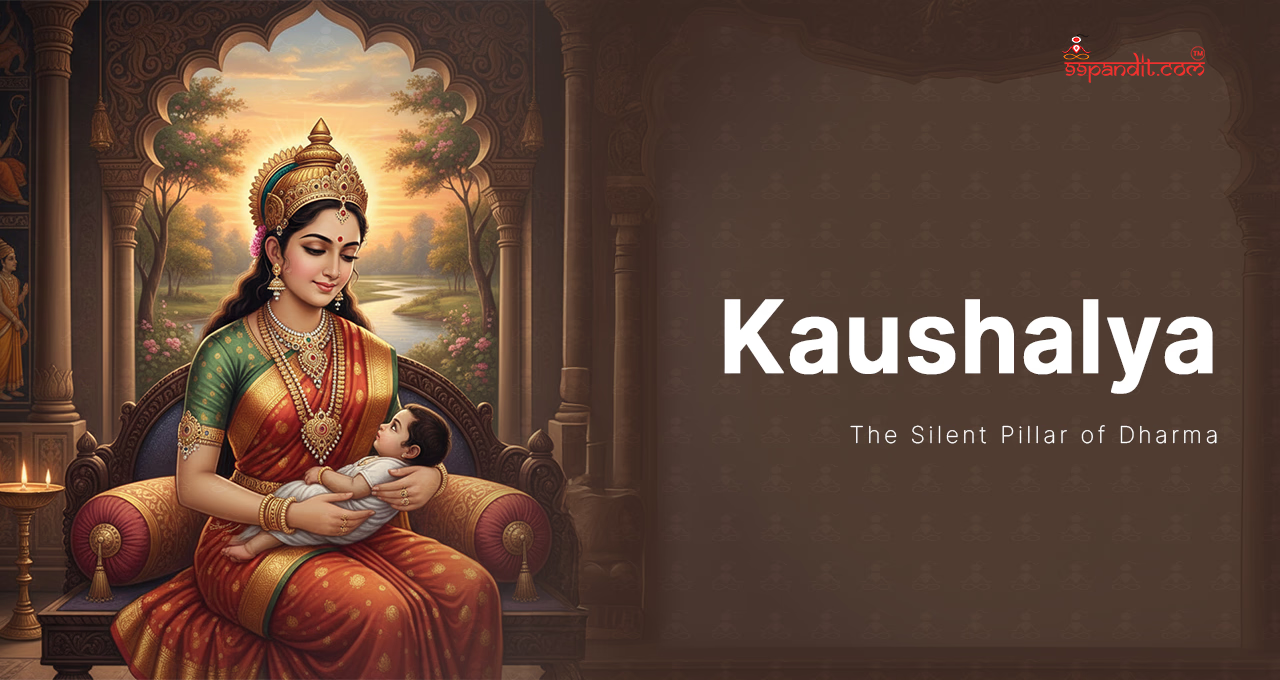
Even though she was in a very high position, she never forgot the way of her duties, dharma, devotion, and discipline.
One of the most beautiful and most profound relationships was the one that connected her with her son, Lord Rama.
With the moral values of duty, compassion, and righteousness, he not only raised his son Rama but also a future king loyal to his dharma.
When Lord Rama was exiled, his mother felt as if her heart was being torn apart. Instead of complaining about this unfairness, she put a blessing on her son and showed her silent power, patience, and motherly sacrifice.
Lessons: Real power is kept in patience, grace goes beyond rank, and a mother’s love is letting go of the ones you love to let them follow their way.
Urmila was the wife of Lord Lakshmana, a brother of Lord Rama. The marriage of both was based on mutual respect and understanding.

Even after so much love for her husband, she always supported him in performing his duty.
When Lakshmana decided to follow Lord Rama to the forest, Urmila wanted to go with him, but couldn’t. For the period of fourteen years, she lived in separation and did his tapasya.
As per legend, it is also believed that she slept for 14 years so that Lakshman could stay alert and perform his services.
Urmila’s sacrifice was a very silent but very influential factor in Lakshmana’s journey. Her acceptance of separation and suffering without accusing her fate strengthened Lakshmana’s ability to protect Rama and Sita with full focus.
Lesson: Her journey reveals that true sacrifice does not just come from seeking recognition. Standing with your loved ones in difficult times is the greatest form of devotion.
Mandodari, the wife of Ravana, was known for his calm nature, intelligence, and understanding of righteousness. Living in a Kingdom like Lanka ruled by pride, she chose to stay rooted to her core values.
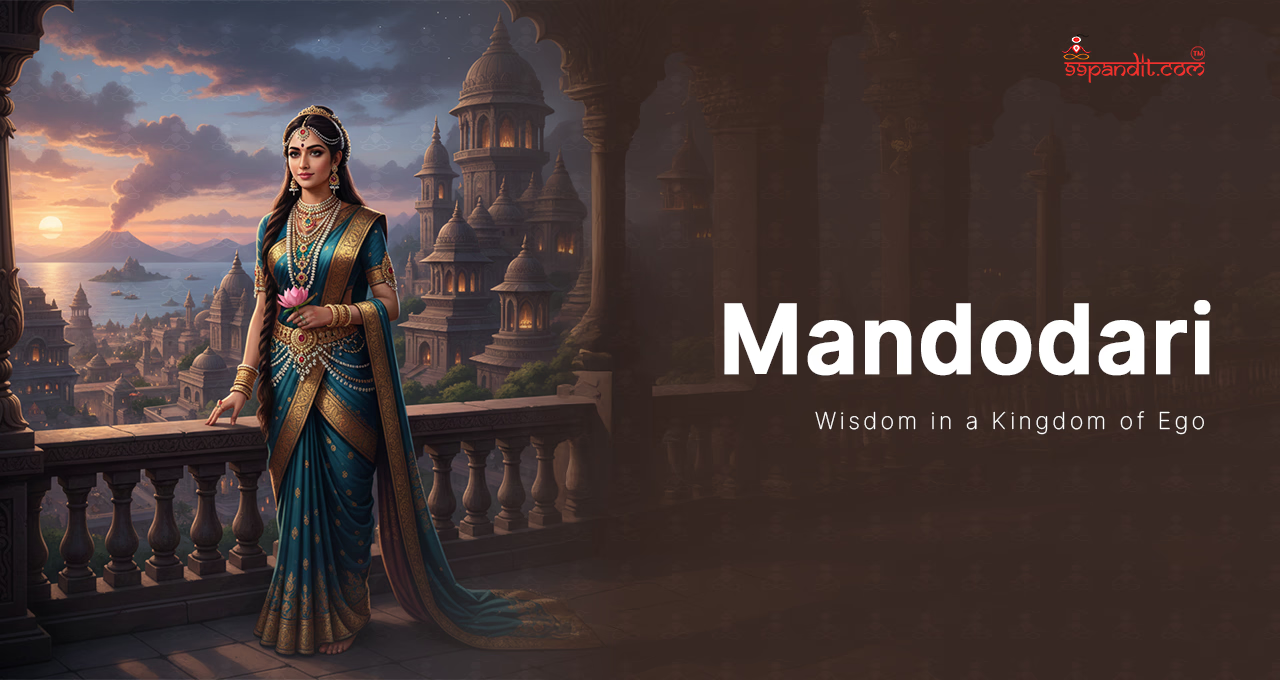
Mandodari is one of the few voices that oppose Ravana’s evil works. She regularly cautions Ravana about the utter destruction that awaits him as a result of his abduction of Sita.
Many times she told her to return Goddess Sita to Lord Rama, reflecting her clear moral judgment.
Although her words are often ignored, her core strength lies in standing for the truth. With deep pain, she has to watch her kingdom fall in front of his eyes, but her courage was silent yet powerful.
Lesson: Madodari guides us that standing in the right is more important, even if others refuse to agree with you. Courage not just always changes results, but sometimes also defines your character.
Sumitra was the mother of Lakshmana and Shatrughna, and another queen of Ayodhya. Their mother is known for selecting simplicity over luxury and authority.
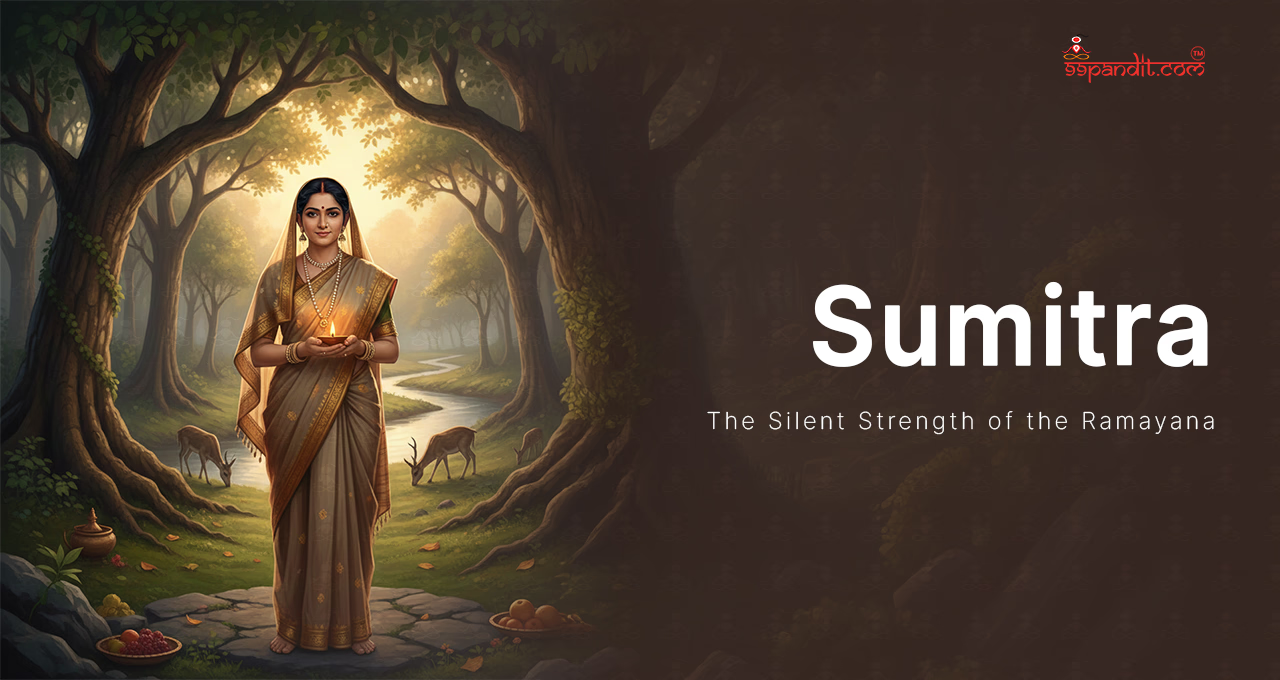
During Lord Rama’s exile, the queen of Ayodhya shows incredible strength. Instead of asking her son to go with Lord Rama, she encouraged him to serve his role of brother, vehicle-keeping duty over personal attachment.
The contribution of Sumitra is not loud yet very powerful in shaping the Ramayana. During the challenging times, she provides emotional support to Kaushalaya and wise advice to households.
Lesson: Sumitra’s life shows that true strength lies in key factors such as wisdom, selflessness, and supporting others without seeking recognition.
Surpanakha, a sister of Ravan, was a brave and strong female demon who had the Dandaka forest under her control.
With an ability to change her form and brother by her brother Khara, she lives her life with independence and freedom.
Her freedom in expressing her feelings and desires qualifies her to be a special female character of Ramayana.
Once, Surpanakha met Lord Rama and Lakshman in the Panchavati forest. Enchanted by their beauty, she transformed herself into a lovely woman and said that she wanted to marry lord Ram.
After being rejected, she gets angry and attacks Goddess Sita. To stop it, Lakshmana stopped her by cutting off her nose.
After which, is went to Ravana and asked for the revenge, which later turned into the main reason behind the battle of Ramayana.
Often seen as a villain, Surpanakha’s story also showcases the values of deeper emotions such as desire, pride, and rejection.
Her humiliation turned into rage, showing how emotional pain can lead to some serious consequences and fights.
Lesson: Her tale from Ramayana reveals that sometimes unaddressed emotions can turn into conflicts. Therefore, keeping a balance between emotions and empathy is critical.
Shabari was a humble woman born in the Bhil tribal community. She was against the animal sacrifice ritual performed on her wedding day, leading her to run to the forest.
In the forest, he meets a Sage Matanga who accepts her as his disciple regardless of knowing her low caste.

She lived full of devotion under his guidance. Before the death of the sage, he told her one day Lord Ram will visit you and complete your life purpose.
Her year of waiting came to an end when Lord Rama, after 14 years of exile, came to visit her. She warmly welcomed him and offered him a berry after tasting each of them to ensure sweetness.
As this is considered against social customs, Lord Rama accepts it and highlights that pure devotion is everything that matters.
The incident of Lord Rama and Shabari tells us that pure devotion is what truly matters, not a birth, caste, age, or gender. Additionally, Lord Rama’s acceptance shows the importance and not social status.
Lesson: Her story reveals that true devotion is not based on certain guidelines or status, but a pure heart, intention, and faith are more essential.
The women of the Ramayana are not incidental characters; they are the emotional and moral keystone of the epic.
They make the course of the story as much as any king or hero through their decisions, self-sacrifice, prudence and piety.
And the lives of these men convey to us that power is not noisy and apparent, but is frequently in patience, moral courage, and silent opposition.
Be it a strength of Sita, the passion of Surphanka, or the devotion of Shabhri, these women demonstrate that there are a variety of powers.
Further, their stories live on through the ages and remain as a source of hope to not only women but also men.
Their real-life problems of love, loss, duty, desire, faith and self-respect make Ramayan an epic and eternal motivation.
To honour the Ramayana is to honour these women not as characters of the story only, but the pillars that have supported its deepest truth. Their legacies teach us that true strength can take different forms.
Table Of Content