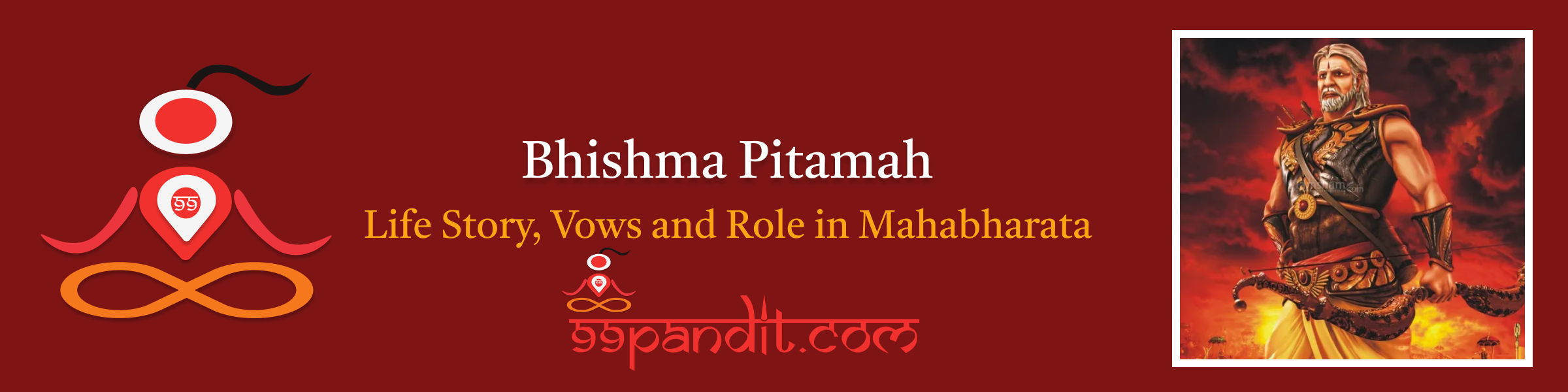
Bhishma Pitamah: Life Story, Vows and Role in Mahabharata
When we talk of sacrifice and duty, the first person whose name flies up is Bhishma Pitamah. His existence was…
 0%
0%
 Book Griha Pravesh Puja Online
Book Now
Book Griha Pravesh Puja Online
Book Now

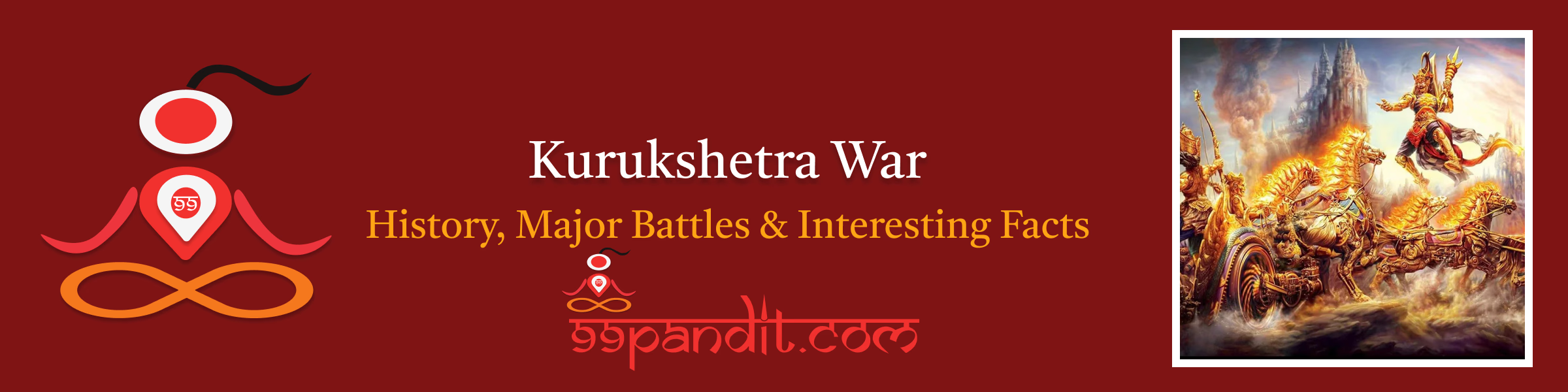


Kurukshetra War: The biggest war in the history of Kurukshetra, known as the Mahabharata War. This is one of the most epic battles in Hindu mythology.
It happened between the cousins of the Kuru dynasty, the Kauravas and the Pandavas. They fought over the throne of Hastinapur.
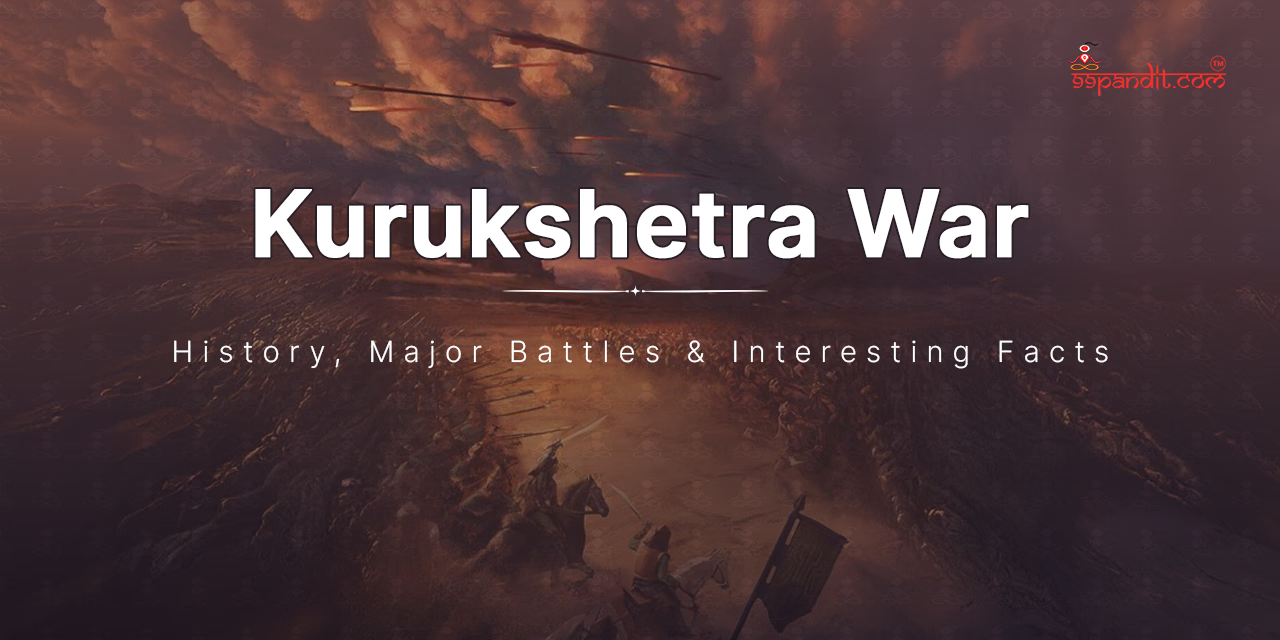
In the war, unlimited lives were lost, and Dharma was found at the end of the Dwapar yug.
Therefore, the sacred Bhagavat Gita holy book of Hinduism, consists of the lessons and wisdom that Lord Krishna, the 8th form of lord vishnu, guides Arjuna on the battlefield of Kurukshetra.
In this article, we are going to tell you about the history, major battles, and interesting facts about the Kurukshetra War.
The Kurukshetra War happened between the Kauravas and Pandavas. It was a central dispute in the Mahabharat that was for the throne.
Pandavas are known for their morality in battling against the 100 Kauravas siblings. Lord Krishna was worshipped as a god and the symbol of wisdom, supporting the Pandavas as their leader.
On the other side, legendary warrior Bhisma Pitamah battled from the Kaurav side due to his promise of loyalty to them.
There is a list of key fighters who fought in the Mahabharat:
Yudhishthira: He was the oldest Pandava and the symbol of morality and leadership.
Bhima: He was known for his immense strength and power, a powerful warrior.
Arjuna: The most skilled and prominent warrior, his doubts and duties of responsibility are described in the Bhagwat Gita.
Nakula and Sahadeva: They were the youngest Pandavas and twin brothers. They were also the Mahabharat warriors, skilled in archery, who fought along with their brothers.
Draupadi: She was known as Panchali, which means the wife of the Pandavas. Her disrespect in front of the whole dynasty sparked the events leading to war.
Krishna: The leader of the Pandavas. He played a crucial role in the Kurukshetra war and became charioteer and adviser to Arjuna. He led Arjuna and created the Bhagwat Gita.
Satyaki: He was the close friend of lord krishna and a strong fighter. He fought on the side of the Pandavas.
Abhimanyu: He was the son of Arjuna and Subhadra. A skilled warrior, recognized for his prowess in the Chakravyuha figure, his death was an unexpected event.
Ghatotkacha: Son of Bhima and a powerful demon fighter, who fought on the side of the Pandavas.
Duryodhana: He was the eldest Kaurava and team leader of the Kauravas’ team. He was recognized for his cunning and jealousy of the Pandavas.
Bhishma: The respected grandfather of both the Pandavas and Kauravas. He ideally guides the team of Kaurava because he promised loyalty.
Dronacharya: The trainer of the Pandavas and Kauravas, he was known as a skilled warrior and initially led the Kaurava forces.
Karna: A powerful warrior and sibling of the Pandavas. He was remembered for his skill and dedication to Duryodhana, apart from his noble family.
Dushasana: He was another sibling of the Kauravas, remembered for his brutality and involvement in Draupadi’s humiliation.
Shakuni: The maternal uncle of the Kauravas. He had an important role in the circumstances leading to the war.
Ashwatthama: An immense warrior, son of Dronacharya, who fought from the side of the Kauravas.
Kripacharya: He was a Brahmin and advisor to the Kauravas; he was a qualified warrior and played an important role in the battle.
Bhagadatta: A strong fighter, comprehended for his skills in fighting from an elephant, he fought alongside the Kauravas.
Shalya: A mighty fighter who battled on the side of the Kauravas, identified for his powers and skill.
Yuyutsu: The only son of Dhritarashtra who endured the war, he battled on the side of the Pandavas.
Dhritarashtra became the king after the death of his brother Pandu, and ruled the kingdom of Hastinapur along with his half-brother Vidur as his prime minister.
Under the influence of Shakuni, Duryodhan bore immense hatred for his cousins from a young age. When Yudishthir became the heir of Hastinapur, Duryodhan refused to accept the claim.
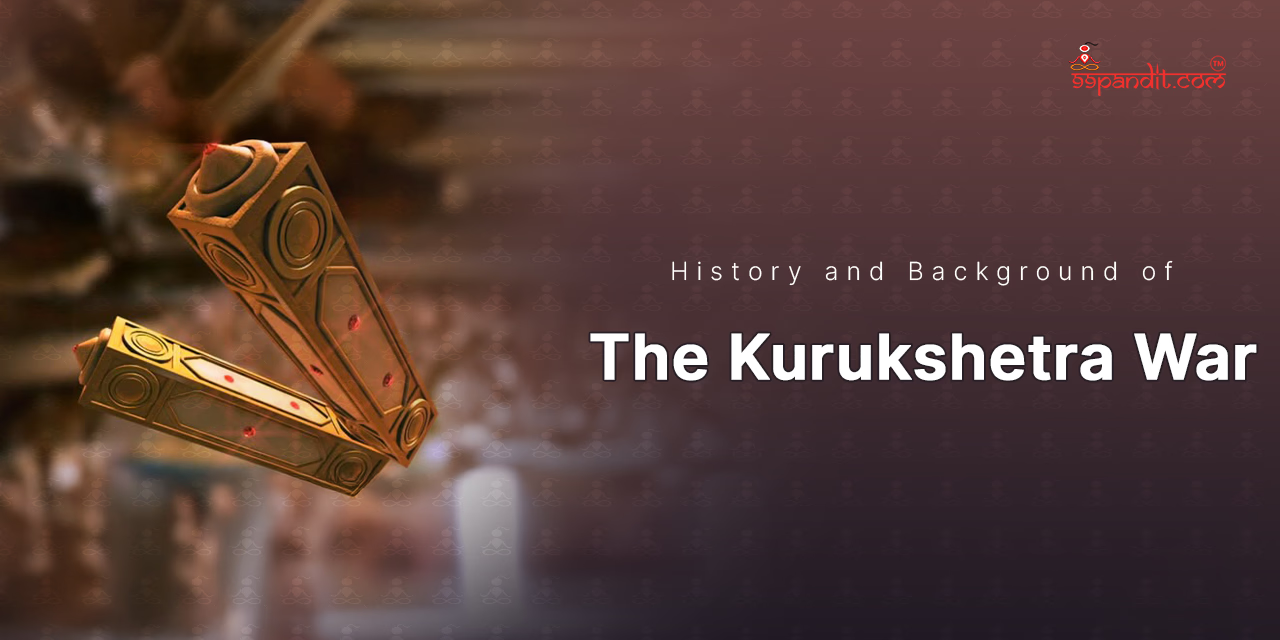
He planned to kill the Pandavas along with Kunti in the palace of Lakshagraha. Yet, they saved, unknown to Duryodhan, and lived in a mask for 4 years.
When Dhritrashtra learned about the news of the Pandavas being alive, he requested them to come back and gave them Indraprastha to govern.
The land being divided into two made Duryodhan angry, for he wanted to rule the whole kingdom. With cunning intentions, he asked the Pandavas to play a game of dice.
Shakuni played the game with magical dice and defeated Yudhisthir in each game. One by one, the king of Indraprastha gambles on their things, whether cows, gold, villages, and also his kingdom.
When they had nothing left, he gambled on his brothers, himself, and also their wife, Draupadi. After that, one of the most ridiculous adharma in every Hindu mythology:
The disobedience of Draupadi in the royal sabha. The event became the cause of the destruction that followed.
Bheema vowed on that day to kill Dushashan and drink his blood to avenge his wife. He even promised to split his thighs of Duryodhan and slay him.
After the final game of dice, Yudhisthir lost the game again. Pandavas went into exile for almost 13 years and should remain 1 year in incognito.
If they are found, they have to repeat the cycle. During the final game, Pandavas and Draupadi impersonated themselves and lived in the Virata kingdom.
Apart from these different efforts from the Kauravas to discover them, the Pandavas successfully remained hidden in their 13th year of exile.
After 13 years of exile, the Pandavas asked for the nightful return of their kingdom, Indraprastha. But Duryodhan rejected their claim.
The Pandavas said they will be happy with 5 villages. And that is how Duryodhan’s rejection marked the start of the great war of Kurukshetra.
On the sacred land of Kurukshetra (currently known as Haryana), the great war happened with lord krishna on the battlefield. Here are the essential activities that happened on every day of the way.
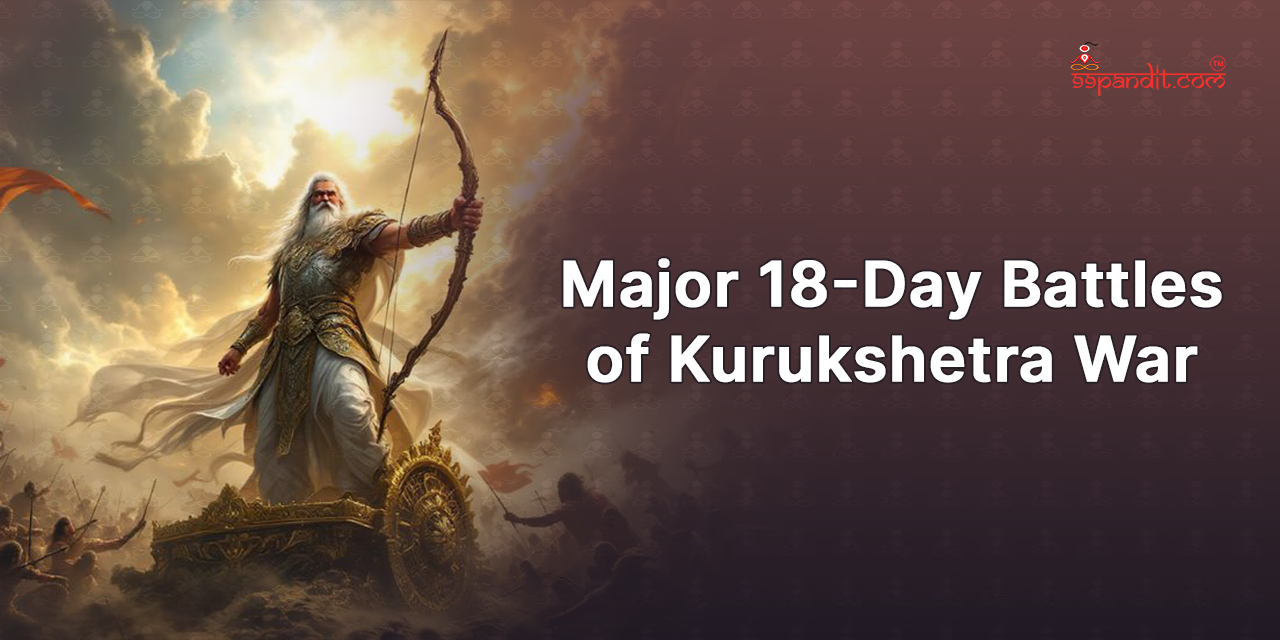
The war started with devas experiencing the battle from the sky and the eldest Pandavas, Yudhishtir, invoking blessings from Bhishma, Drona, and Kripa.
Drona fought with Dristadyumna, where Bhishma created havoc in the Pandavas’ army.
Duryodhan fought with Bhima on the Kurukshetra. Arjuna engaged in a fierce fight with Bhishma, breaking his bow.
Bheema battled valiantly, defeating 14 Kauravas. Kaurava retreated owing to the triumph of the Pandavas.
Shikhandi fought with Bhishma on the battlefield, while Bhima remained to kill the Kaurava brothers.
Duryodhan confronted Bhishma and Drona for helping the opposition. Bhishma asked him to follow peace with the Pandavas.
On the 8th day, Bhima killed 17 brothers of Duryodhan. Arjuna’s son Iravan also died in the Kurukshetra War.
Angrily, lord krishna took a chariot wheel as an element to kill Bhishma, but was stopped by Arjuna.
Arjuna knocked down Bhishma, leaving him in a bed of arrows.
Karna later joined the war and quickly became a formidable warrior. Drona took command as the new leader.
Drona tried to get Yudhisthir alive, but Arjuna and the other Pandavas saved him intensely.
On the battlefield, Abhimanyu died apart from his valor, stuck inside the chakravyuha.
Arjuna took revenge for Abhimanyu’s death and killed Jayadratha. Karna utilized Vasuki Shakti to kill Ghatokacha.
Captured by the deceit, Drona fell at the saber of Drastadyumna. It shows a turning point in the battle.
After that, Karna became the leader of the Kauravas’ force and caused havoc in the Pandava army.
Dushasana was killed by Bhima and completed his oath. Arjuna killed Karna on the other side.
Duryodhan dies on the 18th day, after a heavily mace battle with Bhima. And hence Pandavas won the great Kurukshetra war with the guidance of lord krishna by their side.
The sacred scripture of the Mahabharat is undoubtedly one of the greatest works, different in multiple ways.
It’s different for the biggest philosophical truths, the wide range of human life, the principal values, and the high auspicious stimulus described in the epic.
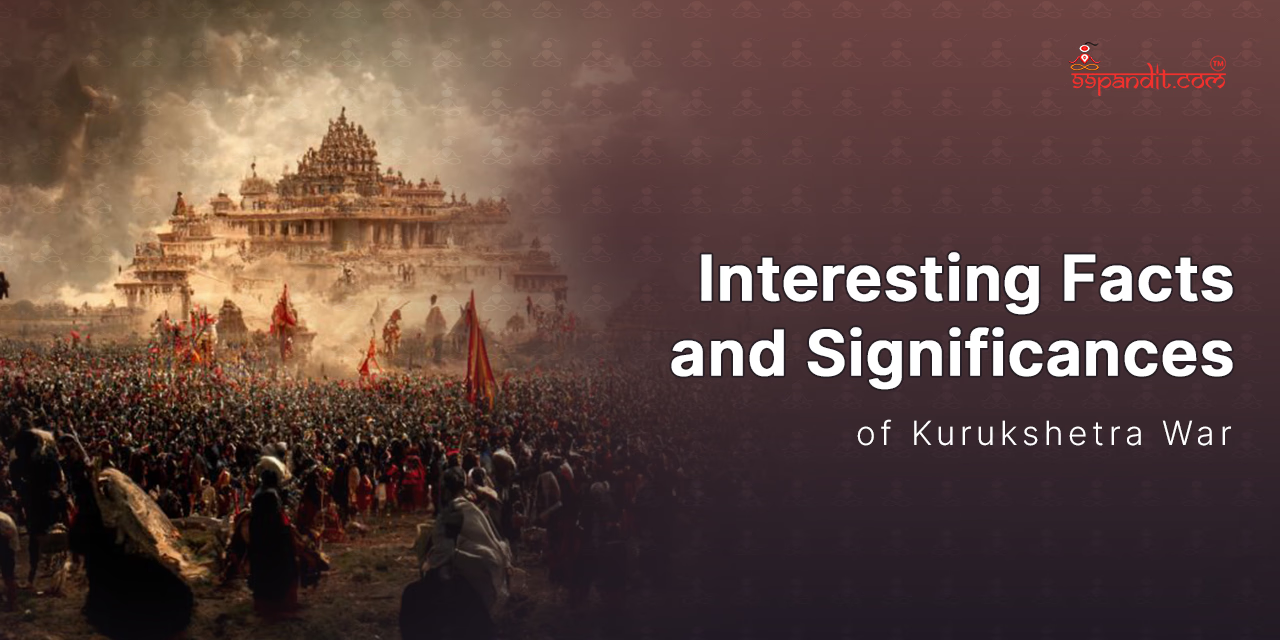
Go through the significance and interesting facts of the Mahabharat in indian history:
1. The Bhagavad Gita: One of the most popular philosophical scriptures in Hinduism is a dialogue that consists of the conversation on day 1 between Lord Krishna and Arjuna, just before the battle starts. It follows dharma, selflessness, and the way to moksha.
2. The Number 18: The number 18 is the center of the epic: the war occurred for 18 days, the forces totaled 18 Akshauhinis (divisions), and the Mahabharata itself has 18 Parvas (books/chapters).
3. The Survivors: Only a handful lived through the 18-day battle out of the millions of warriors who fought.
They were including the five Pandavas, Lord Krishna, Satyaki, Ashwatthama, Kripacharya, and Kritavarma.
4. The Curse of Gandhari: After the battle, losing all 100 sons, Gandhari cursed lord krishna, blaming him for letting the destruction happen when he could have prevented it.
Krishna accepted the curse, which led to the eventual destruction of his Yadav clan 36 years later.
5. Beginning of the Kali Yuga: The most famous custom is that the Kurukshetra war shows the tradition from the Dwapar Yuga to the Kali Yuga. The current and final age of humans, known by the decline of moral aspects.
Literary Masterpiece: The Mahabharat is comprised of one of the two Sanskritic epic poems concerning ancient India, with the other being the Ramayan.
Art and Theater: The stories of epic have inspired numerous transformations in various art genres, including films, television series, and theater staging.
Cultural Heritage: The Mahabharata has permanently transformed the landscape of Indian society with its invaluable teachings of life, ethical dilemmas, and philosophical concepts that are still applicable today.
Timeless Allure: The themes and characters of the epic are studied, adapted, and glorified nowadays as bright examples of the spiritual inner world and national diversity of India.
When the Pandavas rose, they had their victory at an enormous cost. The Kurukshetra was full of the dead 100 Kaurava brothers.
The horrific cost of the war permanently transformed the survivors, and it further affected the future of their kingdom.
The Kurukshetra War is still not a mere old legend today. The way it analyzes responsibility, ethics, and the consequences of conflict is still relevant to this day.
Indians and other people all over the world keep referring to this epic story to grasp the complexity of human nature and the atrocities of war.
The Kurukshetra War lasted for 18 days, and the Pandavas emerged victoriously. Also, the fight brings the destruction of the purity of humanity and shows the path to envy, greed, arrogance, and human thought as we feel it today.
The sacred tale comes with complex learning of humanity, perspective, thoughts, success, expectations, and wealth.
The texts of the Mahabharat make no fake promises of solving different issues. But it offers a different way to think about them through now and in the future. Also, mainly if that future is not good.
100% FREE CALL TO DECIDE DATE(MUHURAT)
Table Of Content
 Number.

Enter the OTP sent to
 number.
Filters by categories
All Pujas
Puja On Special Events
Upcoming Pujas
Dosha Nivaran Pujas
Mukti Karmas
Filters by Trending Topics
Filters by Regions
North Indian Pujas
South Indian Pujas
📅 Regular Muhurat - 07:05 - 07:30 PM
📅 Simha (Singh) Lagna - 02:00-04:02 AM
Participate Now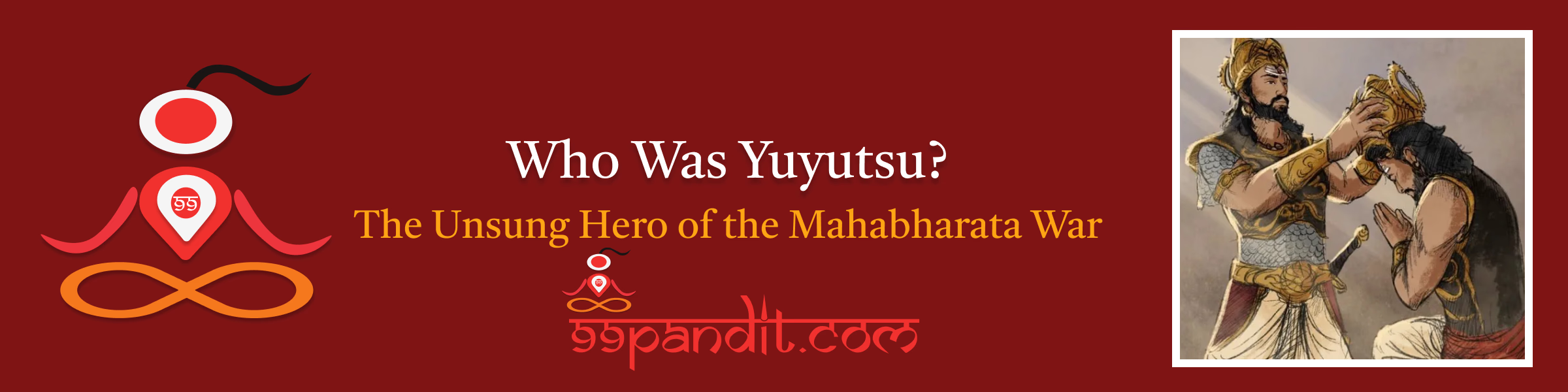

 Ontime Service.
 Certified & Verified Pandit.
 Transparency on every Step.