Narasimha Jayanti 2026: Date, Significance, Wishes & Rituals
Lord Narasimha is the fierce lion-faced incarnation of lord vishnu. He incarnated to protect his beloved devotee bhakt ‘Prahalad’ from…
 0%
0%
 Book Griha Pravesh Puja Online
Book Now
Book Griha Pravesh Puja Online
Book Now



Have you ever heard about Bhishma ashtami or performed it? If not, then no problem! We have come up with complete details about what Bhishma Ashtami is, and when it will be celebrated in 2026.
Bhishma Ashtami 2026 honours the life and departure of Bhishma Pitamah, who was a symbol of sacrifice, discipline and unwavering dedication to dharma.
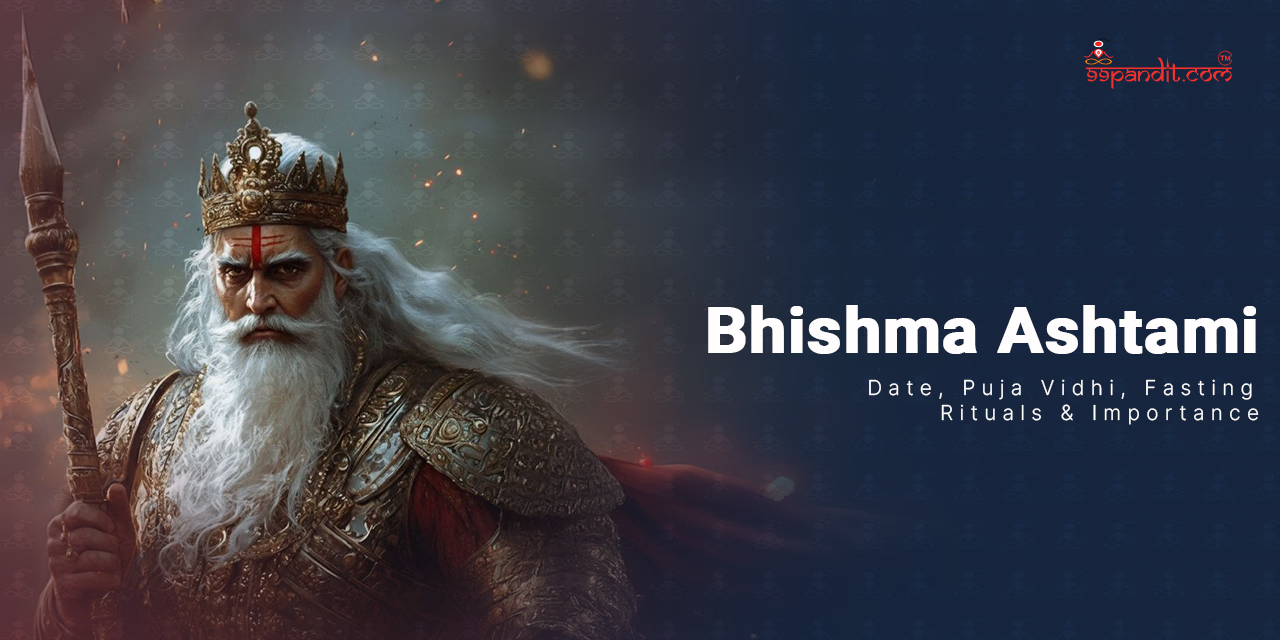
Performing the day with devotion, fasting, and charity encourages people with moral strength and spiritual clarification.
There are multiple sacred rituals and celebrations in the Hindu religion, and Bhishma Ashtami is one of them. The day is dedicated to the great warrior of the Mahabharat.
He is one of the great ancestors of the Kuru dynasty, a royal family from which the Kauravas and Pandavas belonged.
His entire life was filled with endless challenges and stable moral strength, inspiring a lot of seekers of righteousness and truthfulness till now.
This is just a small introduction about the festival and its legend. Read the article to explore it in depth!
Bhishma Ashtami on Monday, January 26, 2026
Bhishma ashtami is celebrated on the shukla paksha ashtami of the Magha month and shows the day when Bhishma pitamah left his mortal body during Uttarayana.
The tithi is believed to be highly sacred for conducting tarpan, shraddha, and prayers to please Bhishma and invoke his blessings for purity, righteousness, and ancestral peace.
The scriptures show that people who remember Bhishma on the day receive his divine safety and guidance on the way of truth and responsibility.
He chose to leave his physical body and follow the divine realms. Bhishma had the boon of ‘iccha mrityu’, which means he can choose the exact time when he wants to leave the world.
On the auspicious day of Uttarayana, when the sun starts its northward journey, a time connected with liberation and higher spiritual destiny.
The day is devoted to:
The day is highly important for those who are looking for ancestral blessings, solving family issues, and inner powers.
Bhishma was the son of Goddess Ganga and King Shantanu, born as Devavrata. He was recognized for his unmatched discipline and devotion to dharma.
He took the vow of lifelong celibacy and service to the Kuru dynasty, which earned him the name Bhishma – the one who made a terrible yet revered vow.
Blessed with the boon of selecting the time of his own death, he became a sign of strength, sacrifice, and righteousness.
His knowledge designed the events of the Mahabharat, and the final learnings remain to lead humanity even today.
The spiritual importance of Bhishma Ashtami is rooted in honouring one of the most noble characters in history. He gave his entire life to the safety of dharma.
His sankalp to be consistent, pure, and loyal to the dynasty his entire life shows an intense goal by giving up personal wishes.
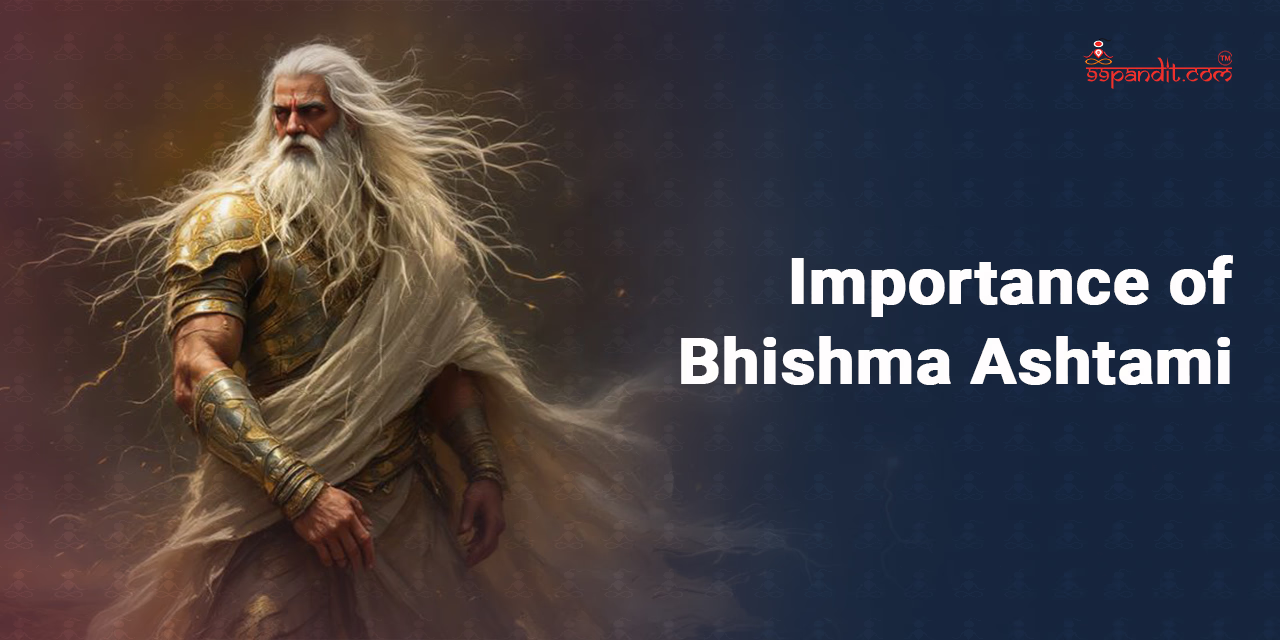
He was the only one who was blessed with the self-death boon. The power enables him to choose the date and time of his death.
He chose the day of Uttarayan, which is a highly auspicious time in Hindu tradition. As per Vedic scriptures, the time is known to offer light, progress, and afterlife liberation.
Instead of just a ritual, it’s all about his life. It inspires multiple people to go beyond emotions and circumstances when this comes to completing their responsibilities.
The day of Bhishma Ashtami is also important for couples who have ‘putra dosha’. They can observe fasting to be blessed with a son soon.
The puja and fast are even followed by newlyweds. This is due to the belief that by getting the blessings of Bhishma Pitamah on the day, couples blessed with a male child will contain traits of Pitamah.
The puja is commemorated in different parts of the world. The significance is that Bhishma Pitamah was one of the most well-known characters of the Mahabharata.
To show the death anniversary of Bhishma, Bengali people perform special puja, whereas every ISKCON and lord vishnu temples are decorated on the day.
Bhishma ashtami can be performed by everyone, but it’s highly advised for those seeking ancestral blessings, facing pitru dosha or repeated life problems.
Individuals seeking to boost discipline and mental clarity, families experiencing disputes, stress, or instability, students or young people seeking wisdom and focus.
Devotees looking to please the legacy of Bhishma Pitamah, women, men, elders, students, and anyone can observe a fast and perform a puja with devotion.
Bhishma Ashtami is scheduled with auspicious rituals that honour Bhishma Pitamah and seek blessings for dharma, purity, and ancestral peace. The followers perform the sacred rituals with devotion and discipline.
The significant form of Shraddha is planned exclusively to please Bhishma Pitamah. Devotees whose fathers have died can perform the ritual, offering prayers for peace and upliftment of the deceased soul.
Take a holy bath in the Ganga if possible, or any holy river, as it is thought to cleanse the body and mind. Offer til and rice during the bath.
Tarpan is executed on the riverbanks to please Bhishma and seek ancestral blessings. Followers present water mixed with black sesame seeds, flowers, and kush grass while reciting sacred hymns.
A lot of people observe day-long fasting on Bhishma Ashtami. The fast is completed only after performing puja and offering arghya to Bhishma Pitamah.
The followers offer arghya using flowers, til, kush grass, and Ganga water, followed by the prescribed mantra. The arghya is considered to bring purity and divine blessings.
“Vasunaamavtaraya Shantanoraatmajanaya cha
Argyam dadami Bhishmaya Aa Balabrahmacharine”
Meaning: The mantra is recited to please Bhishma Pitamah, who was the son of King Shantanu and the divine incarnation among the Vasus.
The mantra is chanted to seek blessings for purification, discipline, strength, and completing one’s dharma.
The story connected to Bhishma Ashtami revolves around his noble life and sacrifice. Born as Devavrata, the son of King Shantanu and the Goddess Ganga.
He was a partial incarnation of Vasu Dyaus, and key points of the Katha Devavrata were a divine soul.
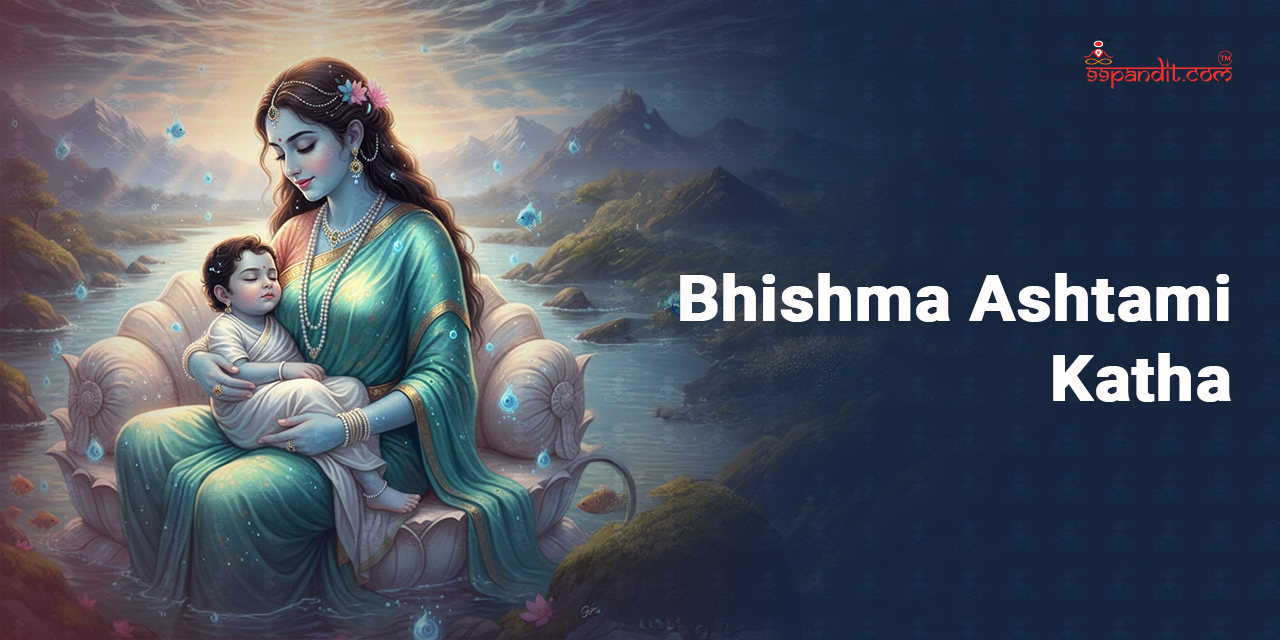
To satisfy his father’s desires, he took the vow of lifelong virtue, earning the name ‘Bhishma’. He became the biggest warrior and guardian of the Kuru dynasty.
He led the army of arrows during the Mahabharata war. Because of his boon to iccha mrityu, he chose to leave his body only when the sun transited into the auspicious Uttarayan.
Bhishma departed on the Shukla ashtami of Magha month, granting the world with his famous teachings called as Bhishma stuti and the Bhishma gita. The lessons from a noble warrior’s life are that:
Learnings from Bhishma Pitamah:
When Bhishma was waiting to let the sun begin its journey to the northern hemisphere, he gave a few important lessons to Yudhisthir. Some of the learning is:
1. Take a bath in holy water in the early morning, Brahma muhurat is preferred. It will cleanse your thoughts, body and make you ready to observe the day with sincerity.
2. Bhishma Pitamah is the follower of lord krishna. Hence, if one celebrates the day and is devoted to the lord, they will be blessed with his divine safety.
3. Keep fasting by taking some fruits, milk products, and fasting foods.
4. Recite the Krishna mantra throughout the day:
“Hare Krishna Hare Krishna, Krishna Krishna Hare Hare
Hare Rama Hare Rama, Rama Rama Hare Hare”.
5. Read or listen about the Bhishma Pitamah’s life from the Mahabharat texts.
The entire life of Bhishma Pitamah is dedicated to dharma by giving up on his personal feelings. The most pleasing way to celebrate the day is by performing some selfless charity.
When you celebrate the day and make some donations, lord krishna blesses your life with positive thoughts, inspiration and success to work spiritually.
Visit the nearby temples, and perform anna daan seva, gau seva, book distribution seva, feed poor people, perform charity, and many more.
Multiple festivals in the Mahabharat show the wisdom and spiritual significance of Bhishma Pitamah.
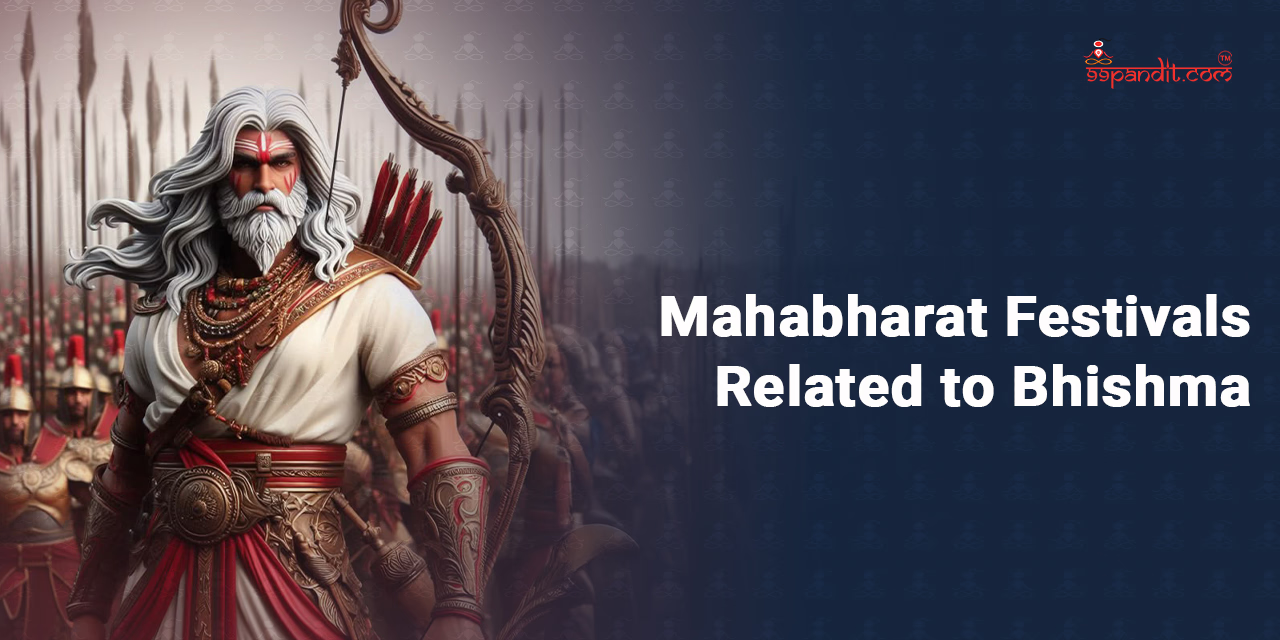
These celebrations offer deep insight into dharma, cosmic order, and events of the Kurukshehetra battle.
1. Jambukhandavinirmana Parva: The parva is the opening sub-perva of the Bhishma festival that starts with Pandavas and Kauravas accepting the rules of the Mahabharat.
2. Bhagavad Gita Parva: This is the most revered part of the Mahabharat, the Bhagwat Gita Parva that consists of life teachings of lord krishna to Arjuna. The teachings from the Bhagwat Gita give timeless wisdom for humanity.
3. Bhishmayadha Parva: Bhishmayadha Parva has 82 chapters and tells the events of the first ten days of the Kurukshetra battle.
It shows Bhishma’s unmatched prowess on the battlefield, his role in making everything in the war.
4. Bhumi Parva: This is one of the larger Bhishma festivals, which gives wide information about the earth’s geography with Sanjay’s narration.
It also shows the highlights of the harmonious coexistence of Brahmins and Kshatriyas, and details of lunar phases and their effects on sea tides.
Bhishma Ashtami is a highly spiritual day which celebrates the virtues of one of the biggest heroes of indian culture – Bhishma Pitamah.
Performing the vrat in 2026 with devotion can bring ancestral blessings, mental strength, and clarity.
While you observe it for family harmony, spiritual upliftment, or to please your ancestors, Bhishma Ashtami assures divine blessings for all.
100% FREE CALL TO DECIDE DATE(MUHURAT)
Table Of Content
 Number.

Enter the OTP sent to
Filters by categories
All Pujas
Puja On Special Events
Upcoming Pujas
Dosha Nivaran Pujas
Mukti Karmas
Filters by Trending Topics
Filters by Regions
North Indian Pujas
South Indian Pujas
Chat with verified astrologers on 99Pandit and receive personalized guidance for every stage of life.




 Ontime Service.
 Certified & Verified Pandit.
 Transparency on every Step.