Aja Ekadashi 2026: Date, Parana Time, Katha & Significance
The most sacred Ekadashi is coming in September. Aja Ekadashi 2026 will be commemorated on Monday, September 7, 2026. Following…
 0%
0%
 Book Griha Pravesh Puja Online
Book Now
Book Griha Pravesh Puja Online
Book Now

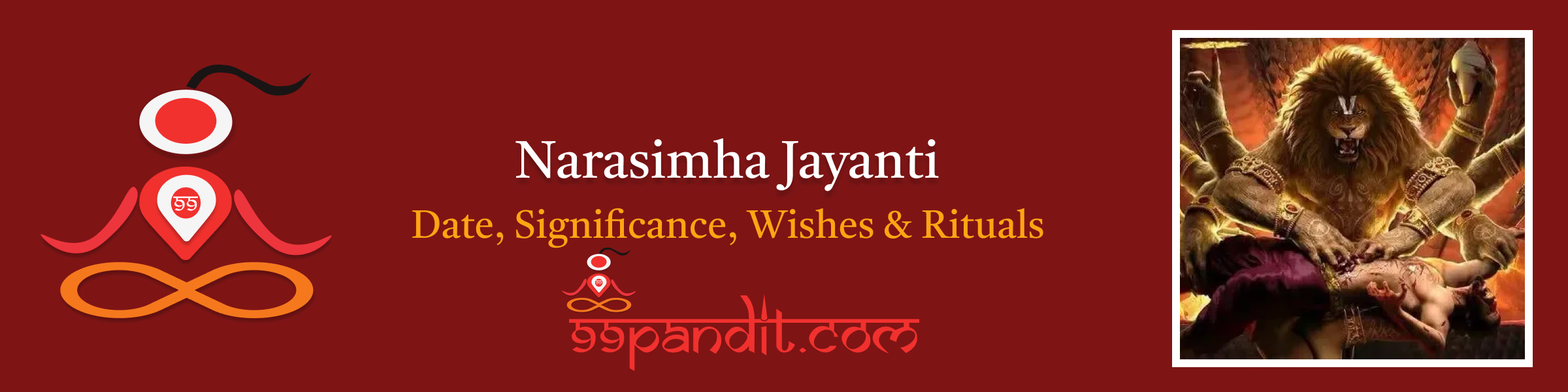


Lord Narasimha is the fierce lion-faced incarnation of lord vishnu. He incarnated to protect his beloved devotee bhakt ‘Prahalad’ from his demon father ‘Hiranayakashayap’.
The festival is an important ritual celebrated by the followers of lord vishnu. He was the 4th incarnation of Vishnu.
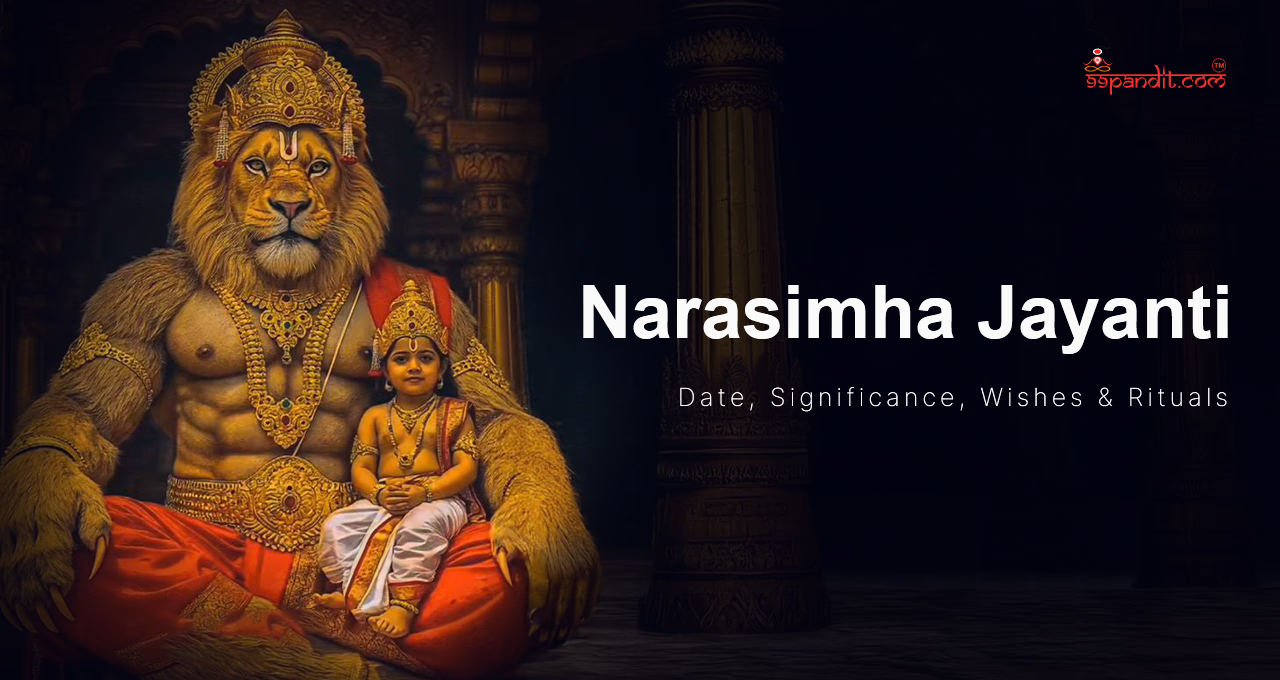
The day has spiritual value for the Hindu devotees across Tamil Nadu and other regions of India, merging deep religious devotion with traditional celebrations.
It is celebrated on the chaturdashi of shukla paksha in the Vaishakha month (April-May), as it shows the transcendental time when lord narasimha came to earth to protect his devoted follower and kill the demon king.
The powerful celebration shows the victory of bhakti over Tyranny and the eternal safety provided to the surrendered soul.
These are just a glimpse, we are going to discuss in detail more about the Narasimha Jayanti!
The sacred celebration of Narasimha Jayanti 2026 will be celebrated on the given dates. The auspicious time or shubh muhurat for puja is:
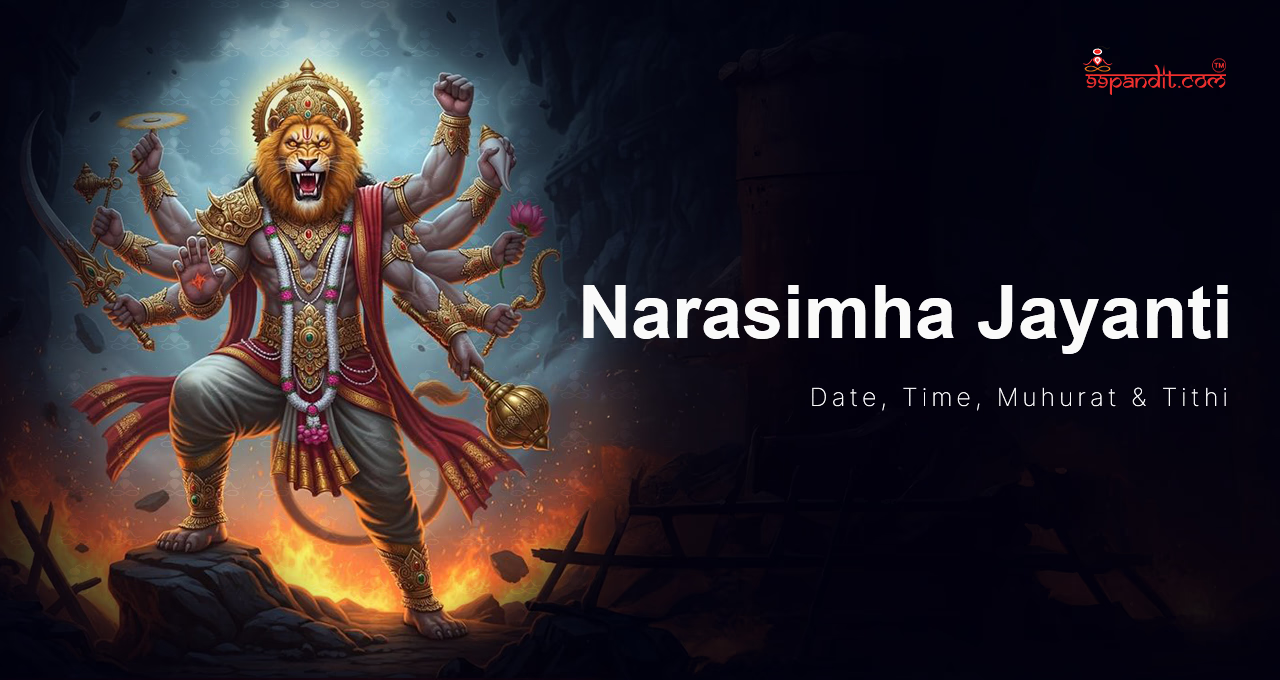
Open fasting next day after parana Time – after 06:11 AM, May 01
On Narasimha Jayanti Parana Day, Chaturdashi will be over before Sunrise
Note: Sunrise and Sunset differ by region and date as per India’s geographical diversity. To know the right time, please consult with an astrologer.
The followers can perform Narasimha Jayanti Puja during the Madhyahna Muhurat, believing the most suitable time for the puja.
It is considered that conducting the puja during this time can bless the individual with immense benefits, including spiritual upliftment, safety from negative energies, and overall well-being.
Narasimha Jayanti is a highly revered festival performed across all parts of India. It celebrates the divine presence of lord narasimha, the fierce deity yet benevolent fourth incarnation of lord vishnu.
The festival pleases the lord’s unwavering dedication to safeguard his followers and maintain dharma against evil forces.
The period is for spiritual reflection, representing divine protection accessible to those who are devoted to the supreme being.
The ritual underscores the principle that god incarnated to restore cosmic order and protect the virtuous.
The spiritual significance of Narasimha Jayanti lies in the alert of the lord’s all-pervasive existence and his active care in the material world to secure his people.
Devotees keep fasting on the day to invoke the deity’s blessings for courage, power, and safety from problems and negative energies.
It is thought that by continuously worshipping the deity on the special day, an individual can overcome inner negativity and external challenges. It led to spiritual growth and moksha.
The celebration is said to bring peace, spiritual enhancement, and lead one on the spiritual path.
Hence, this is the time to show the victory of truth, the power of belief, and the relentless support of the divine in the life journey.
The historical connection of Narasimha Jayanti is highly mentioned in Puranic narratives, mainly the story of Prahlada and the demon king Hiranyakashaipu.
The scripture is Srimad Bhagavatam. Lord Vishnu, when incarnated from a pillar to protect his ardent devotee, Prahlad, from the atheist tyranny of his father.
The divine process shows how the lord kept his promise to always safeguard his followers, apart from their social standing or power.
The festival is hence a direct remembrance of the critical event in the Vedic core of Hinduism.
Traditional Vedic ritual on the celebration includes fasting, prayer, and chanting powerful mantras dedicated to the lord.
The key rituals might be chanting the Narasimha Gayatri Mantra and the Narasimha Sahasranama.
A lot of people also take part in Japa and kirtan to strengthen their spiritual engagement.
Following the Tamil culture, Sri Narasimha Jayanti is performed with great enthusiasm. Temples are decorated with flowers, lamps, and kolam designs.
The pandit performs sacred rituals like abhishekam with milk, honey, and sandalwood paste. The procedure followed by chanting Narasimha Kavacham, a powerful kavacham.
The day is usually commemorated by:
People who come together for prayers, and a lot of them choose to perform special rituals at home, mainly who seeking blessings for health, wealth, and safety from negative powers.
Narasimha puja is organized to receive the blessings of lord narasimha and protection from evil things.
Lord bless the devotees with strength and courage, so that there is a procedure for performing the ritual.
The holy festival of Narasimha Jayanti is the right time to receive Bhagwan’s divine safety and blessings.
Perform the ceremony with devotion, you please his victory over evil and seek strength, courage, and peace in your life.
The Bhagwan Narasimha mantra, which eliminates problems from your way, is the Sri Narasimha mantra.
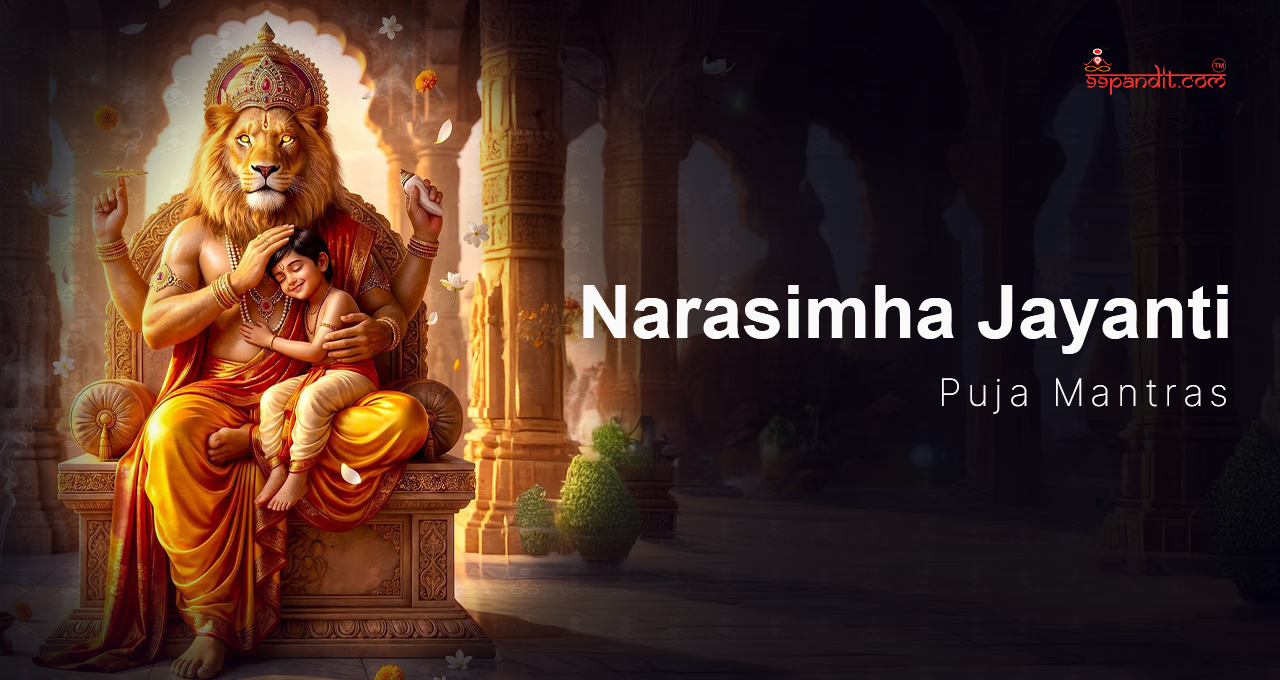
उग्रं वीरं महाववष्णं ज्वलन्तं सववतोमणखम्। नृवसंहं भीषणं भद्रं मृत्यणमृत्यणं नमाम्यहम्
Ugram Viram Maha Vishnum Jvalantam Sarvato Mukham
Nirisimham Bhishanam Bhadram Mrutyur Mrutyum Namamy Aham
Meaning: The mantra tells lord narasimha, who is powerful and ferocious and the incarnation of Maha Vishnu, full of shine, terrific, and sacred, and the death of death blesses us when we bow down to him.
‘Om Namo Narasimhaya,
Prahlad Vairagya Pradayine,
Hiranyakashipu Vamsa,
Gauri Tanaya Dayine.’
Meaning:
Om Namo Narasimhaya: Greetings to Bhagwan Narasimha.
Prahlad Vairagya Pradayine: The one who delivered Prahlada devotion and detachment.
Hiranyakashipu Vamsa: The one who killed Hiranyakashipu, the demon king.
Gauri Tanaya Dayine: The one who is sympathetic to the son of Gauri (referring to Bhagwan Shiva’s consort, Parvati).
The above mantra is chanted during the Narasimha Jayanti and on other occasions too to receive his protection, bravery, and blessings. It’s believed to remove fear, conquer evil powers, and save the devotees from harm.
ॐ जपाकुसुमसङ्काशं काश्यपेयं महाद्युतिम्।
तमो रिंह स्वामिनं शान्तं सर्वरोग निवारिणं॥
Translation: Om, I pray to Bhagwan Narasimha, who has a face like the red hibiscus, who is the desecrator of all sins, the grandest of all deities, who eliminates all diseases.
नमः श्रीनारसिंहाय सहस्त्राक्षाय विक्रमाय,जन्म मृत्यु प्रदोष शमनाय स्वाहा।
Translation: I offer my salutations to Bhagwan Narasimha, who has many eyes and the grand power to remove the cycle of birth and death.
तस्य रक्षणं नित्यं सर्व भय निवारिणं।प्रदाय सर्व सम्रद्धि सुख सम्पत्तिकं।
Translation: The lord is itself the eternal protector, eliminating all fears and bless with wealth, prosperity, and happiness.
नारसिंह महाक्रूर ओजस्वी महाक्रष्ट।सर्व दोष निवारिणं महापाप विनाशकं।
Translaton: O mighty Narasimha, the remover of evil, the destroyer of all obstacles, and the clearer of sins.
The kavacham is usually chanted during prayers or rituals, mainly on occasions such as Narasimha Jayanti. This is done to invoke divine blessings for spiritual upliftment. The power mantras shield the one from negative forces and bring abundance into their lives.
During the Narasimha Jayanti, celebrated in the vibrant cultural landscape of South India with unparalleled passion and devotion, mainly in the number of temples dedicated to lord narasimha.
The auspicious places become the centre of spiritual activity, bustling with special prayers, detailed rituals, and grand rituals performed in honour of the lord.
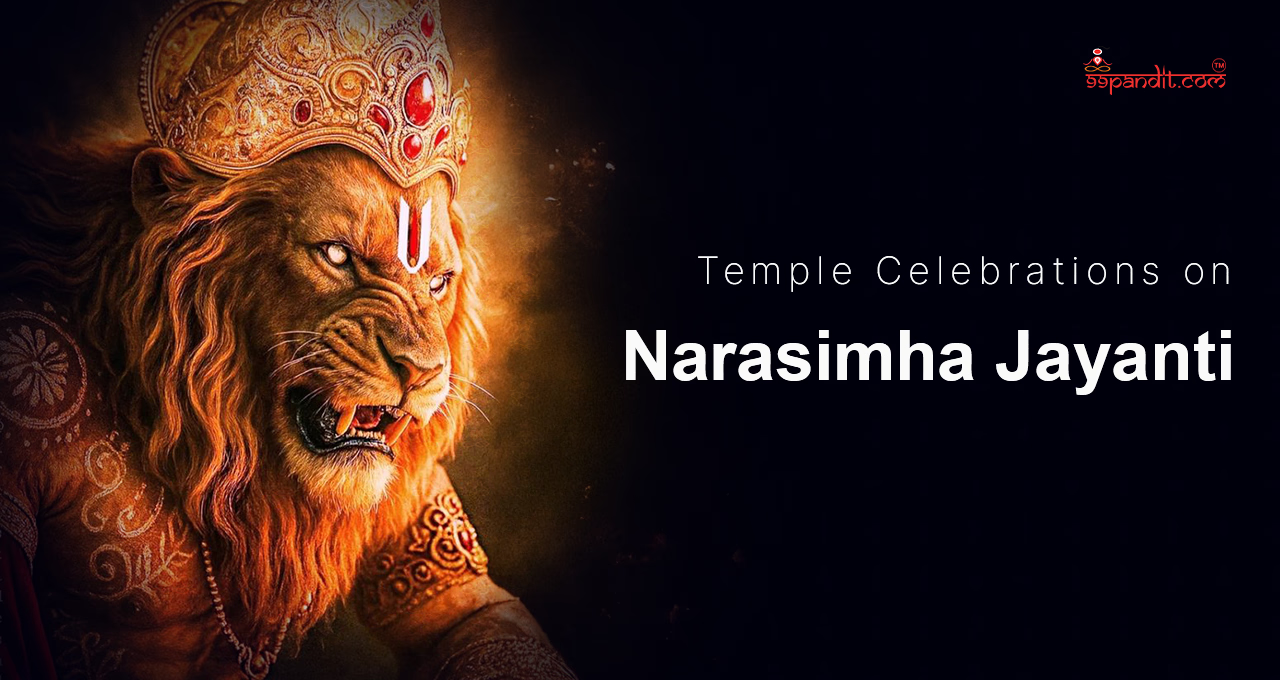
Pandits and devotees take part in the festivities, immersing themselves in dynamic meditation and honouring.
The atmosphere is filled with melodious recitation of hymns and mantras, making the environment charged with divine energy.
With the collective dedication, people seek the benevolence and safety from the lion-faced man, showing their unwavering faith and reverence.
Celebrations in the temple on a special day are not just a religious gathering, but even a vibrant gesture of cultural heritage and spiritual devotion. It boosts a sense of unity and reverence in the devotees.
Use these wishes to wish your loved ones on the auspicious day of Narasimha Jayanti.
Thus concluding, Narasimha Jayanti 2026 is not only a religious observance, but it also encapsulates a spiritual journey for righteousness and liberation from worldly relations.
It acts like a poignant reminder of the lasting struggle between good and evil, shown by the divine intervention of the lord.
With the diligent practice of rituals, fasting, meditation, and performing charity, followers cleanse themselves and align with the lord will.
The day of Narasimha Jayanti motivates people to adopt the path of dharma and leads them with compassion, wisdom, and devotion.
When we celebrate the occasion, it may be led by the learning of the lord to uphold moral integrity, share spiritual awareness and boost harmony in the world.
May the lord grace and safety of lord vishnu bless us on our journey towards spiritual improvement and ultimate liberation.
Table Of Content