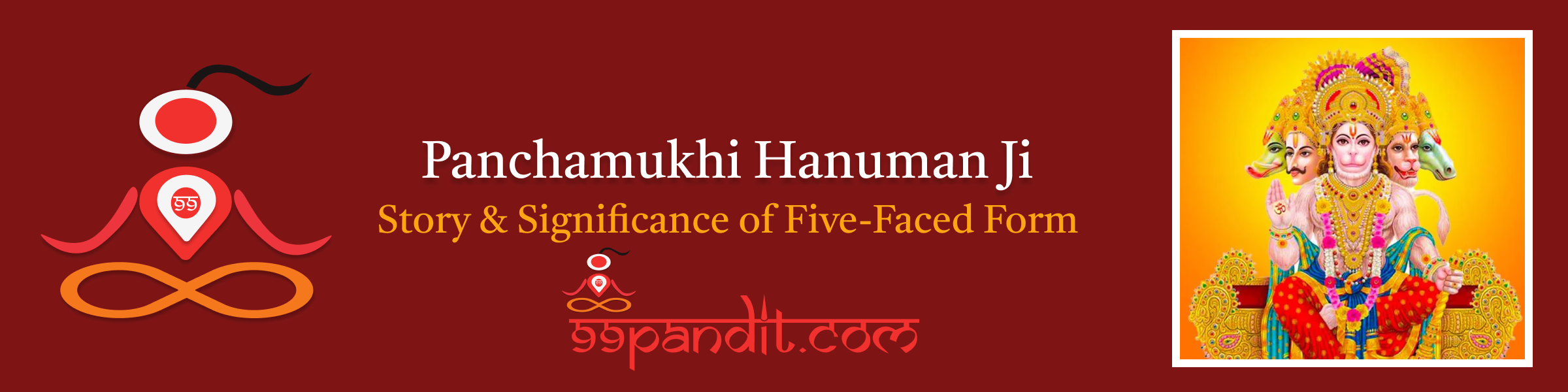
Panchamukhi Hanuman Ji: Story & Significance of Five-Faced Form
Lord Hanuman is one of the most revered deities in the Hindu mythology. Panchamukhi Hanuman Ji is one of the…
 0%
0%
 Book Griha Pravesh Puja Online
Book Now
Book Griha Pravesh Puja Online
Book Now

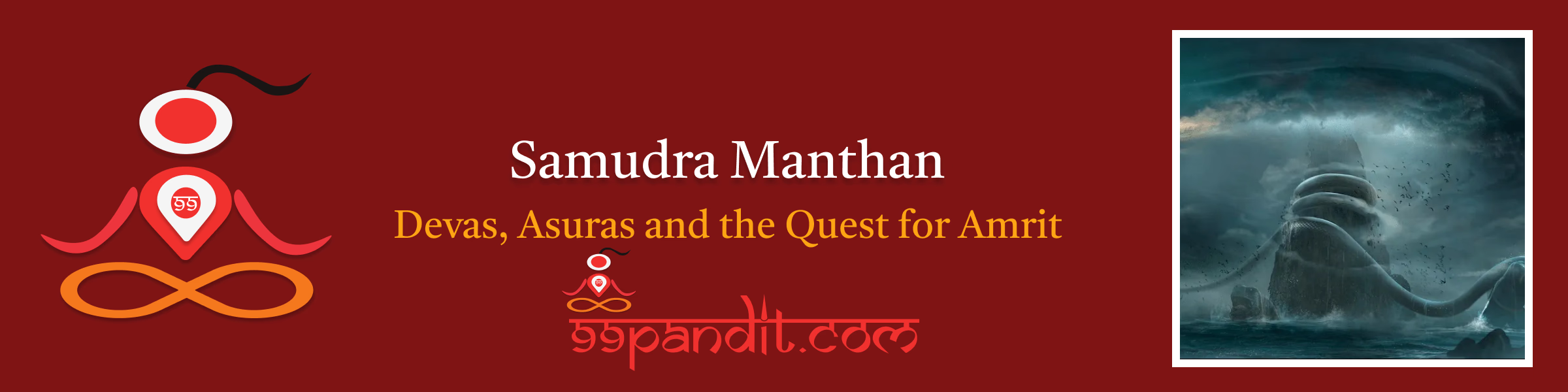


Samudra Manthan is a famous story from Hindu mythology. It is about the Devas or gods and the Asuras or demons.
They both wanted Amrit, the divine nectar that makes one immortal. The ocean was very deep. Mount Mandara was taken as a rod.
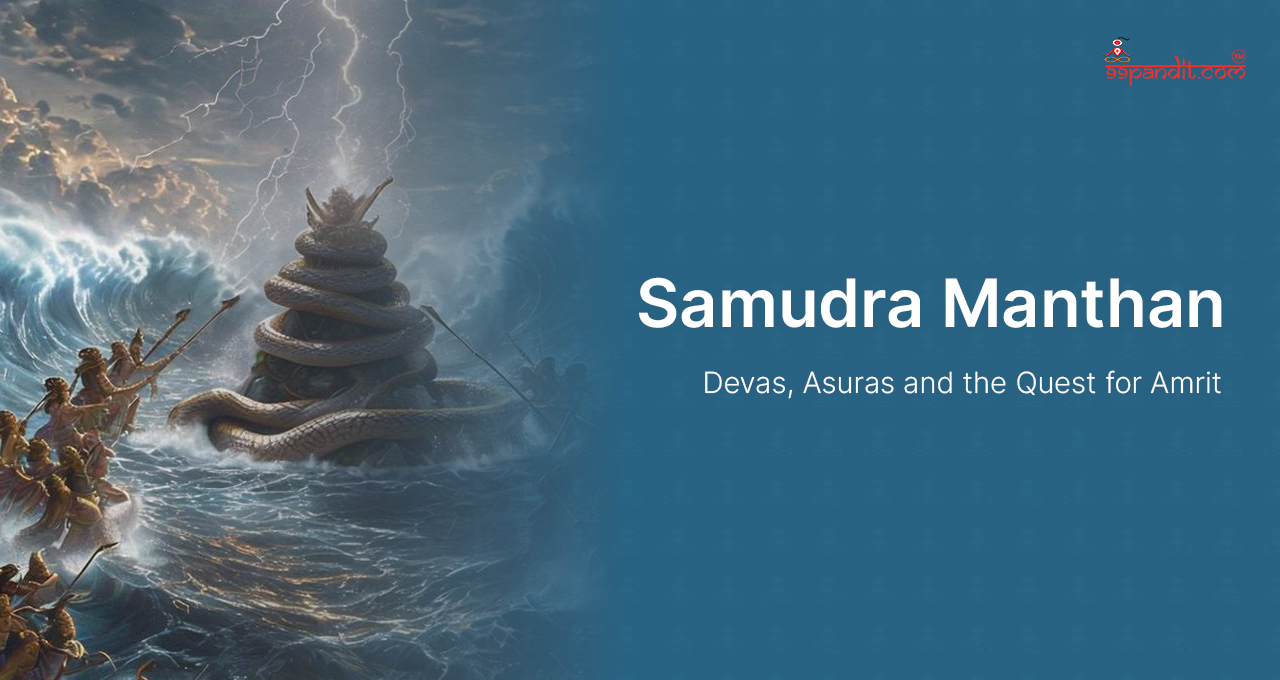
Vasuki, the giant serpent, was the rope. Devas and Asuras took the serpent as the rope and started the manthan. A lot of treasures came out.
The story imparts to us many lessons. Among the qualities that can be reflected in this are teamwork, patience, and bravery.
Even enemy could potentially combine their powers to make something wonderful. The story also tells us to be wise and strong. Samudra Manthan is an epic with magic, morals, and devotion.
The blog will guide you through the story, help you understand the concealed meanings, and explain the reasons why it is so significant in Hindu culture.
The Devas were out of power. It was a long time ago when they became feeble and could no longer protect the Earth properly. Being powerless, they could not fight the Asuras.
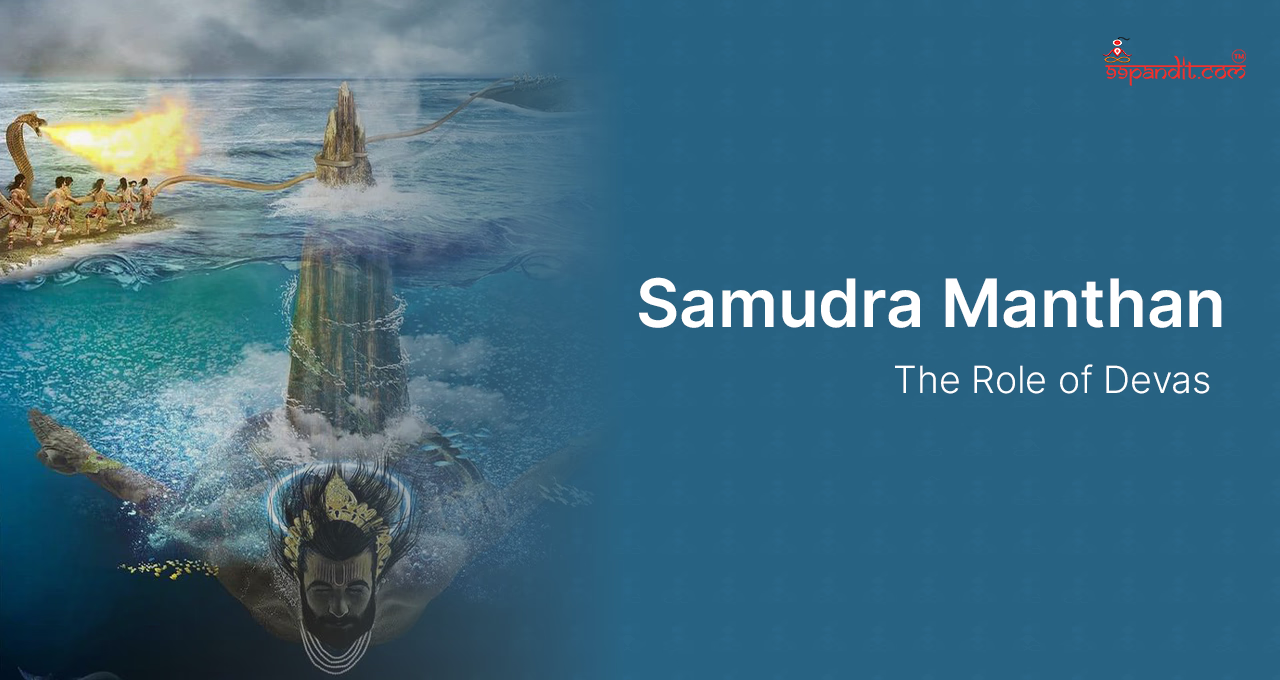
They needed Amrit, the divine nectar, to regain their strength and make the world stable again. Amrit would give them energy and courage to protect humans, animals, and the planet.
Once, Indra, the king of the Devas, was very careless with his actions. He did not follow the dharma strictly. Because of this, he lost his powers and became weak.
This was known as a curse. The curse was a lesson for the kings that they need to be careful even when they are in charge.
It forced the Devas to find a way out of the situation. They understood that the only way to get their power back was by churning the ocean for Amrit.
Vishnu was the guide for the Devas step by step. He instructed them how to use Mount Mandara as the rod and Vasuki the snake as the rope. Lord Vishnu told the right method of pulling the rope and balancing.
He also advised them to be patient and united. Without his support, the Manthan could have been unsuccessful or harmful.
Devas were the finest instance of a well-functioning team. They were very aware of their different roles.
When a few were pulling, the others were pushing, and a few were just watching carefully. They were following dharma, the right way of conduct, so that everything would run smoothly.
Their teamwork technique and proficiency were the reasons that they could keep on with the process without taking a break.
Many gods appeared for the Manthan. Indra was the one who was leading, Varunadev was taking care of water, Agnidev was getting fire, Vayudev was employing wind, and the rest were supporting. Each Deva was assisting with the work with his power, ability, and focus.
This story shows that the mightiest creatures can create mistakes. Yet, they can fix their mistakes by cooperation, instruction, patience, and keeping to the dharma.
The Devas, in turn, demonstrate to us that virtues such as courage, proper planning, and mutual assistance can effectively resolve major issues.
Asuras were very powerful already, but they still aspired to become more powerful. They desired Amrit, the divine nectar of immortality, above all else.
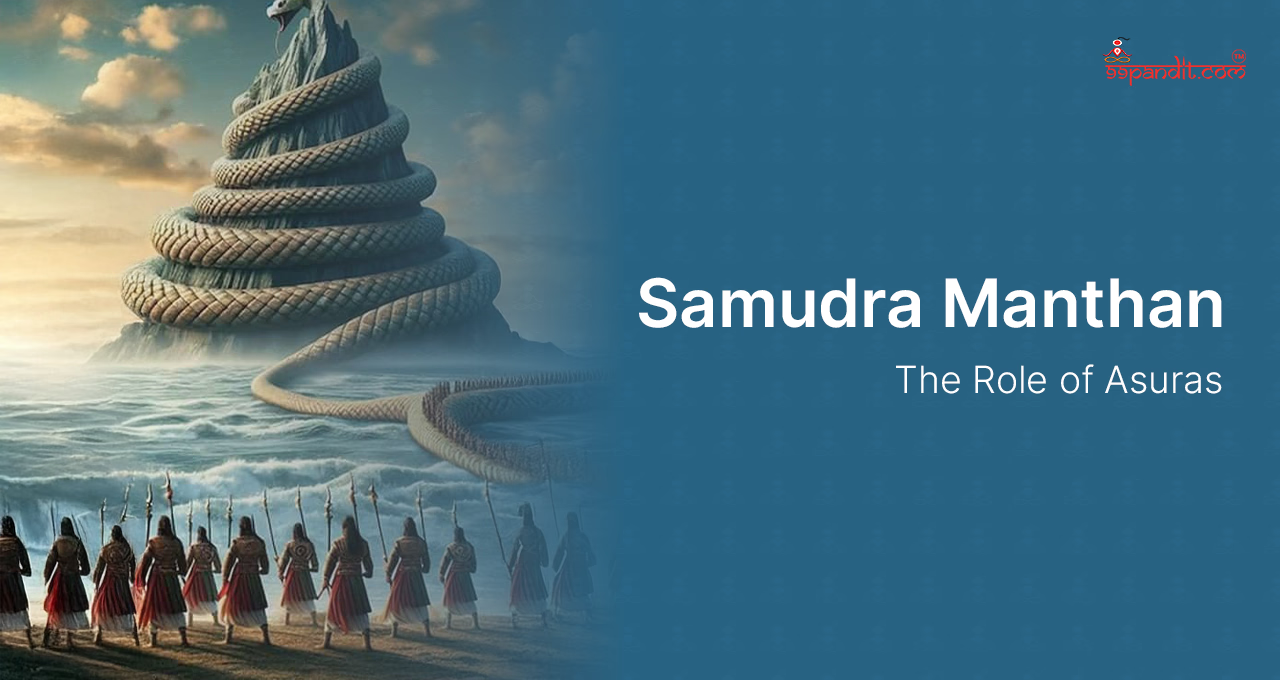
They thought that once they had Amrit, it would be very easy for them to get rid of Devas and be the ones to rule the universe.
Asura were extremely arrogant, and their greed was enormous-power them. They did not abide by dharma.
Their minds were full of thoughts of how to get and keep power only for themselves. This made them lose control of their impatience and also made them reckless.
During the Manthan, they had so much greed that it caused a lot of trouble. If the Devas were not careful, they could have lost the battle.
Despite being enemies, the Asuras decided to join forces with the Devas. They coiled the serpent rope. They were turning the ocean by pulling the serpent’s head and tail vigorously.
They were up to their necks in power and cleverness. But still, they were trying to outwit the Devas and keep the things they got for themselves.
Asuras had a good plan. Some were pulling, some were guarding, and some were trying to get control.
They were clever, but they did not do well. Their power, as shown in the strategy, was not enough if they had no patience and teamwork.
Many Asuras participated in the Manthan. Among them are the likes of Bali, Rahu, Ketu, and Virochana. They were powerful and brilliant leaders.
Each of them tried to be the one to play the part and get Amrit. But their greed and pride caused them to fight and have problems with the Devas most of the time.
The story of Asuras conveys that greed and pride can lead to sorrow-making. Even strong and clever beings must have patience, teamwork, and dharma if they want to succeed.
Their errors serve as a reminder to us that we should not lose sight of wisdom when having a desire.
Manthan of the Ocean is one of the most popular stories in Hindu mythology. It tells about the churning of the sea by the Devas, the gods, and the Asuras, the demons, after the unitedly they took the initiative.
The reason for their quest was Amrit, the heavenly nectar that gives strength and immortality.
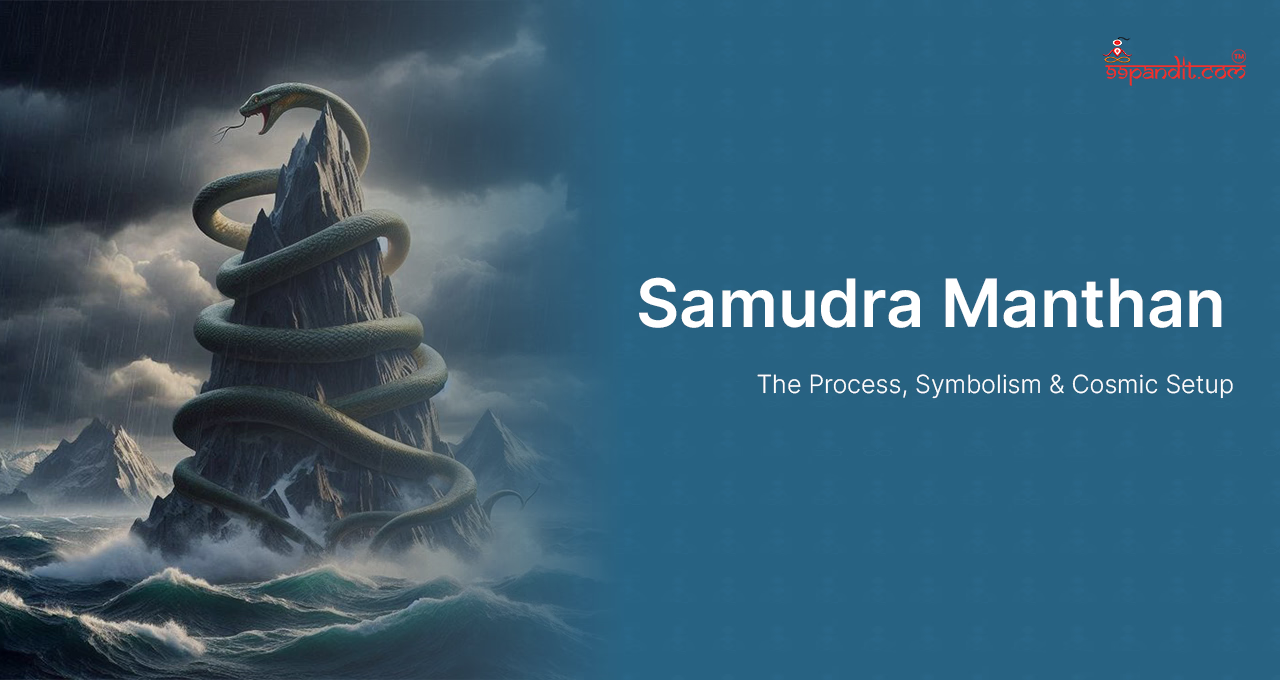
The tale is to be understood as a bundle of the virtues of cooperation, courage, and perseverance.
Deciding on the churning rod, they took Mount Mandara. It was extremely strong and heavy.
The ocean could not have been churned without it. The mountain was positioned right in the ocean and was the main support of the situation.
When the mountain began sinking, Vishnu transformed into a giant turtle, named Kurma Avatar. To help the mountain be stable, he was supporting it on his back.
With the help of Vishnu, the Devas and Asuras could pull the rope without the mountain falling.
For the divine rope, they selected the giant serpent Vasuki Naag. His power and length made him an ideal one for this great task.
The Devas held Vasuki’s tail, and the Asuras held the head. Both sides pulled the rope to churn the ocean.
The Devas held Vasuki’s tail, and the Asuras held his head. The head side was dangerous because poison fumes came out from Vasuki’s mouth.
These fumes could harm anyone. The Devas understood this risk, so they used their mind and chose the safer side, the tail.
The Asuras, in their pride and hurry, grabbed the head. This simple choice shows the wisdom of the Devas and how thinking carefully can keep us safe.
Even though they were enemies, the two parties, Devas and Asuras, worked together. Each had a role and followed the directions of Vishnu.
Their teamwork thrived on the churn they made and thus achieved success. This is a lesson that even adversaries can unite for a common cause.
While the churning was going on, killing poisonous fumes were released from Vasuki, referred to as Halahala.
The poison was extremely dangerous and would have obliterated the Earth. It indicates that the great works always have their share of difficulties and dangers.
After a long time of churning, the ocean opened again. This time, Dhanvantari came out. He looked bright and peaceful.
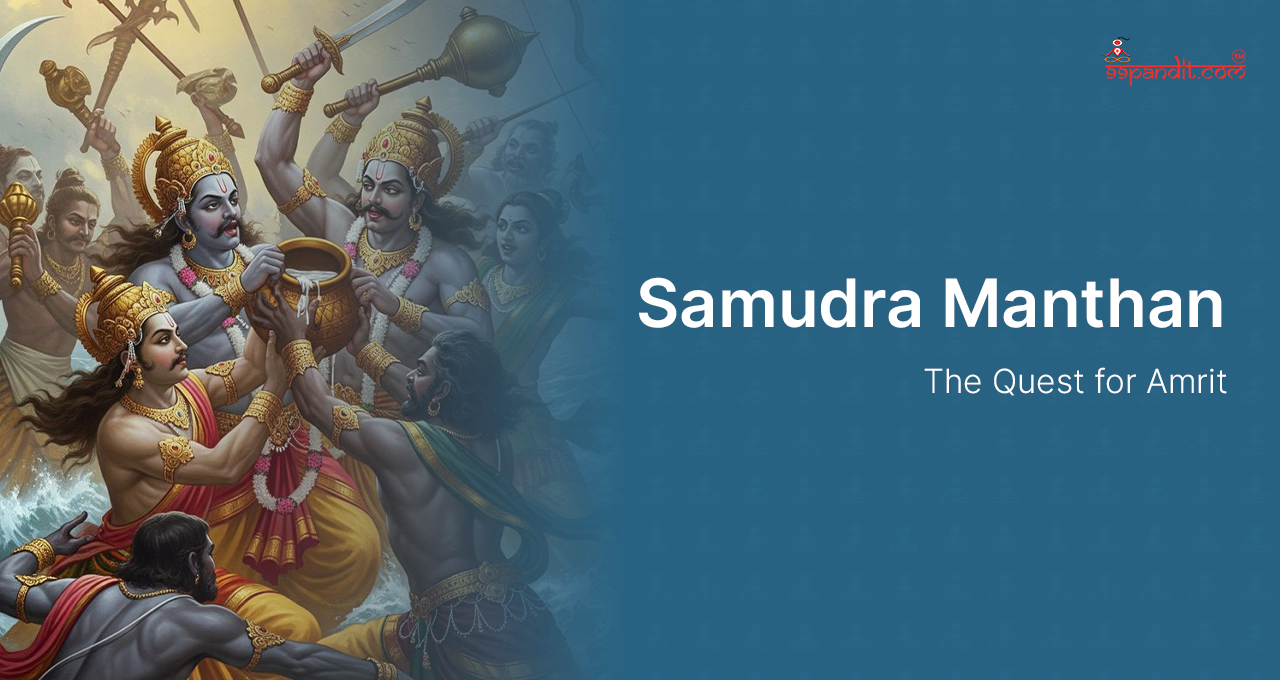
In his hands, he carried a shining pot full of Amrit. Everyone knew this was the most precious treasure. Amrit could give strength, good health, and immortality.
The Devas needed Amrit because they had lost their power after Indra’s curse. Without Amrit, they could not protect the universe.
The Asuras wanted Amrit to rule everything. They did not care about balance or dharma. They only wanted to win. This difference created a big fight between the sides.
To stop the fight, Vishnu changed into the form of Mohini. Mohini appeared calm, smart, and very beautiful. Both Devas and Asuras trusted her.
She assured them of a fair division of the Amrit. But her actual intention was to save the world and protect dharma. She was aware that the Asuras would use the nectar for evil purposes.
Mohini handed over the Amrit solely to the Devas. She diverted the attention of the Asuras with her charming looks.
The Devas took the amrit and thus became immortal. Their power was restored. The universe became safe again.
One Asura named Rahu attempted to deceive Mohini. Rahu sat with the Devas and secretly drank a drop of Amrit. Vishnu promptly noticed this and severed his head.
Atrocity, stealing, and cheating represent the three heads of Rahu, and the three legs of Ketu correspond with arrogance, attachments, and anger.
The mythology of Rahu and Ketu is the metaphorical representation of eclipses and the movement of shadows in the sky.
When the massive Samudra Manthan was performed, the very first thing that emerged from the sea was the terrifying Halahala poison.
It was so poisonous that even if the smallest drop were to fall somewhere, it would be the end of the entire universe.
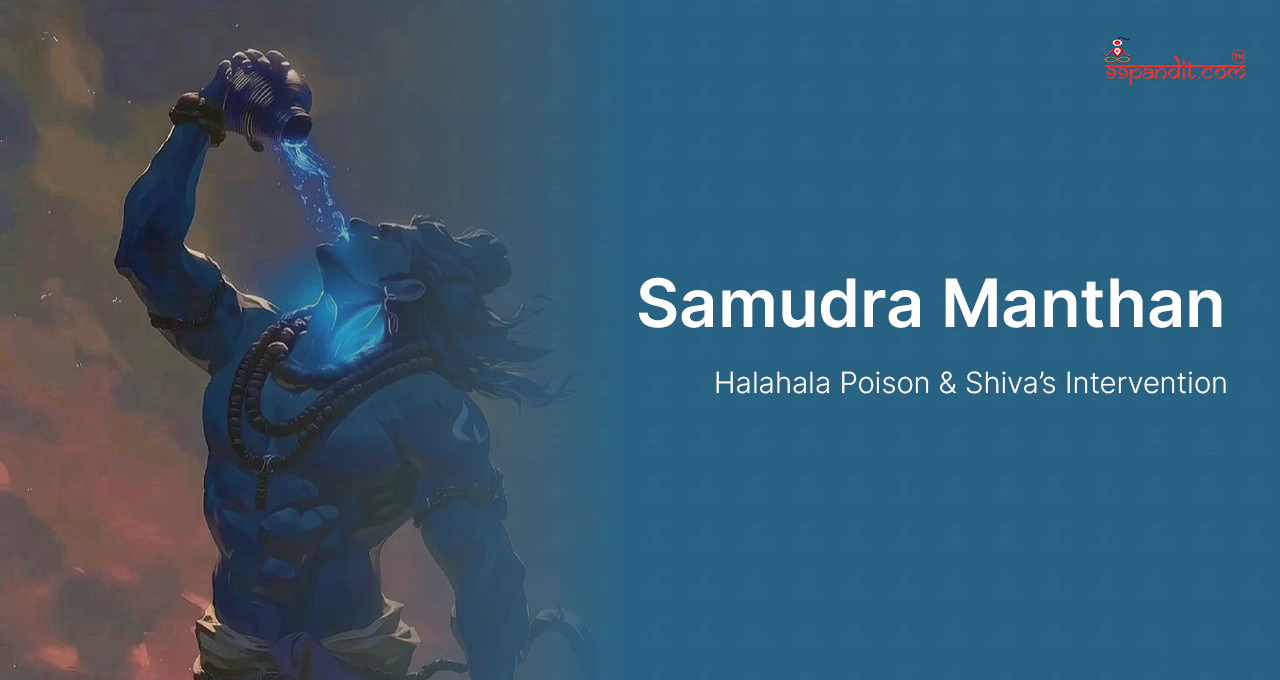
The entire air turned to a deadly one, the sun vanished, and all that lived, Devas, Asuras, animals, and humans, were seized with fright.
In this crisis, Lord Shiva stepped forward for lok-kalyan, the betterment of the world. He didn’t hesitate to take the Halahala poison with his own hands and drink it right away.
This was not an act of showing or getting a prize. Simply, it was done by Him to save the world.
The story of Shiva holding the poison in his throat and it turning his neck blue is the reason Lord Shiva is referred to as Neelkanth, the One with the Blue Throat.
The blue hue is a sign to everyone that he absorbed the pains of the world by himself to keep life safe.
Moreover, she was very important as well, and we can only assume that she helped, loved, and protected her husband.
She was holding his neck so tightly and ensuring that the poison didn’t go into his body. Her assistance, affection, and safety were the things that kept the balance in the centre of the chaos.
During the churning of the ocean of milk, a number of divine treasures, known in Sanskrit as Ratnas, were recovered from the sea.
These treasures were not the result of lucky draws. They came in a certain sequence. Each Ratna was an embodiment of some abstract idea.
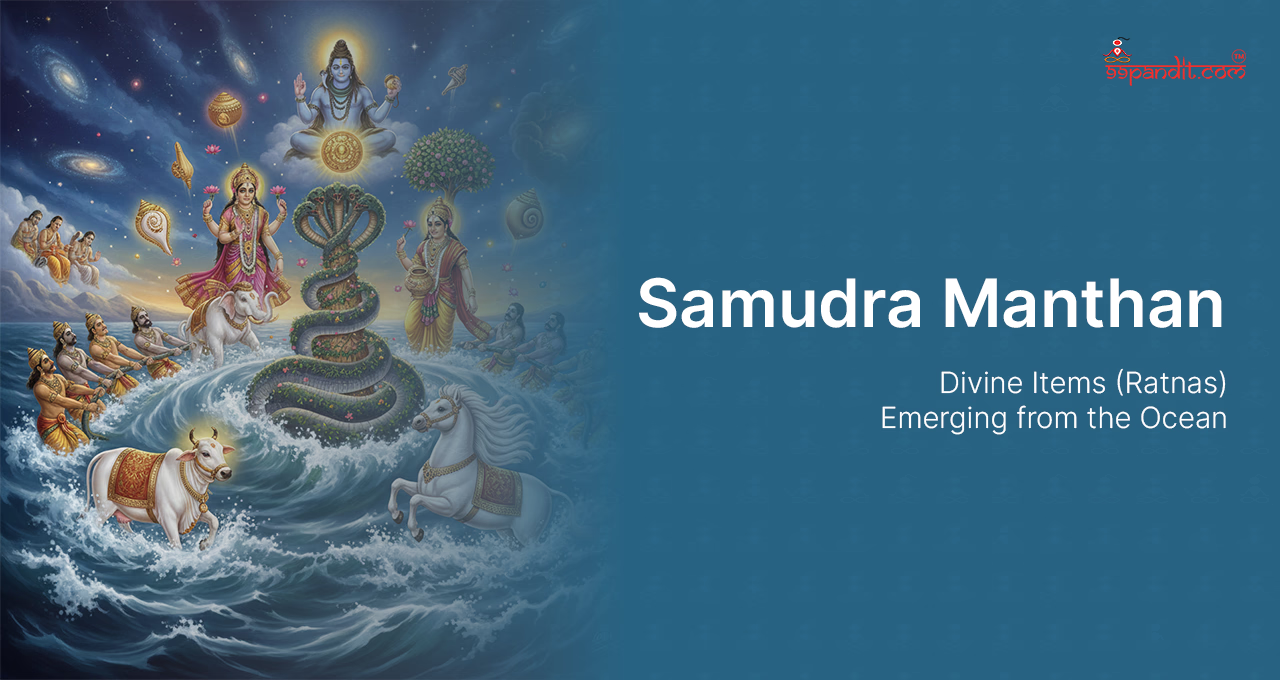
Some of them were indicating power. Some of them were showing off their beauty. Some of them were representing the universe’s laws of balance and duty.
The whole set was the universe’s various requirements. The most significant moment was the arrival of Laxmi.
Maa Laxmi appeared from the ocean, glittering with love and peace. She gave a thought and then chose Vishnu to be her life partner.
She selected him because he is the epitome of balance, protection, and dharma. This act was a demonstration that riches should be with wisdom and virtue.
There were many more Ratnas that appeared. Airavata , the white elephant, was a representation of might and regal authority. Uchhaishravas, the divine horse, was a symbol of speed and life.
Kaustubha, the gem closest to Vishnu’s chest, was a symbol of purity and celestial light. Each of those riches had a definite role in the universe.
Mother Ocean also gave rise to Varuni, the Goddess of delight and divine energy, and the Shankha, the holy conch that was the symbol of sound creation and awakening.
Those Ratnas were not only things. Each one was a model of a universal principle, for example, balance, prosperity, courage, purity, and harmony.
They were a collective reminder that the world requires various qualities in order to be complete and peaceful.
Samudra Manthan is a significant narrative carefully preserved in Hindu tradition. It imparts a lesson that astonishing outcomes call for patience, labour, and the right guidance.
The tale depicts that good and evil can arise together and how equilibrium is what sustains the universe’s safety.
This event changed the cosmic order by bringing about a system that rewarded wisdom and discipline.
Devas turned into the model of virtue, whereas Asuras were characters of pride. This distinction was the one to determine who got Amrit.
The story’s message is still relevant today; it teaches that we should consider our actions and collaborate even if the times are hard. The real power is in control of oneself and doing what is right.
Ultimately, Samudra Manthan provides an insight that the search for Amrit is actually a search for goodness, balance, and harmony in life.
Table Of Content
 Number.

Enter the OTP sent to
Chat with verified astrologers on 99Pandit and receive personalized guidance for every stage of life.

 Ontime Service
 Certified Pandit
 Transparency