Panchamukhi Hanuman Ji: Story & Significance of Five-Faced Form
Lord Hanuman is one of the most revered deities in the Hindu mythology. Panchamukhi Hanuman Ji is one of the…
 0%
0%
 Book Griha Pravesh Puja Online
Book Now
Book Griha Pravesh Puja Online
Book Now

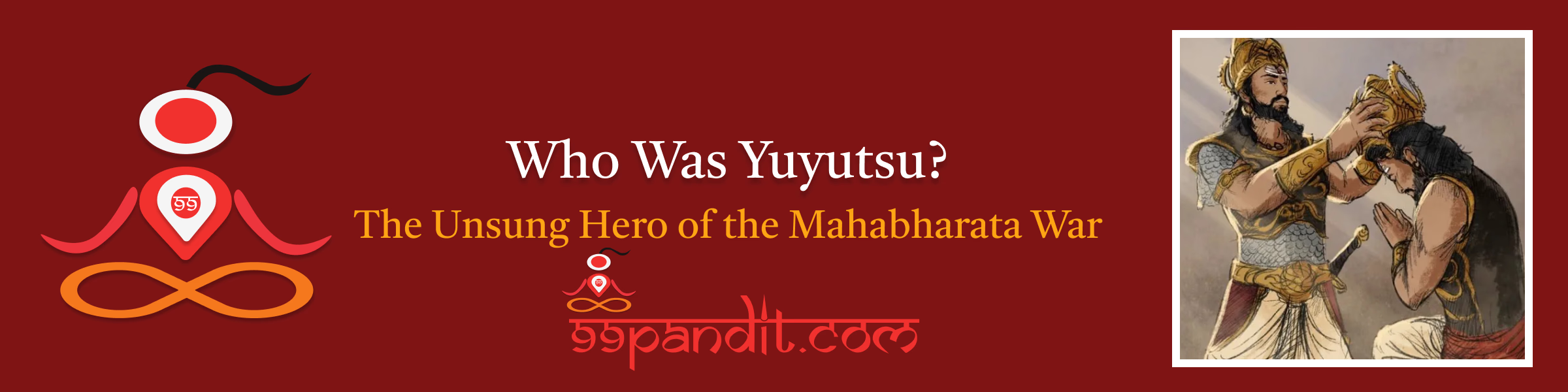


The Mahabharat is one of the popular and ancient epics, which is a treasure trove of powerful characters.
This is the story of a fight between two brothers: the Pandavas and the Kauravas. The large battle of the Mahabharat started for the sake of the kingdom and righteousness.
The strong characters of the Mahabharat are the five Pandava brothers named Yudhishthira, Bhima, Arjuna, Nakula, and Sahadeva. On the other side, the Kauravas, the hundred sons of Dhritarashtra.
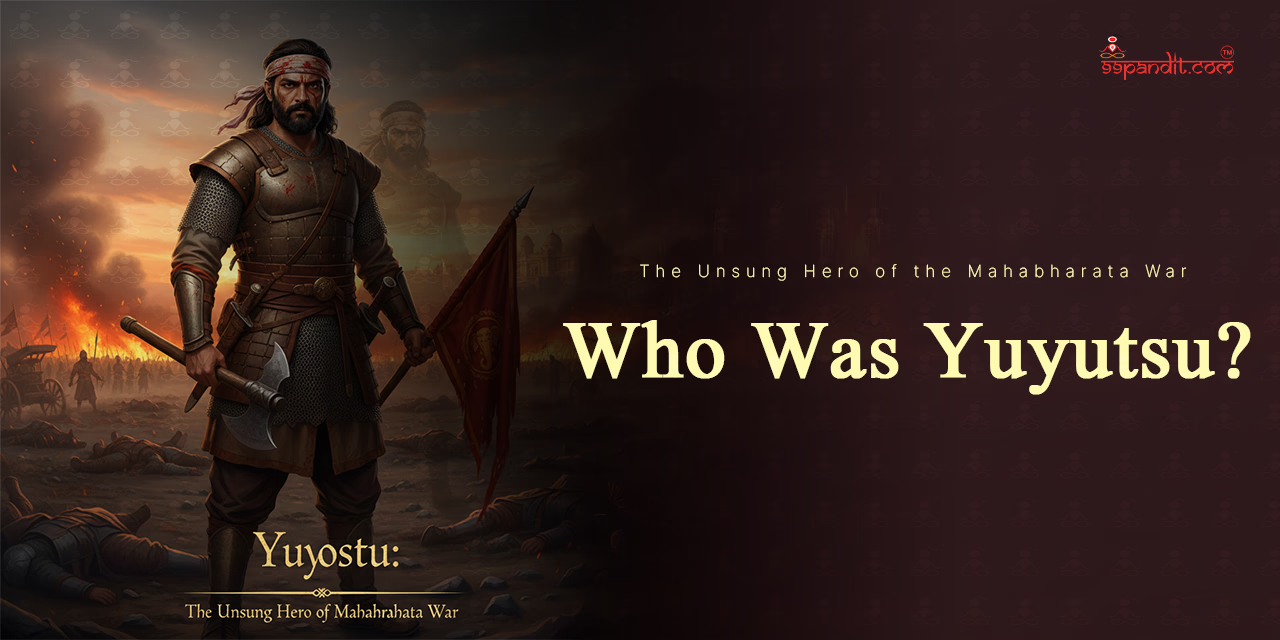
Among these heroes in the tale, there was a unique and compelling character in the Mahabharat, that is Yuyutsu.
He was born as the son of Dhritrashtra and a vaishya woman called Sughada. He was as old as Duryodhan and the eldest among all the ninety-nine Kauravas.
Indeed, being a Kaurav, he chose the path of dharma and became an important informer of the Pandavas. As is known, Yuyutsu represents righteousness, loyalty, and moral courage.
Thus, let’s dive into the life and legacy of Yuyutsu, describing his origins, key characteristics, and why he is known as the unsung hero of the Mahabharat.
Yuyutsu in the Mahabharata is known as the son of King Dhritrashtra and Sughada, who was a maid of Queen Gandhari. It makes him called a ‘dasiputra’, or ‘son of maid’, a status he had with the wise Vidur.
As Gandhari’s pregnancy with the Kauravas lasted for almost two years, this caused concern in the kingdom.
With the fear that she would not be able to deliver any children, her maid, Sughada, conceived a child at that time, ensuring the royal family had an heir.
Surprisingly, he was the same age as Duryodhan. The meaning of his name ‘Yuyutsu’ derives from ‘Yu’ means yuddha (fight), and ‘utsu’ means curious; it is termed as ‘one who is curious to battle.
His mother was believed to be from a vaishya varna, hence the epic battle refers to him as vaishyaputra.
Apart from his humble roots, he grew up in a royal conspiracy of Hastinapur, making his way of integrity.
There is no comparison between Yuyutsu and Vidhur, as he had striking parallels with Vidur, another important figure in the Mahabharat. Both are known as Dasiputra, born to a maid in the royal family.
But their honesty and loyalty lay not with blind loyalty to the Kauravas but with Yudhishthira, the elder Pandav. They followed him for his adherence to truth and justice.
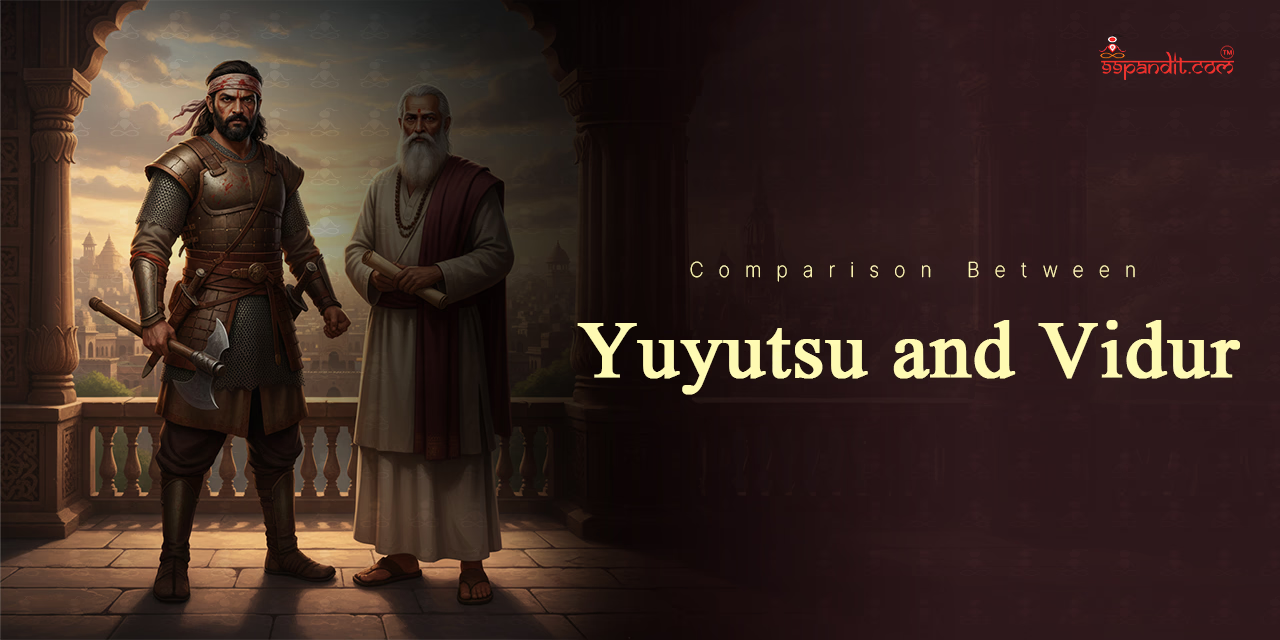
Being a follower of lord krishna, Yuyutsu and Vidur were recognized for their honesty and intelligence, and often acted as voices of reason in rough times.
The similarities between them show a recurring theme in the Mahabharat: true supremacy from character, not birth.
Like Vidur, Yuyutsu leads the family’s loyalties with knowledge, hence that even those on greed for power can impact the course of history.
As Yuyutsu had a supporting character in the epic Mahabharat, his duties were crucial. He admired elder Pandav Yudhishthir and regularly worked to protect the Pandavas from any harm.
One remembering time was when Yuyutsu informed Bhima about Duryodhan’s evil plan to poison him. He wanted to save Bhima’s life and prevent a big problem for the Pandavas.
When tensions increased toward the great battle, Yuyutsu made a strong choice. He decided to leave the Kaurava camp and joined hands with the Pandavas, catering himself to choose dharma over family duties.
He identified as a Maharathi (a skilled chariot fighter), fought bravely on the side of righteousness.
Similarly, he was the only son of Dhritarashtra who survived the devastating 18-day battle, proof of his strategic acumen and divine blessing.
In the Mahabharat, there were both Maharathis, in the Kurukshetra war, who were capable of fighting 720,000 warriors simultaneously. They are the best soldiers of the Kauravas and the Pandavas.
Among those, maharathis were Bhishma, Drona, Karna, Ashwatthama, Kripa, Shalya, and Jayadratha. On the Pandava side, they were Bhima, Arjun, Nakula, and Sahadeva.
Yuyutsu was a half-brother of the Kauravas. He also joined hands with the Pandavas during the Mahabharata War.
Those warriors were known for their immense strength, skill, and bravery and were involved to play an important role in the outcome of the war.
During the Kurukshetra war, Yudhisthir made a public announcement that if anyone wanted to switch sides could do so before the start of the battle.
It was the time when Yuyutsu made a strong decision to side with the Pandavas’ army. The decision solidified his character as a moral warrior who kept dharma over anything.
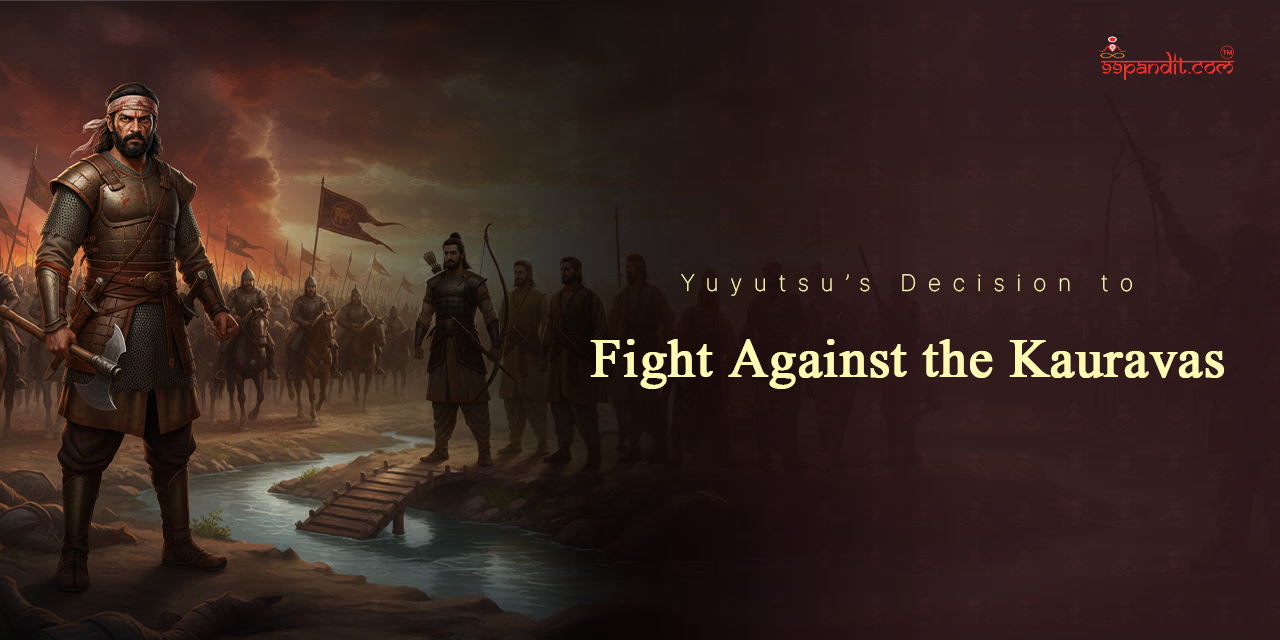
Being a warrior from the Pandavas, he proved to be a superior and honest fighter. He was known as ‘Atirathi’, able to fight thousands of people at a time. During the war, he had multiple notable encounters.
One of the most well-known encounters of Yuyutsu during the Kurukshetra War was with Kripacharya, who was the teacher of both the Kauravas and the Pandavas.
On the 7th day, he and Kripacharya fought, and Kripacharya wounded Yuyutsu. Yet, he survives the encounter and remains to fight on the side of the Pandavas.
Uluka was the son of Shakuni, who fought from the Kauravas’ side in the Mahabharata.
He fought against Uluka on the 16th day of the war. Yuyutsu is believed to have wounded Uluka but could not kill him as Uluka fled from the battle.
After the Mahabharat war, Yuyutsu’s wisdom remains to shine. With the kingdom in defeat and young Parikshit as a king, Yudhisthir assigned him the power of administration of the kingdom.
The role highlighted his reliability and dedication to stability during the delicate transition.
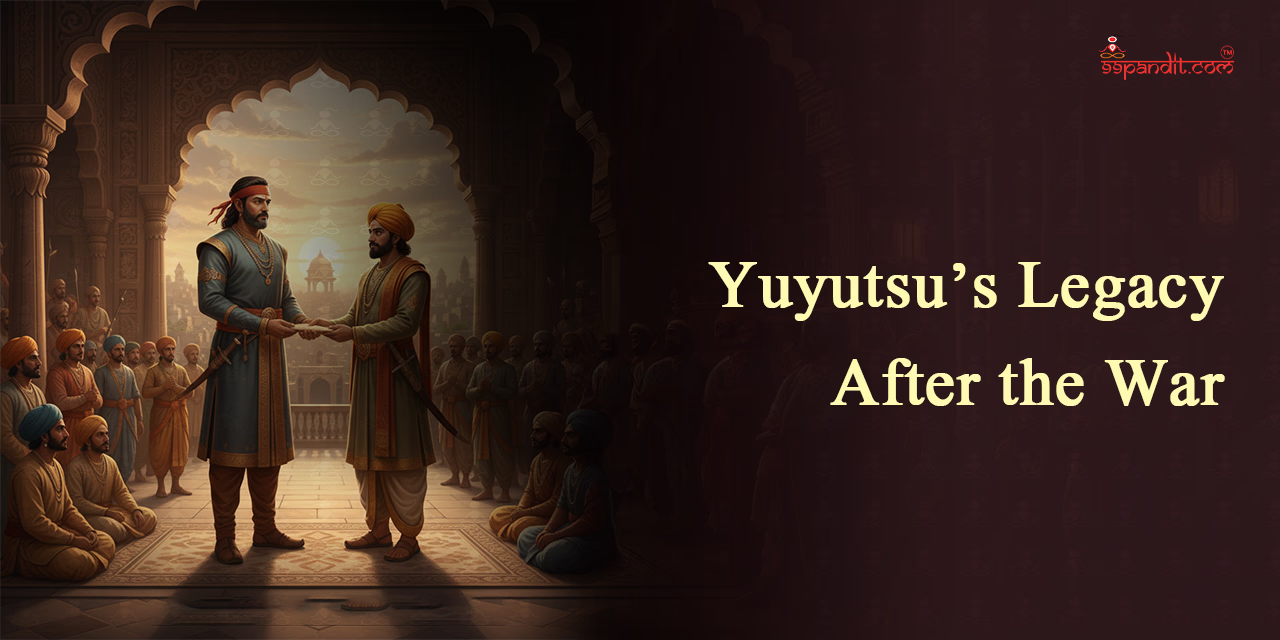
Yuyutsu is remembered now for his unwavering loyalty and righteousness in choosing the path of dharma over family.
In the epic explained by larger-than-life images, he is known as a symbol of moral clarity – proof that even a ‘minor’ character can signify the core values of dharma.
Both Yuyutsu and Vidur were recognized as the strong warriors of the Mahabharat and were aware of Duryodhan’s evil planning.
But what makes them different from each other? It was the decision of Vidur to stay loyal to his family, or Yuyutsu to fight on the Pandav side for the sake of righteousness.
A lot of people also praise Vidur (Vikarna) as he remained in the camp after knowing imminent defeat and death. He never left his brother; the Mahabharat beauty relies on the nuances of morality.
The death of Yuyutsu is not particularly described in the original epic Mahabharat, but other scripts also give some hints.
After the war, Gandhari could not bear her grief and anger, blaming the Pandavas for the death of her sons and other people in the battle for the kingdom.
She showed her desire to see the Pandavas, with the purpose of destroying them with her fiery glance.
Krishna, suspecting her true intentions, asked Sahadeva to clarify his doubts. After learning, he asked Yuyutsu to remove the blind from Gandhari’s eyes.
Yet, he did the same. Gandhari’s gaze turned him into ashes. Krishna and Vidur later scolded Gandhari to kill her only surviving son and informed her that if Yudhisthir were to die, the dharma would be lost forever.
They asked her to blind fold her eyes again, and a remorseful Gandhari followed the instructions.
Yuyutsu, like other warriors in mythology, took the tough decision but the right one, even when it led to their death, and set an example of a hero who obeyed his conscience.
Yuyutsu’s actions in the Mahabharata represent a choice for righteousness over family allegiance.
He recognized the evil deeds of his brothers. Therefore, he chose to fight on the side of the Pandavas. Many might consider him a traitor for this decision.
Unlike Vibhishana in the Ramayana, Yuyutsu did not simply leave his family. Instead, he actively joined his half-brothers to uphold dharma.
The case of Yuyutsu can be regarded as a lesson that one must never turn a blind eye to injustice and oppression, even to end the suffering of his/own family.
It is also presented that it is possible to reform and to forgive the mistakes of the past.
Yuyutsu can teach one that it is crucial to make unpopular and hard decisions when it is time to be on the right side.
Yuyutsu is a character with many facets in the Mahabharat as he decides to change his side and join the Pandavas on the other side.
He rescued the life of Bhima by telling the Pandavas that Duryodhana had planned to poison the water and also engaged in a battle as one of the eleven Maharathi at the Pandava camp.
Yuyutsu was often regarded as a traitor. However, his actions show the necessity of defending the good.
He proved that we must oppose injustice, even within our own circles. Yuyutsu survived the Great War.
His life serves as a reminder that redemption is always possible. Even after conflict, one can still hope for a better future.
The lessons we should all learn from Yuyutsu’s life:
The life of Yuyutsu, who was the only Kaurava who sided with the Pandavas and gave multiple profound lessons on integrity, dedication, and the nature of justice.
As he was not well-known, his story gives a powerful moral compass within the epic war. When he returned from the war, he explained everything to Vidura.
He also supported the Pandavas to take command and rule the kingdom. He also took care of his father, Dhrishrashtra.
When the Pandavas exile for heaven, they appointed him as the manager of the kingdom. He managed it and passed away peacefully.
In short, his life is a beacon of moral clarity that shows the true strength lies in moral courage and that knowing what is right is the highest duty, apart from personal cost.
Table Of Content
 Number.

Enter the OTP sent to
Chat with verified astrologers on 99Pandit and receive personalized guidance for every stage of life.


 Ontime Service
 Certified Pandit
 Transparency