

Ganga Nadi: जाने गंगा नदी की उत्पत्ति, इतिहास, गंगा आरती एवं सम्पूर्ण जानकारी
गंगा नदी भारत की सबसे पवित्र और सबसे प्रसिद्ध नदी है। हिन्दू धर्म में इसे माता और देवी का दर्जा…
 0%
0%
 Book Griha Pravesh Puja Online
Book Now
Book Griha Pravesh Puja Online
Book Now




108 Names of Lord Kuber: In Hindu scriptures, Lord Kuber is considered the one who manages the divine Treasury of the Gods and is the chief of the northern direction.
With the power to rule wealth, plenty, and material luxuriance, He is the God who gets the most attention from the crowd of seekers for financial security and development.
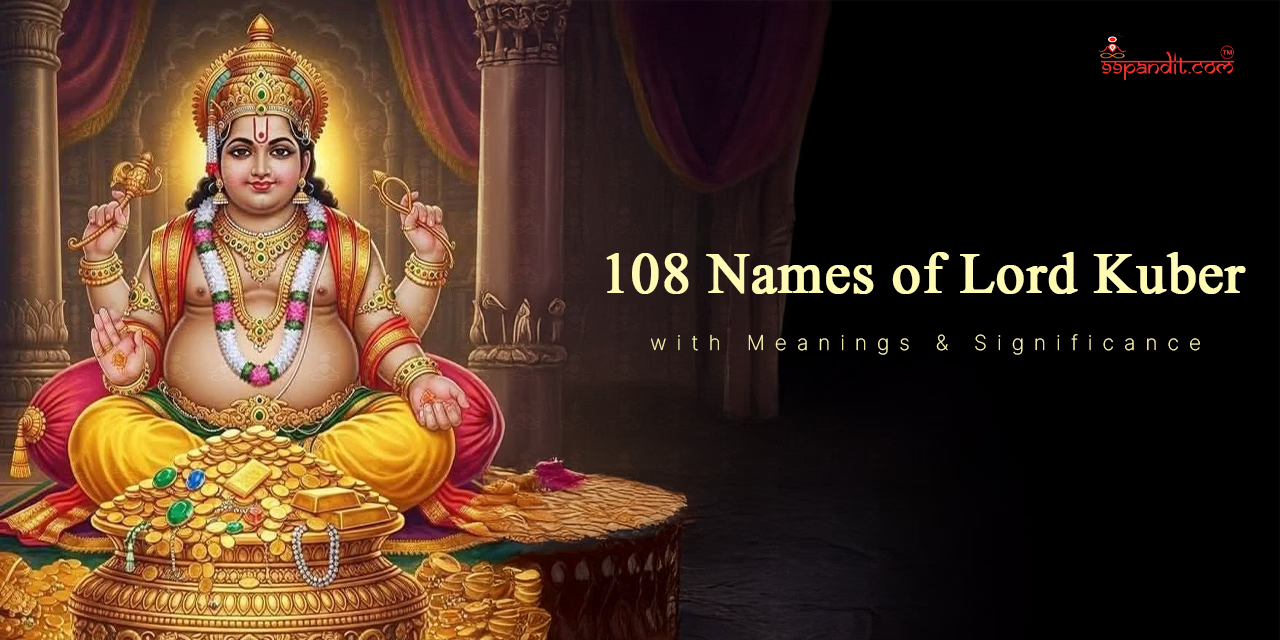
Puranas and other such texts portray Him as the one who keeps the world in balance by giving resources repositorily and with sagacity beyond human.
Being the God of Wealth, Lord Kuber is invoked to bring in a life that is full of opportunities, success, and smooth and continuous growth.
To find out about vibrant names and immense cultural and spiritual meaning, as every name signifies a unique blessing, divine grace, goodwill, sanctity, or growth.
As of now, there is a massive increase in people’s curiosity about the 108 Names of Lord Kuber.
Devotees wish to get spiritually more involved, decode the meanings of the divine names, and invite those changes in their lives that are positive and come naturally.
| S.No. | Names | Meaning |
| 1. | Kuber (कुबेर) | God of Wealth |
| 2. | Dhanada (धनद) | Wealth Giver |
| 3. | Shrimate (श्रीमते) | Rich & Blessed |
| 4. | Yakshesha (यक्षेश) | Lord of Yakshas |
| 5. | Guhyakeshvara (गुह्यकेश्वर) | Lord of Hidden Treasures |
| 6. | Nidhisha (निधीश) | Master of Riches |
| 7. | Shankara-Sakha (शङ्कर-सखा) | Friend Of Shiva |
| 8. | Mahalakshmi-Nivasabhu (महालक्ष्मी-निवासभुव) | Home of Mahalakshmi’s Grace |
| 9. | Mahapadma-Nidhisha (महापद्म-निधीश) | Keeper of the great Padma Treasure |
| 10. | Purna (पूर्ण) | Complete One |
| 11. | Padma-Nidhishvara (पद्म-निधीश्वर) | Lord of Padma Treasure |
| 12. | Shankhya-Nidhi-Natha (शङ्ख्य-निधि-नाथ) | Lord of ConchTreasure |
| 13. | Makarakhya-Nidhi-Priya (मकराख्य-निधि-प्रिय) | Loved by the Makara Treasure |
| 14. | Sukhasampati-Nidhisha (सुखसम्पत्ति-निधीश) | Lord of Joy and Wealth |
| 15. | Mukunda-Nidhi-Nayaka (मुकुन्द-निधि-नायक) | Chief of Mukunda Treasure |
| 16. | Kundakya-Nidhi-Natha (कुन्दाक्य-निधि-नाथ) | Lord of the Kundaka Treasure |
| 17. | Nila-Nitya-Adhipa (नील-नित्य-अधिप) | Eternal Blue-realm Ruler |
| 18. | Maha (मह) | Great One |
| 19. | Varan-Nitya-Adhipa (वरन्-नित्य-अधिप) | Supreme Eternal Ruler |
| 20. | Pujya (पूज्य) | Respect-Worthy |
| 21. | Lakshmi-Samrajya-Dayaka (लक्ष्मी-साम्राज्य-दायक) | Giver of Lakshmi’s Kingdom |
| 22. | Ilapila-Pati (इलपिला-पति) | Lord of Ilapila |
| 23. | Koshadhisha (कोशाधीश) | Treasury Lord |
| 24. | Kulochita (कुलोचित) | Honoured by Good Families |
| 25. | Ashvarudha (अश्वारूढ) | Riding a Horse |
| 26. | Vishva-Vandya (विश्व-वन्द्य) | Respected by All |
| 27. | Visheshajna (विशेषज्ञ) | Expert One |
| 28. | Visharada (विशारद) | Skilled & Wise |
| 29. | Nalakubara-Natha (नलकूबर-नाथ) | Lord of Nalakubara |
| 30. | Manigriva-Pitri (मणिग्रीव-पितृ) | Father of Manigriva |
| 31. | Gudhamantra (गूढमन्त्र) | Knower of Secret Mantras |
| 32. | Vaishravana (वैश्रवण) | Son of Vishrava |
| 33. | Chitralekha-Manah-Priya (चित्रलेखा-मनः-प्रिय) | Loved by Chitralekha |
| 34. | Ekapinaka (एकपिनाक) | Holder of a Single Bow |
| 35. | Alakadhisha (अलकाधीश) | Lord of Alaka City |
| 36. | Paulastya (पौलस्त्य) | Born in Pulastya’s Lineage |
| 37. | Naravahana (नरवाहन) | One who Moves with Humans |
| 38. | Kailasa-Shaila-Nilaya (कैलास-शैल-निलय) | Resident of Kailasa |
| 39. | Rajyada (राज्यद) | Giver of Kingdoms |
| 40. | Ravana-Agraja (रावण-अग्रज) | Ravana’s Elder Brother |
| 41. | Chitra-Chaitra-Ratha (चित्र-चैत्र-रथ) | Rider of a Magical Chariot |
| 42. | Udyana-Vihara (उद्यान-विहार) | Garden Wanderer |
| 43. | Vihara-Sukuthuhala (विहार-सुकुथूहल) | Joyful Traveler |
| 44. | Mahotsaha (महोत्सह) | Very Energetic |
| 45. | Mahaprajna (महाप्राज्ञ) | Highly Intelligent |
| 46. | Sada-Pushpaka-Vahana (सदापुष्पक-वाहन) | Always on the Pushpak Vimana |
| 47. | Sarvabhauma (सार्वभौम) | Universal King |
| 48. | Anganatha (अङ्गनाथ) | Lord of the Body |
| 49. | Soma (सोम) | Calm One |
| 50. | Saumya-Dikeshvara (सौम्यदिकेश्वर) | Lord of Gentle Direction |
| 51. | Punyatma (पुण्यात्मा) | Pure Soul |
| 52. | Puruhuta-Shri (पुरूहुत-श्री) | Blessed by Gods |
| 53. | Sarvapunya-Janesvara (सर्वपुण्य-जन-ईश्वर) | Lord of Good People |
| 54. | Nitya-Kirti (नित्य-कीर्ति) | Ever Famous |
| 55. | Nidhi-Vetra (निधि-वेत्र) | Holder of Treasure Staff |
| 56. | Lanka-Praktana-Nayaka (लंका-प्राक्तन-नायक) | Former Ruler of Lanka |
| 57. | Yakshini-Vrita (यक्षिणी-वृत) | Surrounded by Yakshinis |
| 58. | Yaksha (यक्ष) | Wealth Spirit |
| 59. | Parama-Shanta-Atma (परम-शान्त-आत्मा) | Deeply Peaceful |
| 60. | Yaksha-Raja (यक्ष-राज) | King of Yakashas |
| 61. | Yakshini-Hridaya (यक्षिणी-हृदय) | Loved by Yakshinis |
| 62. | Kinnara-Ishvara (किन्नर-ईश्वर) | Lord of Kinnaras |
| 63. | Kimpurusha-Natha (किंपुरुष-नाथ) | Lord of Kimpurushas |
| 64. | Natha (नाथ) | Protector |
| 65. | Khatka-Ayudha (खट्क-आयुध) | Weapon Holder |
| 66. | Vashi (वशी) | Controller |
| 67. | Ishana-Daksha-Parshvastha (ईशान-दक्ष-पार्श्वस्थ) | Stading Beside Ishana & Daksha |
| 68. | Vayuvaya-Samasraya (वायुवाय-समाश्रय) | Supported by Wind |
| 69. | Dharma-Marga-Nirata (धर्म-मार्ग-निरत) | Dharma-Following |
| 70. | Dharma-Sammukha-Samsthita (धर्म-सम्मुख-संस्थित) | Standing Firm in Dharma |
| 71. | Nityeshvara (नित्येश्वर) | Eternal God |
| 72. | Dhanadhyaksha (धनाध्यक्ष) | Wealth Supervisor |
| 73. | Ashtalakshmi-Ashritalaya (अष्टलक्ष्मी-आश्रितालय) | Home of Ashta Lakshmi |
| 74. | Manushya-Dharmanya (मनुष्य-धर्मण्य) | Protector of Human Dharma |
| 75. | Sakrita (सकृत) | Forever Kind |
| 76. | Kosha-Lakshmi-Samashrita (कोष-लक्ष्मी-समाश्रित) | Blessed by Lakshmi of the Treasury |
| 77. | Dhanalakshmi-Nityavasa (धनलक्ष्मी-नित्यवास) | Home of Dhanalakshmi |
| 78. | Dhanya-Lakshmi-Nivasa (धान्यलक्ष्मी-निवास) | Home of Dhanya Lakshmi |
| 79. | Ashta-Lakshmi-Sadavasaya (अष्टलक्ष्मी-सदावास) | Always with Ashta Lakshmi |
| 80. | Gaja-Lakshmi-Sthiralaya (गजलक्ष्मी-स्थिरालय) | Home of Gaja Lakshmi |
| 81. | Rajya-Lakshmi-Janma-Geha (राज्यलक्ष्मी-जन्मगेह) | House of Rajya Lakshmi |
| 82. | Dhairya-Lakshmi-Kripashraya (धैर्यलक्ष्मी-कृपाश्रय) | Blessed by Dhairya Lakshmi |
| 83. | Akhanda-Aishvarya-Samyukta (अखण्ड-ऐश्वर्य-संयुक्त) | Fully Wealthy |
| 84. | Nityananda (नित्यानन्द) | Ever-Blissful |
| 85. | Sukhashraya (सुखाश्रय) | Giver of Comfort |
| 86. | Nityatripta (नित्यतृप्त) | Always Satisfied |
| 87. | Nidhittara (निधित्तर) | Best among Treasure-Keepers |
| 88. | Nirasha (निराश) | Without Desires |
| 89. | Nirupadrava (निरुपद्रव) | Without Problems |
| 90. | Nityakama (नित्यकामी) | Always Fulfilling Wishes |
| 91. | Nirakanksha (निराकाङ्क्ष) | Expectation-Free |
| 92. | Nirupadhika-Vasabhu (निरूपाधिक-वासभुव) | Unlimited Abode |
| 93. | Shanta (शान्त) | Peaceful |
| 94. | Sarvagunopeta (सर्वगुणोपेत) | Full of Good Qualities |
| 95. | Sarvajna (सर्वज्ञ) | All-Knowing |
| 96. | Sarva-Sammata (सर्व-सम्मत) | Accepted by all |
| 97. | Sarvanikaruna-Patra (सर्वाणि-करुणा-पात्र) | Filled with Compassion |
| 98. | Sadananda-Kripalaya (सदानन्द-कृपालय) | Always Joyful & Kind |
| 99. | Gandharva-Kula-Samsevya (गन्धर्वकुल-संसेव्य) | Served by Gandharvas |
| 100. | Saugandhika-Kusuma-Priya (सौगन्धिक-कुसुम-प्रिय) | Lover of Fragrant Flowers |
| 101. | Svarna-Nagari-Vasa (स्वर्ण-नगरी-वास) | Living in the Golden City |
| 102. | Nidhi-Peetha-Samastha (निधिपीठ-समस्थित) | Seated on the Treasure Throne |
| 103. | Mahameru-Uttarastha (महामेरु-उत्तरस्थ) | Living North of Mount Meru |
| 104. | Maharshi-Gana-Samstuta (महर्षिगण-संस्तुत) | Praised by Sages |
| 105. | Tushta (तुष्ट) | Satisfied |
| 106. | Shurpanaka-Jyeshtha (शूर्पणक-ज्येष्ठ) | Elder of Shurpanakha |
| 107. | Shiva-Puja-Rata (शिव-पूजारत) | Devoted to Shiva |
| 108. | Anagha (अनघ) | Pure and Sinless |
Chanting the 108 Names of Lord Kuber attracts material prosperity to the devotees – it also helps them to have good thoughts and develop their spiritual discipline.
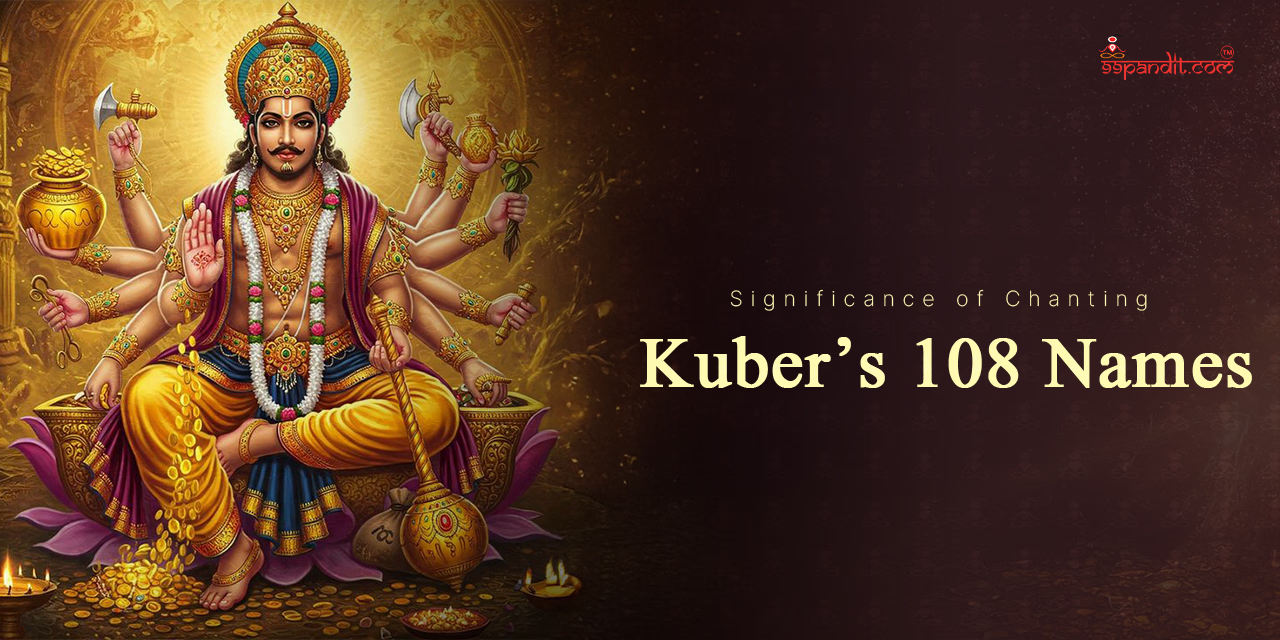
Each name is a unique chant that, when chanted, attracts to us abundance, purity of mind, and inner peace.
1. Benefits of Chanting 108 Names of Lord Kuber Regularly:
2. Influence on Positivity, Prosperity, and Mindset:
3. How Chanting Purifies Thoughts and Intentions:
4. Why 108 Is Considered a Sacred Number:
The legend of the 108 Names of Lord Kuber is his time as the God of Wealth by a long shot. Kuber, a son of Sage Vishrava, was not bred or brought up to have wealth or be of the royal lineage.
He lived a pretty decent life, which no one really noticed, while his half-brother Ravana was gaining strength and fame. What Kuber really wanted was not material wealth but rather a divine purpose.
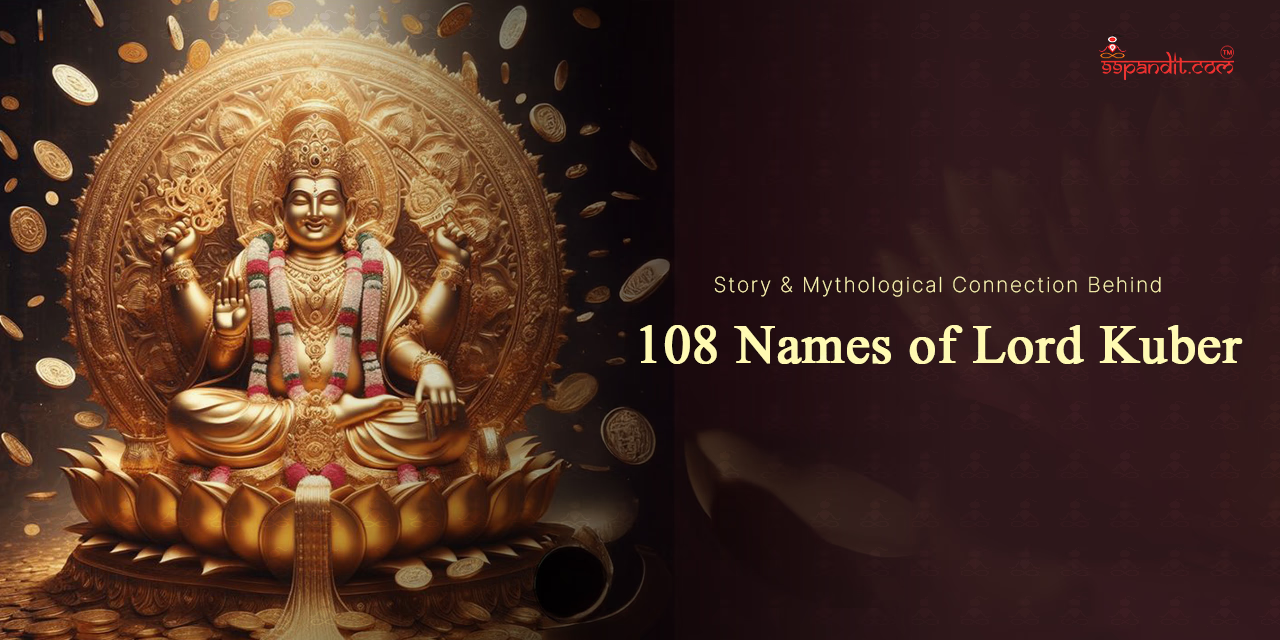
To get it, he disconnected himself from the world and went to the Himalayas, where he meditated for an uncountable number of years. Even the gods themselves were amazed by the purity of his.
At last, Lord Shiva came to see him with his universal energy. Pretty much on top of that, Shiva changed Kuber’s destiny by the wave of his hand.
He gave Kuber the title of the Lord of Wealth, made him live in Alakapuri, gave him the Ashta Nidhis, and crowned him the chief of the Yakshas.
Kuber’s 108 names are a reflection of the spiritual of Kuber, that is, his faith, learning, morals, and above all, the riches which he was made a custodian.
1. A number of the names refer to Kuber’s activities as the protector of the treasures in the eight directions (Ashta Nidhis), which stand for the wealth of the entire universe.
2. In different cases, the names go as far as tracing Kuber to Lord Shiva, hence reinforcing the idea of Kuber as the treasurer who was given by Shiva and to whom he trusted most among his followers.
3. The words Yakshesha and Yaksha-Raja signify his domination of the Yakshas, the divine beings that are the guardians of the hidden treasures.
4. The names, which speak about Kuber’s association with Mount Kailasa, imply that he was very close to (or with) Shiva at his divine abode.
5. Numerous names signify Kuber’s sovereignty over Alakapuri, a place which was believed to be laden with gold, precious stones, and heavenly prosperity.
6. The names linking Kuber to Ashta Lakshmi suggest the association of Kuber with different forms of Goddess Lakshmi – wealth, courage, cereals, prosperity, and kingship.
7. Names illustrating characteristics like being pure, compassionate, and having wisdom originate from the idea that Kuber is the one who manages riches fairly and according to Dharma, not with greed.
8. Some of the names reflect the Pushpaka Vimana, a heavenly plane given by Lord Shiva to Kuber before Ravana took it by force.
The 108 Names of Lord Kuber together disclose his multidimensional persona as a king, protector, leader, devotee, giver of wealth, and the embodiment of divine abundance.
One of the most effective things you can do to draw in more wealth through your spiritual practice is to recite the 108 Names of Lord Kuber.
The ritual itself is just a minor part of the whole spiritual exercise. The main part is when your mind becomes in sync with the qualities of glory, stability, and a superior purpose that come from above.
Anybody who needs to have a good equilibrium between worldly blessings and his/her inner self will be able to take advantage of this chanting.
The waves emitted from Lord Kuber not only attract wealth but also bring wisdom, mental discipline, and a good attitude, traits which are beneficial not only to your personal growth but also to your financial growth.
Here are those who benefit the most:
1. Individuals Seeking Financial Stability:
People who are in situations where they do not have enough money or have debts, and whose sources of income are not stable, may perform such chanting as a way to attract stability, opportunities, and make good financial decisions.
2. Students and Working Professionals:
Students become more focused and confident, whereas professionals get clarity, productivity, and career growth.
3. Business Owners Seeking Growth:
Through chanting, entrepreneurs, shop owners, and startups can attain the goals of abundance, profitability, having a loyal customer base, and being financially secure against any unforeseen circumstance.
4. Spiritual Seekers:
The practice of chanting Kuber’s 108 Names helps those who are on the path of spirituality to attain inner peace, pureness of the mind, and connect with the higher spiritual plane. The divine energy of Kuber brings them calmness and detachment.
Invocation of the 108 Names of Lord Kuber is an effective way of not only attracting material wealth but also one’s inner power.
These sacred names are not only praises; they have a powerful root in the supernatural world, each one representing a different aspect of Lord Kuber, like protection, wisdom, purity, self-control, and divine grace.
As one, they are a complete spiritual map leading a person to a balanced way of life. If the chanting is done with devotion, the names’ vibration results in the awakening of the inner wealth, clear-mindedness, thankfulness, self-assurance, and the ability to see the already existing opportunities around us.
The ceremony, actually, is the source of the qualities mentioned above and also peace, self-control, and spiritual stability.
Regular chanting, even for a very short time, has the power to bring a great change in the household and the heart.
When a person embraces these 108 names with all his/her heart, they merge with the divine blessings of Kuber, and therefore, prosperity, positivity, and a life of higher value come at the door.
Table Of Content