
 Temples
Ahobilam Narasimha Swamy Temple: Timings, History & Distance
Did a divine pillar shatter in a wild forest? Yes, it did. Ahobilam sits deep inside the Nallamala…
calendar_today Jul 13, 2026
 Book Griha Pravesh Puja Online Book Now
Shree Somnath Jyotirlinga Temple is one of the 12 Jyotirlinga; the Somnath Temple is the main attraction of Gujarat.
The history of the Somnath temple is rich, and destroyed and reconstructed multiple times in earlier times.
Lord Shiva dedicated the temple, making it one of the most popular pilgrimage sites in India. The temple is the first Jyotirlinga among the 12 Jyotirlinga shrines.
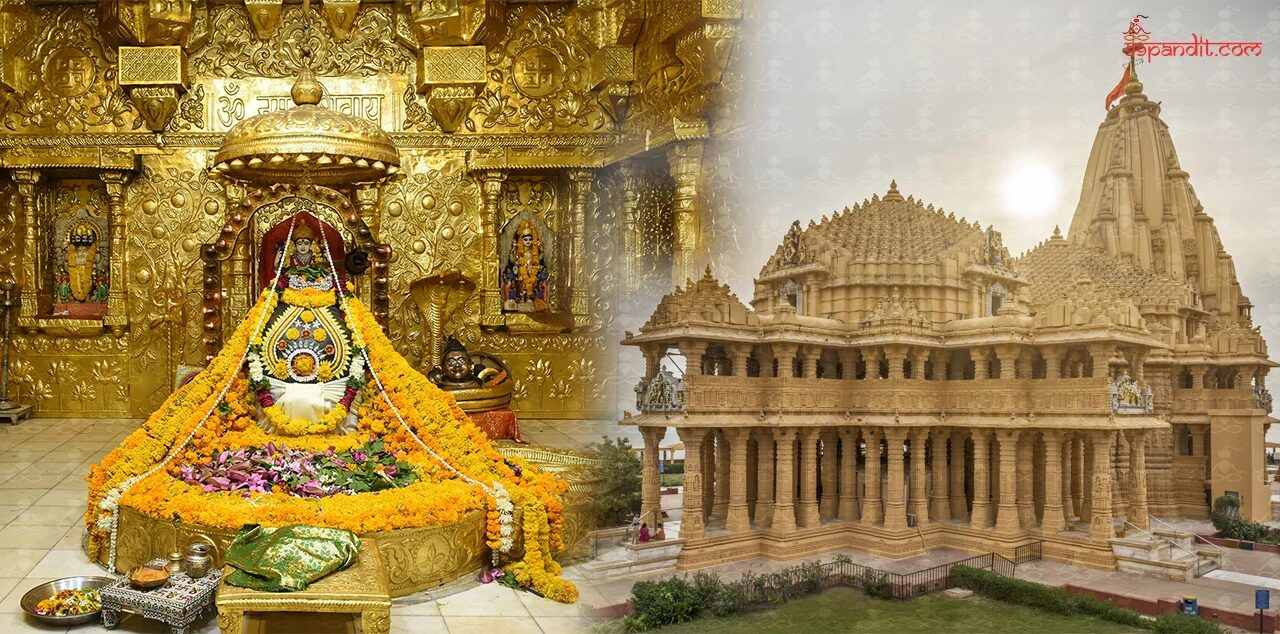
The Somnath temple in Gujarat is an eye-catching site for visitors and devotees annually. Somnath temple timings are mentioned on the internet, which we will also discuss in this blog.
In this temple, pandits perform puja and rituals to honour Lord Shiva regularly. Online booking for darshan and puja is easily accessible. The Somnath Jyotirlinga temple observes dress modestly.
Shree Somnath Jyotirlinga temple opens daily at 6:00 AM. The first Mangala aarti starts at 7:00 AM.
The darshan timing for the temple begins at 6:00 am and lasts till 9:30 pm. The average time of darshan is 30 min to 1 hour.
Depending on the rush, waiting time might increase; hence, please visit the temple on weekdays. On weekdays, the crowd is less, and darshan can be done easily.
Darshan Timings:
Aarti Timings:
The light and sound show at the temple begins at 8:00 pm and finishes at 9:00 pm. The showtime is performed daily in the temple.
The time might vary depending on the occasion; thus, please check the updated time for darshan and show it on their official website.
In Hinduism, there are twelve temples dedicated to Shiva called Jyotirlingas. The Someshwar Mahadev Temple is one of these Jyotirlingas.
Known more popularly as Somnath Temple, it is one of India’s oldest and most revered pilgrimage sites. The Somnath Temple is located in Gujarat’s Prabhas Kshetra, close to Veraval.
This temple contributes to India’s cultural legacy and is mentioned in the revered Hindu text known as the “Rig Veda.”
“The protector of the Moon” is what the name “Somnath” means. For those who practice Hinduism, it is a highly sacred location.
One of the most revered gods in Hinduism, Lord Shiva, is the object of this ancient temple. The “Jyotirlinga,” a stone at the temple, is a representation of Lord Shiva.
People think that this stone has divine light. In Hindu mythology, the temple is associated with Lord Shiva, who is said to have manifested here in three distinct guises: Mahesh, Vishnu, and Brahma.
This temple, which is teeming with spiritual energy and tales, is where people flock to worship these sacred manifestations of Lord Shiva.
This temple is a representation of India’s rich history and culture in addition to being a site of worship.
Despite numerous obstacles, such as destruction in the past, it has consistently been rebuilt, demonstrating India’s powerful spiritual force.
This Shiva temple attracts visitors from all around the world who come to pray, relax, discover inner peace, and take in the stunning architecture.
Getting the blessing of Lord Shiva at the Somnath temple is easy when you perform these Popular Pujas at Somnath.
Rudrabhishek is one of the most powerful pujas performed at the Somnath Jyotirlinga temple.
In this puja, the Shivling is bathed with holy items like milk, honey, ghee, curd, and sacred Ganga water. Priests chant special mantras from the Vedas while offering these items.
Why Perform Rudrabhishek:
Kaal Sarp Dosh happens when all planets in your birth chart fall between Rahu and Ketu (snake head and tail). This dosh can make your life very difficult even when you work hard.
Why Perform Kaal Sarp Dosh Puja:
Rin Mukti means freedom from debt. This puja is for people who have money problems, loans that don’t get cleared, or family debts from ancestors.
Why Perform Rin Mukti Puja:
All nine planets (Navagraha) affect our lives. When planets are in bad positions, life becomes difficult. This puja balances all planetary energies.
Why Perform Navagraha Shanti Puja:
The history of the Shree Somnath Jyotirlinga temple is mesmerizing as this is motivating.
Recognizing Somnath Jyotirlinga temple comes as a testament to the unshakable devotion and resilience of the devotees for centuries.
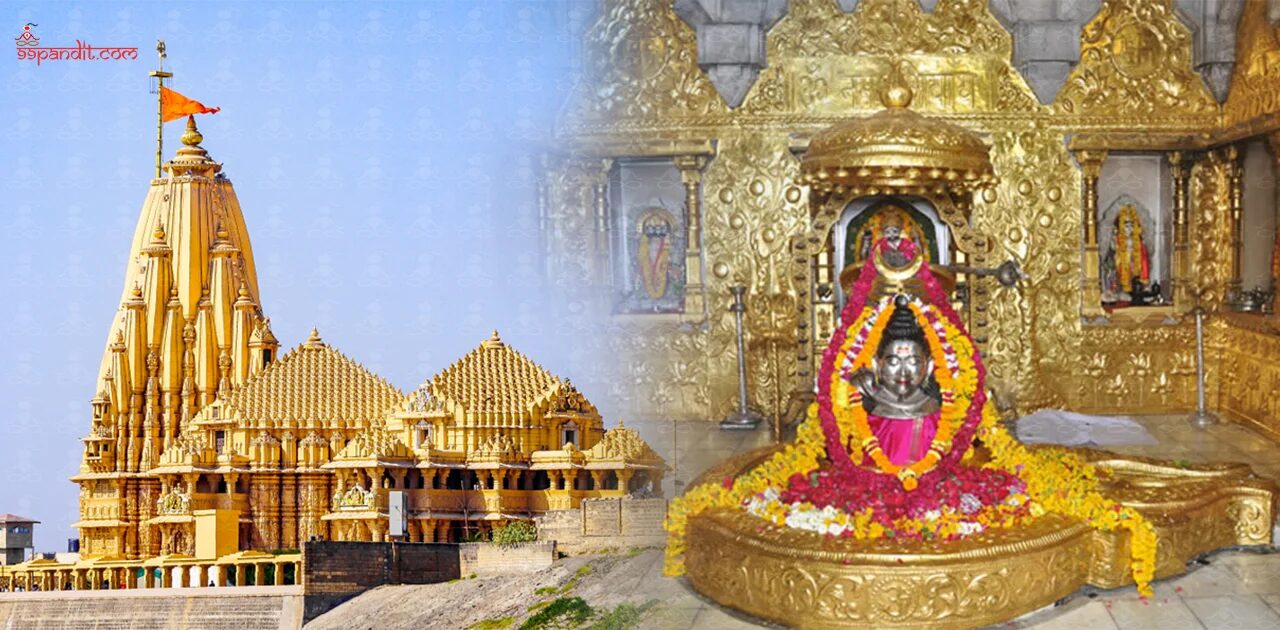
This is not just an infrastructure of appeasing; this is an echoing story of faith, rebirth, and destruction.
According to legend, the moon deity initially constructed this temple in gold, Ravana in silver, and Lord Krishna in wood. Bhimdeva completed the final reconstruction in stone.
According to the chronicles, the temple was repeatedly destroyed by invaders yet continued to rise, demonstrating the enduring significance of Lord Shiva, its presiding god.
I’ve discovered that the Somnath Jyotirlinga remained a magnet for pilgrims, despite these restorations.
The temple suffered severe destruction during invasions in the eleventh century. Like the stories of its divine patron, it remained strong despite this.
The most recent reconstruction operations in 1951 produced the current structure, guaranteeing that the spiritual drama will be witnessed by future generations.
The Somnath Temple has endured as a symbol of spirituality and optimism despite its turbulent past.
It is a living example of India’s cultural legacy and a symbol of faith triumphing over hardship.
Earlier, there was a story of Chandra, the moon god, who had several wives. He loved one of them, named Rohini, compared to the others, which upset her father, Prajapati.
He wanted the god Chandra to love all his daughters equally, but he did not listen. This makes Prajapati angry and curses Chandra, and due to this, Chandra loses its brightness.
When the moonlight was gone, the world became quite dark. The other lords asked Prajapati to take back the curse, but he said that Chandra had to seek blessings from Lord Shiva. This is why people call Lord Shiva Somnath, the lord of the moon.
It is considered that Chandra also took a dip into the Saraswati river to get back his glory, and this is why the moon waxes and wanes, and it impacts the tides here by the seashore.
Winter, from October to March, is the ideal season to visit Somnath Temple. The mild, pleasant weather at this time of year is perfect for touring the stunning seaside town of Somnath and visiting temples.
The weather is suitable for outdoor pursuits. Thus, you may take in the temple and its environs without having to deal with the discomfort of the intense summer heat.
Seeing the breathtaking sunrise or sunset by the Arabian Sea when you visit in the early morning or late evening enhances both the spiritual and aesthetic value of your trip.
The temple is open all year round, so you may arrange your visit to suit your schedule and tastes, though winter is the best season to come.
Remember, during festivals and religious occasions, there might be crowds in the temple. If you consider a quieter experience, plan your trip accordingly.
The Somnath temple is situated in Veraval, the Saurashtra region of Gujarat. The temple is well-linked by road, air, and train.
By Road:
You can arrange local transportation to the temple by bus and taxis from the national highway.
By Train:
By Air:
Near Somnath Jyotirlinga temple, there are few places to visit that give a blend of spiritual sanctity, historical richness, and natural beauty.
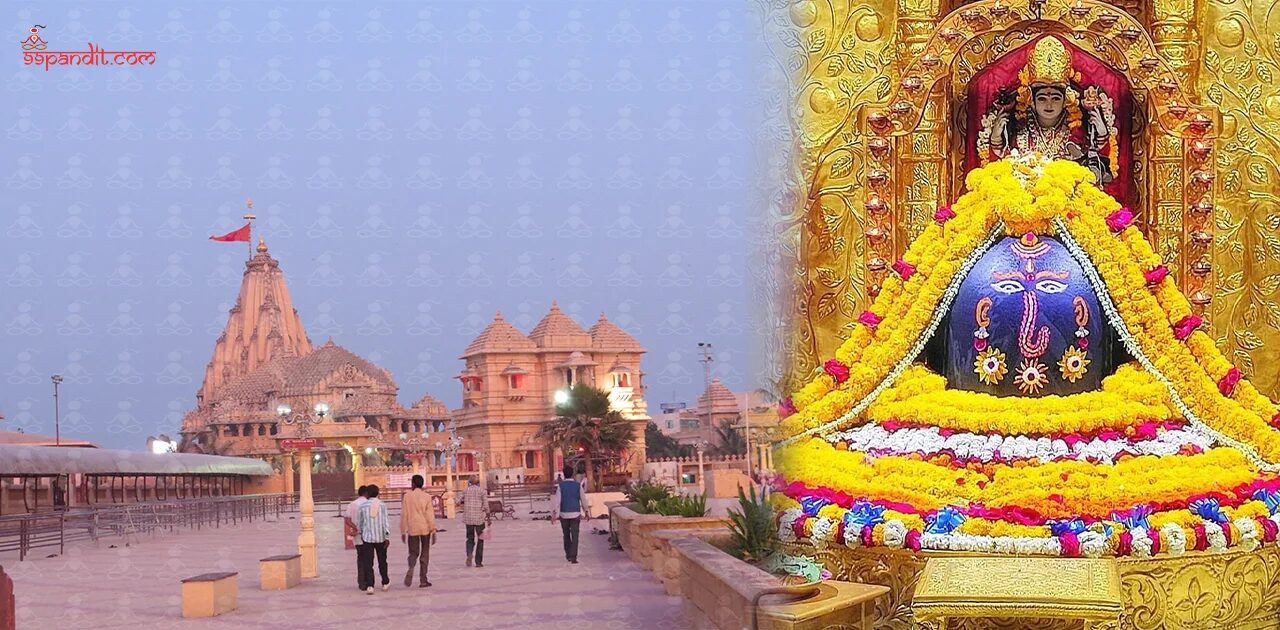
As we have discussed the temple history, timing to seek darshan, and how we can reach Somnath temple, now we will list the nearest place, one of the top 12 Jyotirlingas of Lord Shiva, to improve your visit with cultural and spiritual experiences.
About 5 km from the Somnath Jyotirlinga temple, Bhalka Teerth marks the place where people believe a hunter badly injured Lord Krishna.
Here, the Mahaprabhuji’s Bethak temple and a historic peepal tree witness a critical moment in Hindu mythology. A small, and sacred pond at the place gives a chance for devotees to pay tribute.
The most attractive place, which is a stone’s throw from the temple, gives breathtaking views of the Arabian Sea with beautiful sightseeing.
Perfect for relaxation, the beach offers multiple activities like camel rides and local shopping. However, people suggest avoiding swimming due to strong currents.
The confluence of the Hiran, Kapila, and Saraswati rivers around Somnath is a religiously important place for Hindus.
The Gita Mandir and the Lakshminarayan Temple nearby enhance the location with religious and architectural sensations.
Baba Narayandas founded the cave temple in 1949, and people believe the Pandavas used it as a shelter during their expulsion.
Pennants like Lord Shiva and Ram, give scenic city and sea views, making it the most visited place for both spirituality and scenery.
Near to the Somnath temple, the place celebrates Lord Krishna’s journey to divine rule. The existence of his footprint and the Baldev Gufa count the layer of historical and religious experience.
Every place around the Somnath temple not only has a spiritual journey but also links the visitors to the rich cultural importance of Somnath.
Your journey to these places would be a blender of joy, abundance, and natural beauty, enriching an unforgettable experience.
Other places apart from these to visit in Somnath are:
Scheduling your trip to Somnath Jyotirlinga temple becomes easier with the knowledge of short routes and nearby transport hubs.
With Veraval railway station just a stone’s throw away and Diu Airport within a comfortable distance, you’re all going for a hassle-free trip.
Remember, a smooth trip to the sacred place allows the visitor a deeper, more serene exploration of the religious aura that covers it.
Whether you are coming from a crowded city or a calm town, the way leading to the Somnath temple ensures that your pilgrimage is as elevated as the divine consideration awaiting you at this ancient refuge.
Safe travel, and may your visit to the Somnath temple be exciting, as this is unforgettable.
Table Of Content
Expert and trusted pandits available for every puja, ritual, ceremony, and celebration
The complicated carved honey-coloured Somnath Jyotirlinga temple on the western side of the state is considered to be the site where the first of the 12 holy Jyotirlingas emerged in India - a place where shiva appeared as a fiery column of light.
The Somnath temple is situated in Veraval, Saurashtra region of Gujarat.
Somnath temple is a highly secure place. You will be screened and frisked once entering the temple and only frisked at the entrance of the temple. No electronic devices are allowed including mobile, auto car keys, etc. You are not even allowed to wear a leather belt or carry the wallet inside.
Somnath temple was destroyed 17 times, but rebuilt stronger and larger Mahmud Ghazni is said to have raided and destroyed this sacred temple multiple times. The successive invasions by outsiders also drove further destruction in place of rebuilding several times by Indigenous monarchs.
Somnath is a glorious temple located in Sagar Kant of Saurashtra in Gujarat state. One of the 12 holy Jyotirlinga of Lord Shiva is in Jyotirlinga located in Somnath.
The mythology environment of Somnath temple is highly rooted in hindu religious texts and epics. As per the legend, the Moon god, Soma had a curse on him that caused his demise. In search of redemption and to regain his lost gem, Soma is considered to have prayed to Lord Shiva at this very site.


 Ontime Service
  Certified Pandit
  Transparency