
Phalguna Purnima 2026: Date, Vrat Katha, Rituals & Significance
Phalguna Purnima 2026 is the last full moon of the Hindu lunar year. This sacred day will be celebrated on…
 0%
0%
 Book Griha Pravesh Puja Online
Book Now
Book Griha Pravesh Puja Online
Book Now

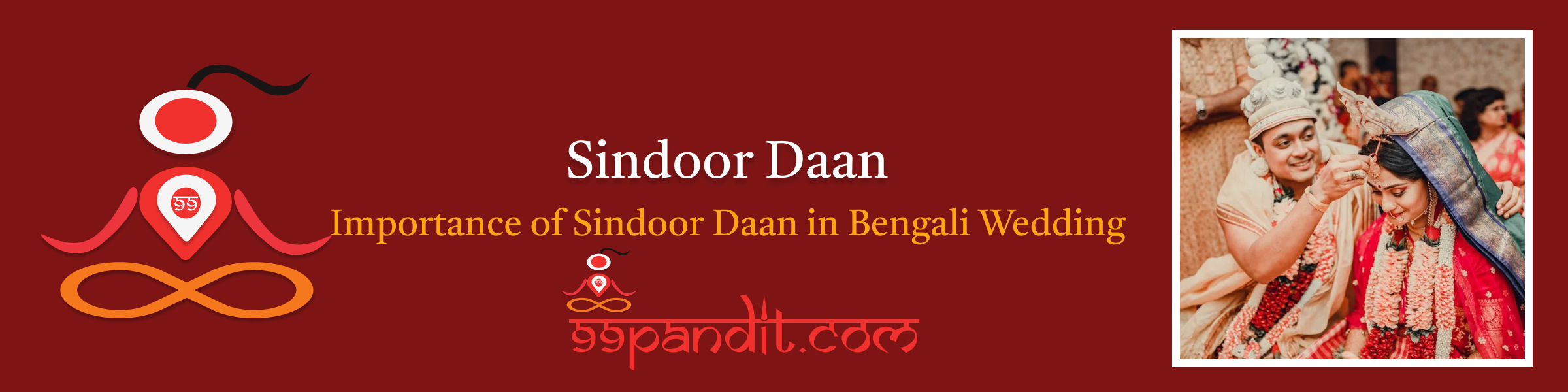


A Bengali wedding is filled with colours, heartfelt emotions, and exquisite ceremonies. Every ceremony holds symbolism. Among the crucial ceremonies is Sindoor Daan.
This instant transforms the bride’s life. Signifies the start of her marital path. Sindoor Daan in a Bengali wedding is not a mere tradition.
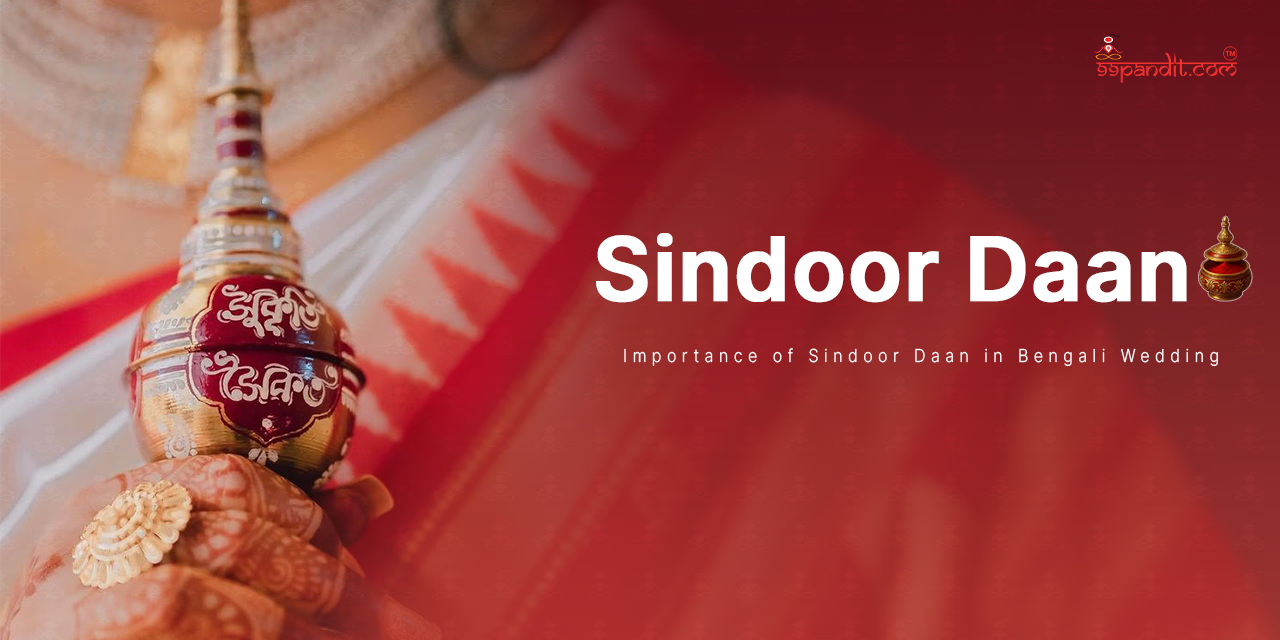
It is full of love, respect, and commitment. The groom applies sindoor softly on the forehead of the bride.
This small gesture shows that he vowed to be with her. It is also an embodiment of their future relationship as husband & wife.
The couple receives the blessing of the family members. The mood is full of happiness and optimism. Many are interested in understanding the meaning of Sindoor Daan.
The ceremony does not seem to be so complex; however, it has certain feelings and cultural symbolism. It symbolises the values of Bengali families and how they consider marriage as a union.
Should you attend a Bengali wedding or hold one yourself, it will help you enjoy the ceremony more when you know the meaning of Sindoor Daan.
This article is going to reveal to you the meaning of Sindoor Daan, its significance, and how it enhances the ceremony of marriage.
One of the sacred rites in a Bengali marriage is Sindoor Daan. It means the moment in which the groom puts a sindoor on the forehead of the bride.
This is an action that marks the beginning of the married life of the bride. It further represents that the couple has accepted each other as friends.
The wedding ceremony is held in Sindoor Daan, which happens at the end of it. The bride sits with a lowered head after such ceremonies as Saat Paak, Subho Drishti, and Mala Badal.
She has her head covered with the end of the sari or a specific cloth by her family members. This forms a pure environment for the ritual.
At this moment, the groom picks an amount of sindoor with his right hand. He carefully places it on the bride’s maang (the hair parting).
This is the touching moment of the wedding. This is a symbol of a promise by the groom to protect, honour, and support his wife in marriage.
Sindoor Daan goes beyond an act. It represents unity, faith, and dedication. It serves as a reminder for both individuals of the connection they are deciding to create.
This small ritual has its meaning and remains a very important part of any Bengali marriage.
Sindoor holds an important place in Bengal culture. Bengali married women use sindoor to adorn their forehead and the section of their hair to represent their status.
It means that they are blessed with a happy matrimonial life. In Bengal, sindoor symbolises safety and wealth.
It is believed to keep off energies and usher in luck into the house. Also, it is a symbol of the friendship between a man and his wife.
The custom of sindoor originates from Hindu texts and convictions. These scriptures describe sindoor as a symbol of power, energy, and matrimonial unity.
It is due to this reason that Bengalis take this practice seriously and with devotion. According to the Bengali tradition, sindoor is not merely a colour. It is a feeling, a gift, and a vow of unity.
This marks the starting point. When the wedding date is decided, the two families unite to offer their blessings to the bride and groom.
At the point of determining the date of the wedding, the two families convene together to bless the bride and groom.
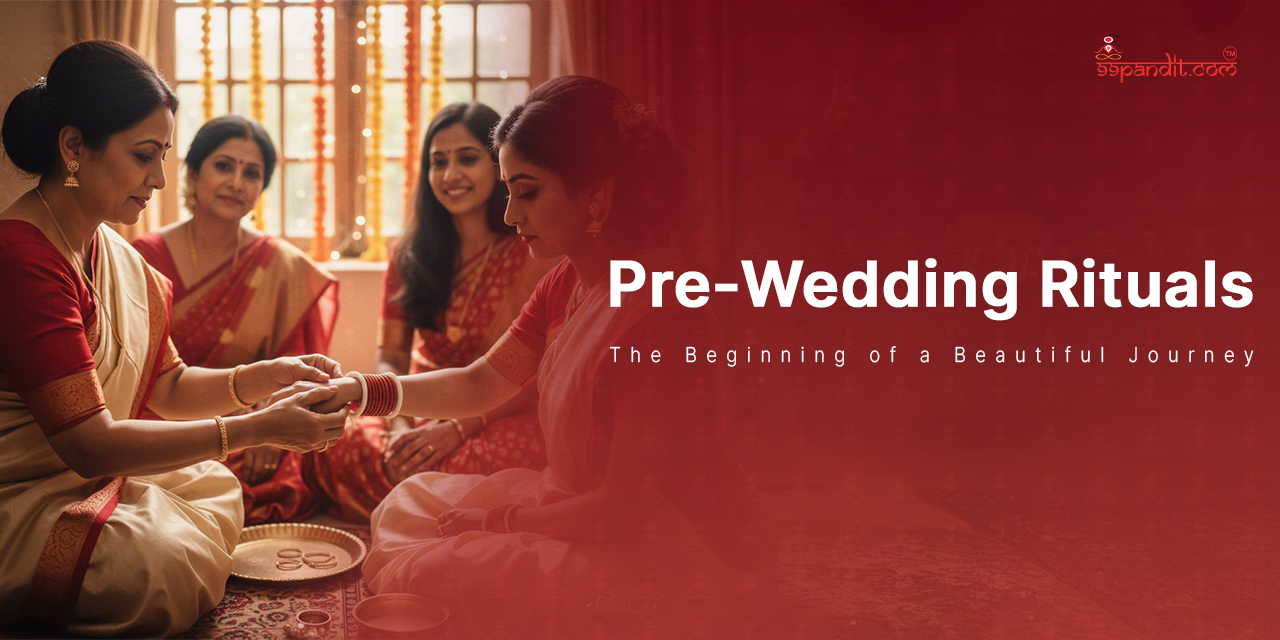
They apply durba and tiny gold pieces onto their foreheads. It’s a wedding custom yet rich in significance.
In the process of this ceremony, the grandmother and other elders give blessings, and the father secretly places a gift in the palm of the child in the presence of the whole family. It is simple, intimate, and extremely moving.
Aiburobhaat marks the large family feast for the bride. It takes place either the day before the wedding or on the wedding eve.
During this ritual, the bride’s or groom’s family treats them to a meal that any food enthusiast would adore.
They offer fish, rice, vegetable specialities, and chutneys. Mishti doi. This is the significant meal that the bride or groom shares with their family from childhood.
Dodhi Mangal is performed on the morning of the wedding day, before the commotion of the rituals. Flattened rice in milk and jaggery is given to the bride and groom.
Then they have a fast until the time the wedding is over. This gentle, peaceful beginning represents patience, purity, and self-control.
An ancestral ceremony, in a Bengali wedding, connects history and today. Nandi Mukh is the moment families seek blessings from their forebears.
The priest chants hymns. Fragrant smoke drifts upward, and all attendees enter a silent, respectful state.
The atmosphere carries a heritage as if the marriage is overseen by countless ancestors.
This is among those traditions that ensure that all the people know that a wedding is not only about two people. It means family, kinship, and love.
Known as the haldi ceremony, Gaye Holud stands out as one of the most exuberant Bengali pre-wedding events.
The groom is covered with turmeric, after which the same turmeric paste, along with a saree, presents, and sweets, is brought to the bride’s residence.
At the bride’s home, turmeric is spread on her face and hands. Mothers and cousins coat one another with turmeric.
The conch shell (Shankh) blares. There’s joyful disorder as everyone hurries to capture a perfect picture.
Turmeric serves as both a blessing and a beautifying agent, a radiant symbol, for beginning a new married life.
At the moment the bangle ceremony begins, silence falls over the room. White shankha (conch shell bangles) and red pola ( bangles) are adorned on the bride’s wrists by her mother or another senior married woman.
For the Bengali bride, these bangles represent happiness, serving as a physical sign that she has embraced her new identity as a married woman.
The groom comes to the wedding location like royalty in a decorated vehicle other times, in a horse-drawn coach. The bride’s relatives assemble at the doorway to greet him.
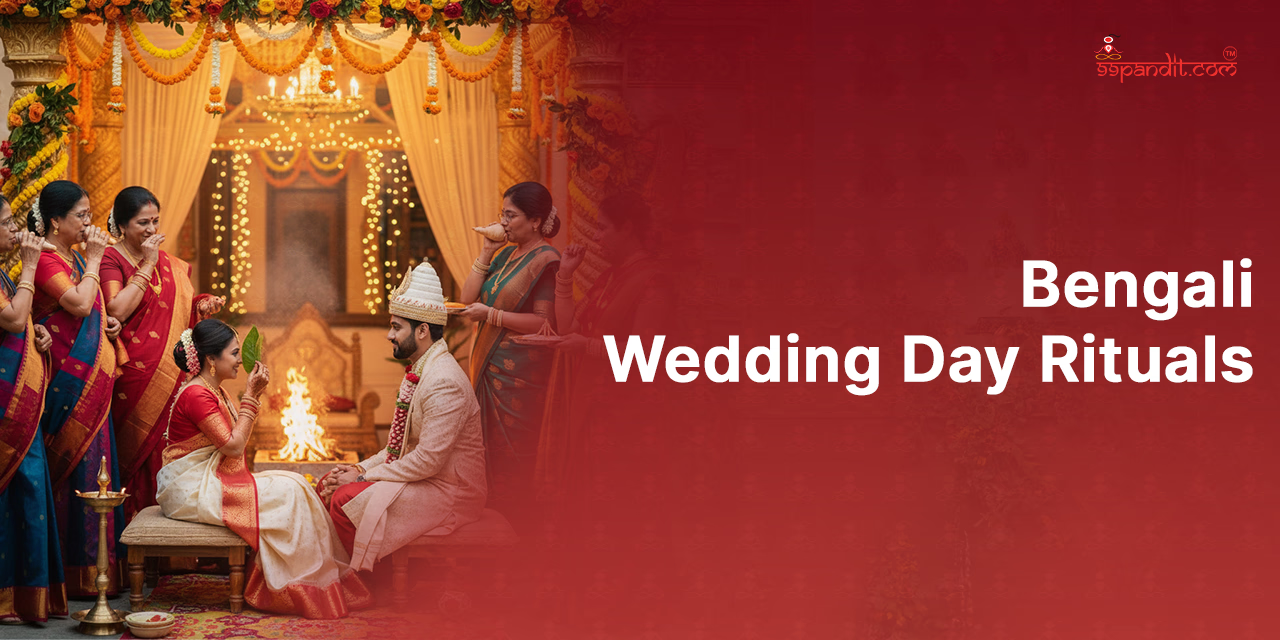
His arrival is playful and ceremonial. The bride’s mother performs an aarti and circles a lamp to ward off evil before touching the tilak to his forehead.
One of the individual rituals during a wedding is called Subho Drishti. It is the moment where the groom and bride will exchange glances on their day.
The bride is normally seated on a stool known as a pidi, and her face is covered with betel leaves.
Against the background of the growing ululation and conch shells, she exposes herself by lifting the leaves, and they look at one another.
The garland-swapping Mala Bodol is both fun and meaningful. The mala-swapping Garland is a fun and significant thing. Garlands are exchanged three times between the bride and the groom.
Family members may carry the bride, and the groom may find it difficult to fit the garland on, resulting in scenes where he fights to win as cousins support him.
Sampradan is a ceremony where a relative, who mostly happens to be the father of the bride or her maternal uncle, places a hand on the groom and officially transfers her to her family.
The priest recites prayers, the sacred fire burns, and the mood is overwhelmed with emotion.
At the wedding mandap, the bride and groom sit facing the fire. Their clothes are joined, representing the joining of two souls. Following this, they carry out the Saptapadi, taking seven circles around the fire.
In households, these seven circles may involve the bride circling the groom or both circling the fire together, reciting seven promises.
This stands as a ceremony in a Bengali wedding. Every circle symbolises a vow to celebrate happiness, support hardships, nurture a family, and remain united.
Afterwards, the bride and groom join the family while the priest recites mantras and all exhale, with happiness and comfort.
The brother of the bride (or any close relative) helps the bride to put puffed rice into the fire, puffed rice being a symbol of good luck.
It is a show, but one that very often ends up in tears, the hand of a brother taking his sister through a ceremony that signifies her passage into her new home.
The bride and the groom then sit down beside the fire as the family members bless them, and this gives the impression of a family heritage.
Sindoor Daan is the ideal image of a Bengali wedding. This is the instance when the groom places sindoor along the parting of the bride’s hair.
The groom applies the sindoor with a shaking hand, and the bride is transformed into a married woman, which can be seen and is a happy experience.
The transformation is completed when the bride is normally wrapped in a new saree presented by the family of the groom.
The Biday signifies the conclusion of the wedding at the bride’s family home. Stands as one of the most heartfelt customs.
The bride tosses handfuls of rice into her mother’s saree pallu, behind her, a symbol of appreciation. The household is filled with embraces and then falls silent with goodbyes.
When the bride moves to her house, she receives a religious welcome often likened to Goddess Lakshmi entering the house.
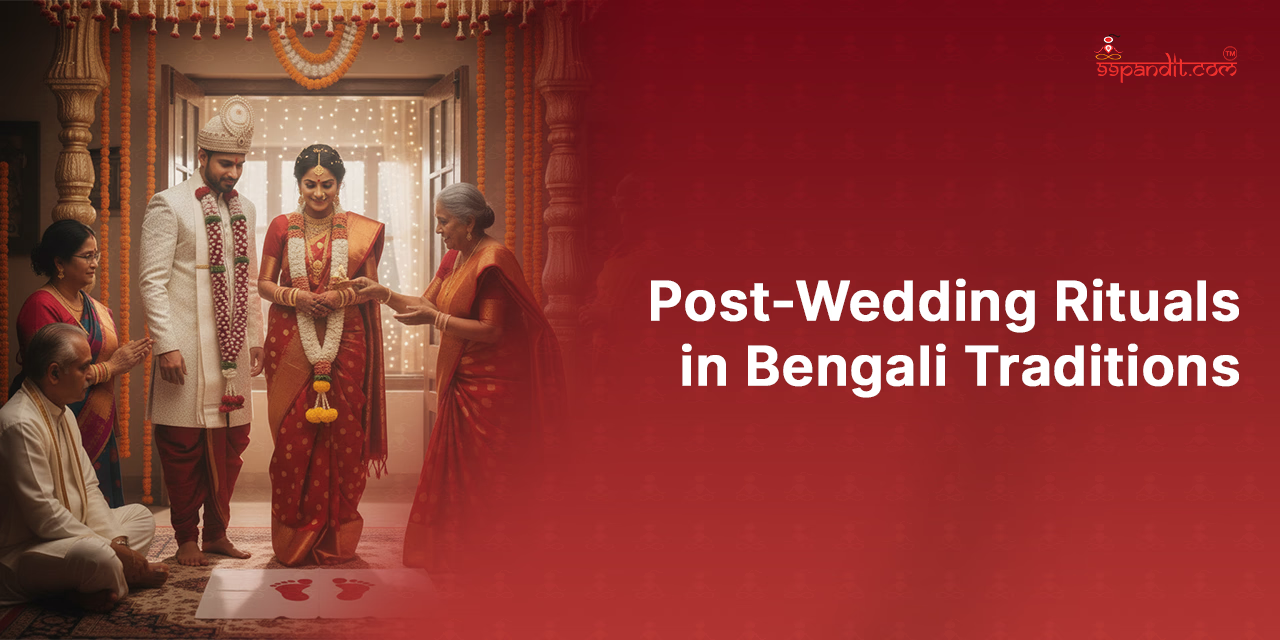
The mother-in-law performs aarti, and the bride may place her feet on a container of milk and alta, which leaves a print on a white cloth. These footprints represent wealth entering the household.
The day following, the groom presents the bride with a plate representing the meal the groom provides to his bride.
Subsequently, the family organizes a boubhat formally introducing the couple, as husband & wife, with guests bestowing gifts and warm wishes upon them.
Finally, the phool sajja, the bridal chamber, is decorated with flowers. Jasmine, rose petals, tuberose scent, and softness everywhere.
It is small and private, yet everyone in the family has an opinion and a story to tell about that night later.
Sindoor Daan stands as one of the significant ceremonies in a Hindu Bengali marriage. It signifies the start of a chapter for the partners. Additionally, it represents affection, faith, and well-wishes for a life ahead.
In customs, particularly in areas such as Bengal, sindoor symbolizes wealth and the sacred connection between spouses.
Households observe this practice with dedication as it links them to age convictions and enduring customs.
Today, Sindoor Daan remains a timeless ritual because it keeps the cultural heritage alive. It reminds the couple of their promises and fills the wedding with sacred energy.
If you wish to conduct this ceremony following Vedic procedures, 99Pandit can assist. You can reserve skilled pandits who adhere to each step meticulously.
Through 99Pandit, you guarantee that your Sindoor Daan and all marriage rituals proceed flawlessly and correctly.
Table Of Content
 Number.

Enter the OTP sent to
Chat with verified astrologers on 99Pandit and receive personalized guidance for every stage of life.



 Ontime Service
 Certified Pandit
 Transparency