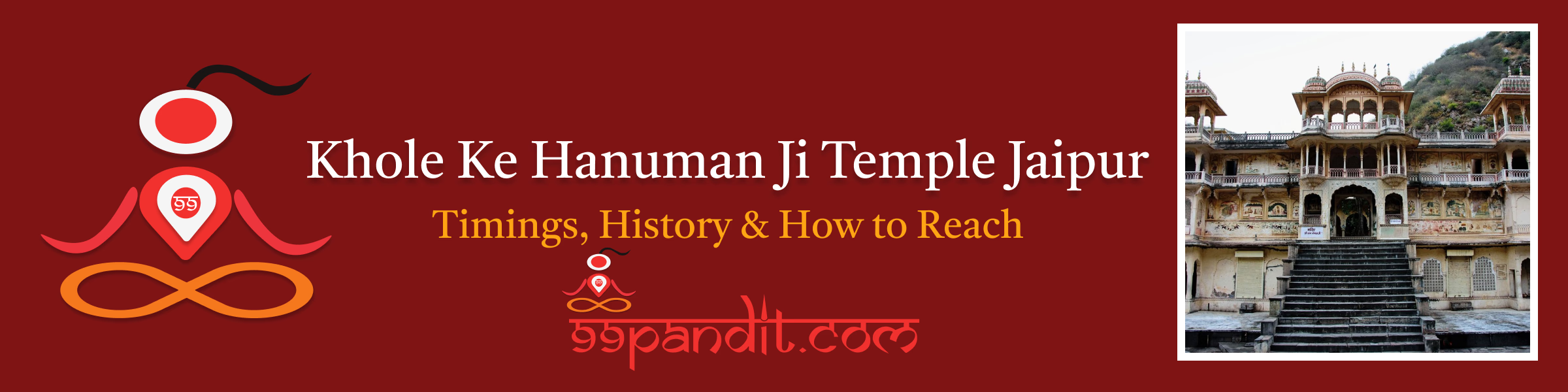
Khole Ke Hanuman Ji Temple Jaipur: Timings, History & How to Reach
Surrounded by the scenic hills of the Aravalli Hills, the Khole Ke Hanuman Ji Temple is among the most visited…
 0%
0%
 Book Griha Pravesh Puja Online
Book Now
Book Griha Pravesh Puja Online
Book Now

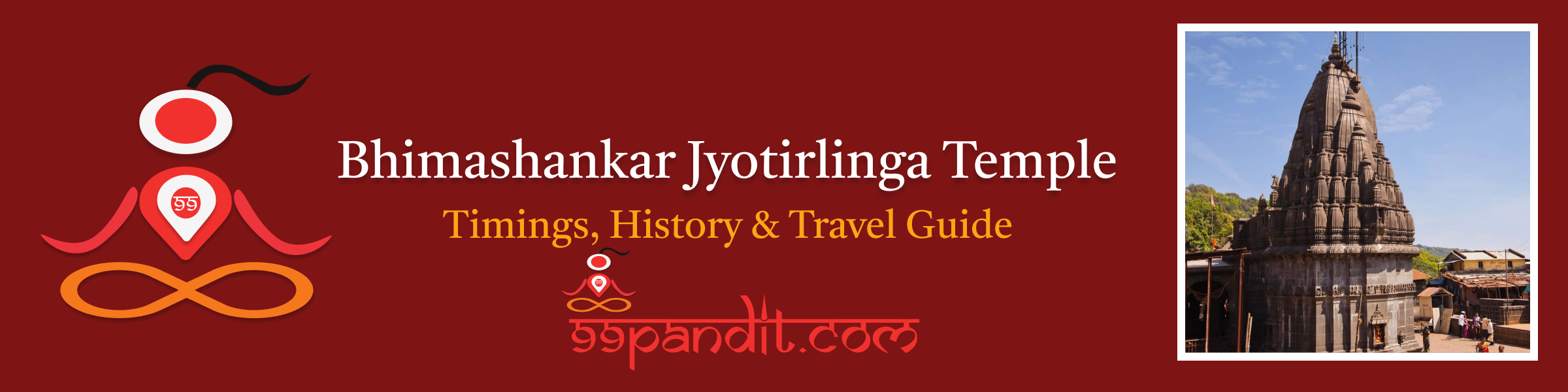


Situated in the Sahyadri hills of Maharashtra, the Bhimashankar Jyotirlinga Temple stands as a symbol of spiritual power and beautiful architecture. The temple draws millions of devotees and spiritual seekers each year.
Being the 6th in the 12th Jyotirlinga makes it more significant and holiest manifestation of worshipping Lord Shiva across the country.
The temple is a great place to escape the modern world chaos as it is covered by dense forest, misty hills and running streams.
In addition, the fact that it is orginates of the holy Bhima river makes it more religious. Its awe-inspiring scenic views, mythical narrative, and centuries-old Shaivite culture make the temple a sightseeing location.
In this guide, we will cover more about the Bhimashankar Jyotirlinga temple, its timings, key legends, main rituals, and travel tips.
Whether you’re going to seek the Swayambhu Linga blessings or enjoy the trek via Ganesh Ghat, the guide will help you plan a smoother journey.
If you’re also planning to visit the temple, then knowing the rituals and timing can help in a peaceful darshan.
Mostly the temple opens in the morning and remains accessible to people until late evening with shorts break in between.
Here’s the standard daily schedule for the Bhimashankar Jyotirlinga:
| Time | Rituals | Significance |
| 4:30 AM | Kakada Aarti/ Temple Opening | The first prayer to wake up the deity. |
| 5:00 AM | Nijaroopa Darshan | Special darshna of the original Swayambhu Linga without any decoration |
| 5:30 AM | Regular Abhishekam | Holy bathing of the linga with mantra chanting is performed. |
| 12:00 PM | Naivedya/ Maha Puja | The food (Bhog) is presented to Lord Shiva. |
| 2:45 PM to 3:20 PM | Afternoon Puja | A special puja is offered to Lord Shiva. |
| 6:30 PM | Madhyan / Shringar darshan | The deity is decorated in royal attire, and no abhishek is allowed during this period. |
| 7:30 PM | Evening Aarti | Closing aarti is performed with beautiful hymns. |
| 9:30 PM | Temple Closing | The shrine gets closed after the final prayers |
Certain rituals, like Abhishek and Seva rituals, are also offered by the temple to worship Lord Shiva in a more personal manner.
Pro-Tip: In case you want to conduct a Maha Rudra or any main Seva in Mahashivratri or Shravan month, it is recommended to contact the temple at least 15 days before.
The Bhimashankar Jyotirlinga Temple is one of the holiest shrines where Lord Shiva is worshipped in Pune, Maharashtra.
What makes it so spiritually important is that it is the houses of Jyotirlinga that showcase endless and formless divine energy.
The term Jyotirlinga derives from two Sanskrit words, “Jyoti”, which means light and “Linga”, which refers symbol.
Together, they describe the limitless pillar of the divine light, revealing the power of Lord Shiva. Another aspects that set this temple apart is its unique Ardhanarishwara form.
The Linga featured with natural vertical line, representing the union of Shiva and Shakti. This also indicates the cosmic balance of the masculine and feminine energies.
Many devotees believe that a single darshan here is believed to remove karmic debt, bring inner peace, and supports spritual development.
The tales behind the Bhimashankar Jyotirlinga Temple explain what keeps this destination a spiritual magnet even in today’s era.
The name of the temple is kept after the demon Bhima, a son of Khumbharakan. To take revenge for his father’s death, he gained immense power through penance and terrorized the world.
He even imprisoned Lord Shiva’s greatest devotee, King Sudakshina. Angered by the king’s devotion, Bhima raised his sword to kill the king while worshipping.
That’s exactly when Lord Shiva manifested in a colossal, fiery form called Tripurantaka. A battle followed, and eventually Lord Shiva killed the demon.
After, at the request of all the gods, He agrees to stay in place forever as the protector of the universe.
Bhimashankar also contains the sacred Shakti Peeth. Inside the temple, there is a shrine of Kamalaja Devi (Goddess Parvati).
She is worshipped as the one who helps Lord Shiva during the battle in the form of a lotus. The presence of dual power in the temple makes it a rare destination with complete cosmic balance.
The Bhimashankar Temple is a living example of timeless beauty that blends 13th-century stonecraft with 18th-century Maratha grandeur.
Let’s break down the architecture and history behind the temple:
The temple creation dates back to the 13th-century Yadava era. Designed in the classic Nagara (Indo-Aryan) style, the walls of the temple are built using black basalt stone in Hemadpatnu format. It is a technique where massive stone blocks are interlocked without any mortar.
During the 18th century, the legendary Maratha statesman Nana Phadnavis modified the temple by constructing a grand Shikhara (Spire) and the Sabha mandap (assembly hall).
Hanging a bronze bell in the centre of the temple is not an ordinary bell but a fascinating war trophy with a unique tale:
Unlike other temples where you have to walk up to reach the deity, here you have to descend steps into the Garbhagriha (inner sanctum).
The best time to visit the Bhimashankar Jyotirlinga Temple is based on whether you want to experience pleasant weather or a festive celebration.
Being situated on the Sahyadri ranges, the destination offer different experience in each season.
Ideal Months for Pilgrimage:
October to February is considered the most ideal time to visit the site, as the weather during this time is very pleasant.
It is a good time for peaceful darshan, temple rituals, and trekking as well, because the forest around it is safe.
Weather Conditions Across Seasons:
Also, you can witness heavy crowds during the festive seasons like the Shravan month Mahashivratri, Pardosh Vrat, and Monday. Planning a trip on weekdays can reduce waiting time and enure peaceful experience.
The temple is well-connected by road, air, and railway, which makes it easier for pilgrims and visitors across India to travel.
Bhimashankar is well connected by roads to all the major cities of Maharashtra. Pune is one of the nearest locations, and transportation in the form of buses, taxis, and private cars is easily available.
The nearest railway station is Pune Junction, and trains from different cities come to this station on a daily basis. You can take a taxi or a bus from the station to reach Bhimashankar.
The nearest airport is the Pune International Airport, which is well connected to the major cities of Delhi, Bengaluru, Hyderabad, and Mumbai.
From the airport, one can either self-drive or take a taxi to reach Bhimashankar, which will take 3-4 hours.
If you are planning to visit the Bhimashankar Temple and have some extra days in hand, then do not miss the opportunity to explore these beautiful places:
1. Bhimashankar Wildlife Sanctuary:
To witness the Malabar Giant Squirrel (Shekru), you don’t have to travel far, as it starts right from the temple’s doorstep.
The biodiversity hotspot is home to rare birds, leopards, and barking deer. It is best for nature and animal lover that love wildlife photography.
2. Hanuman Lake:
To reach Hanuman lake you just have to cover a 2 km walk from the temple market. It is a favourite picnic spot of many families to just relax and enjoy the beauty of nature. On the bank, there is a small temple of Lord Hanuman.
3. Nagphani Point:
Situated just 3 km away from the temple, it is the highest point on the entire hill. After a medium uphill trek, you will get rewarded with a 360-degree awe-inspiring view of the Sahyadri mountains.
4. Naneghat:
An ancient route known for the “reverse waterfall” is approx 65 km from the main temple. In monsoon during heavy winds, the water is blown upwards instead of downwards. It is a must-visit site for historic lover wnat to explore 2,000-year-old rock inscriptions.
The Bhimashankar Jyotirlinga temple is not just a pilgrimage site but a spot blend of divine powers, ancient history, and breathtaking natural beauty.
Plus, its 6th position among the 12th Jyotirlinga makes it more significant for followers of Lord Shiva.
It is believed that seeking darshan in this temple removes the lifelong past sins and brings peace and prosperity in a person’s life.
Covered with lush green forests of the Sahyadri ranges, the holy site offers a divine experience where faith meets serenity.
With knowledge of the mythological tale, history, architecture, correct timing, and tips for travel, you can prepare for your spiritual experience in advance.
Whether you are a loyal pilgrim or interested in the Nagara-style temple, a visit to the Bhimashankar temple is sure to leave you with a lasting experience.
Moreover, do not miss the opportunity to explore the surrounding areas to make your visit even more memorable.
Plan your visit carefully, keeping in mind the timing and temple customs, and bring the blessings of Lord Shiva into your life.
Table Of Content