
Khole Ke Hanuman Ji Temple Jaipur: Timings, History & How to Reach
Surrounded by the scenic hills of the Aravalli Hills, the Khole Ke Hanuman Ji Temple is among the most visited…
 0%
0%
 Book Griha Pravesh Puja Online
Book Now
Book Griha Pravesh Puja Online
Book Now

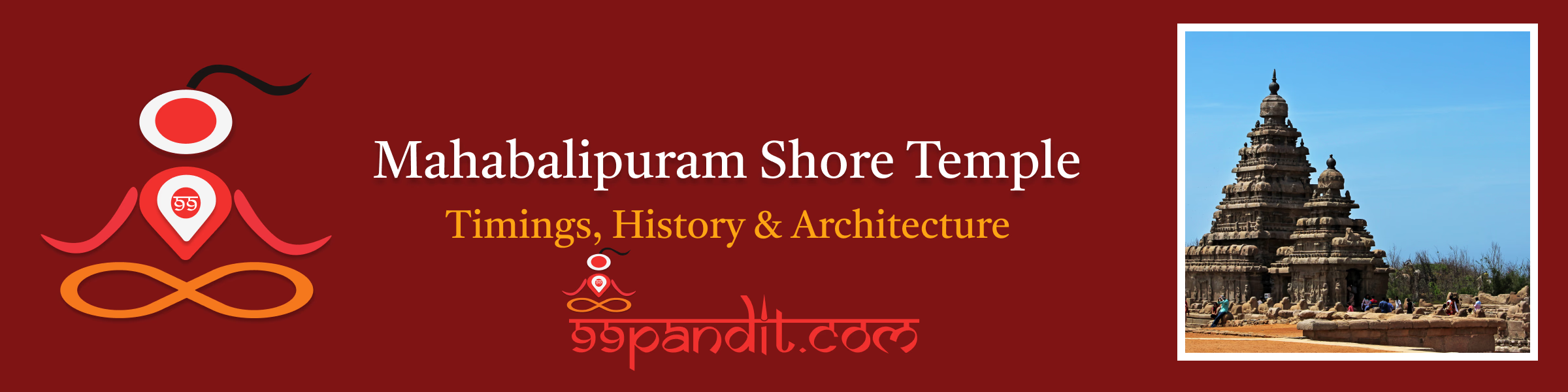


Standing majestically along the shores of the Bay of Bengal, the Mahabalipuram Shore Temple stands as a 1,300-year-old granite temple reflecting India’srich culture.
Well-recognised as a UNESCO World Heritage Site, the iconic beauty is one of the most celebrated heritage temples in Tamil Nadu.
The structural stone temple was built in the 8th century CE during the Palla dynasty, under King Narasimhavarman II.
The beauty of Shore Temple architecture lies in its oldest yet strong granite structure,e built block-by-block.
While representing Dravidian-style architecture, it survived harsh seas, winds, and even the 2004 tsunami as a reminder of South India’s maritime past.
Once a coastal landmark, the destination today attracts history lovers, devotees, and travellers across the globe.
In this guide, we will take you through a brief journey on Mahabalipuram Shore Temple.
We will cover everything from its history, architecture, visitor tips, and much more.
Here’s a quick overview of covering important information and key facts of the Shore Temple, Mahabalipuram. Each section’s detailed version is provided later in the article:
| Features | Details |
| Location | Beach Road, Mahabalipuram, Tamil Nadu, India |
| Temple Timings | 6:00 AM to 6:00 PM |
| Best Time to Visit | November to February |
| Entry Fees (Indians) | ₹40 per person |
| Entry Fees (Foreigners) | ₹600 per person |
| UNESCO site | Inscribed in 1984 (Part of the Group of Monuments) |
| Major Deties | Lord Shiva (Kshatriyasimnesvara) & Reclining Vishnu |
| Artitectural style | Early Dravidian Structural Stone Architecture |
| Recommended Duration | 1 to 2 Hours |
Planning a trip to this Pallava-inspired artwork requires a bit of planning to avoid both crowds and bad weather.
The Mahabalipuram Shore temple remains open throughout the week, including Sunday and public holidays as well.
Best time of day to visit:
The entry fee for visiting the Shore Temple is managed by the Archaeological Survey of India (ASI). Here’s the entry fee structure:
You can even buy a “combo ticket” for sightseeing the Pancha Rathas and Arjuna’s Penance.
While the beauty of the sea and sunset blended with the Dravidian architecture is a photographer’s dream, certain rules should be followed:
The Mahabalipuram Shore Temple’s history is rich of takes of its artistic vision and nature’s challenges.
Designed between 700 and 728 AD during the rule of King Narasimhavarman II (Rajasimha), it echoes the highest level of craftsmanship of the Palla dynasty.
Unlike rock-cut Rathas nearby, the temple is structure monument with precisely shaped granite blocks.
It is not just a place to worship Lord Shiva and Lord Vishnu, but a “Jalashayana”. Which generally refers to the temple resting closer to the water body.
During the time of the Pallava period, the temple served as a major port city that connected South Indian traders to South Asia and beyond.
The Shore temple is a living example of both a spiritual centre and a coastal landmark.
For many centuries, European sailors and explores including the famous Marco Polo refer Mahabalipuram as the “Land of the Seven Pagodas”. As per the local legends:
For a long time, historians considered the “Seven Pagodas” just a myth until the 2004 tsunami.
Before the waves hit, the sea level reduced to 500 meters, which expose the a long straight row of giant stone structures.
Once the water settled, archaeologists found a massive stone lion, temple walls, and a terracotta ring well that closely align with Pallava architecture.
Read Also: Banke Bihari Temple: History, Significance, and How to Reach Vrindavan
The architectural style Shore Temple is a historic landmark in India’s rich culture. It showcases the time when the Pallava builders moved from carving into caves to creating free-standing structures.
This transformation is the birth of Dravidian architecture, which later turned into a grand temple in South India.
Dravidian Architecture Features
Three Shrines Inside the Temple Complex
What makes the Shore temple unique is its “Triple-Shrine”, which is a house for both devotees of Lord Shiva and Lord Vishnu.
Sculptures, Carvings & Materials Used
The Shore Temple in Mahabalipuram is a rare spiritual site where Shaivism and Vaishnavism exist together in the same complex.
The presence of the triple shrine depicts the religious harmony which is common during the 8th-century.
Primarily dedicated to Lord Shiva, the tower consists of a gracefully polished Shivalinga and Somaskanda carving.
It represents Lord Shiva with Goddess Parvati and their son Kartikeya. This design expresses family unity, protection, and balance.
At the same time, the temple also honours Lord Vishnu. Lying between the two Lord Shiva shrines, it reflects “Jalashayana” (Lord of the Water).
Though daily worship is no longer done here, the temple still holds great significance in life of devotees.
During the Mamallapuram Dance festival (a cultural dance celebration), the temple comes alive with classical performances.
Read Also: Konark Sun Temple: History, Architecture, Mystery, and How to Reach
The Mahabalipuram Shore temple is a UNESCO World Heritage Site due to its exceptional architectural, historical, and cultural value it holds.
Firstly, it is among the first structural stime temple in South India, which marks the shift from rock-cut caves to complete stone-built temples.
It makes this a key memorial in the transformation of the Dravidian temple architecture.
Secondly, the temple is an achievement for the Pallava dynasty as it represents advanced engineering, artistic skills, and precise planning.
What is more impressive is its coastal location with daily explosion with sea winds and erosion.
The next reason is that it is a part of the Group of Monuments at Mahabalipuram. It combined showcase a entire and unique record of Pallava art and architecture from the 8th century.
Lastly, it’s an outstanding architectural influence on temple design across India, including Cambodia, Vietnam, and Java.
Due to its global impact and the above reason, UNESCO recognised the Shore Temple in 1984 as a significant universal heritage.
Located about 60 km from Chennai, the Mahabalipuram Shore Temple is very well-connected and easily accessible by different modes of transport.
Mahabalipuram by road is the most common and scenic choice, with a drive along the East Coast Road (ECR).
Public taxis, buses, and private cabs are easily available from Chennai, Puducherry, and nearby towns. From Chennai, it takes around 1.5 to 2 hours to reach the temple.
Mahabalipuram does not have its own railway station. But the nearest railway station from there is Chengalpattu Junction, which is about 30 km away from Mahabalipuram.
The station is well-connected with major cities like Chennai, Bengaluru, and Madurai. From the station, you can hire a taxi or a bus to reach the main shrine.
The closest airport to here is Chennai International Airport, which is about 55-60 km away.
Taxis and cabs are easily available from the airport for a direct journey of 1.5 hours to the temple.
With good connectivity and easy access to multiple modes of transport, planning a journey to the Mahabalipuram Shore temple is convenient for everyone.
Read Also: Neelkanth Mahadev Temple in Rishikesh: All You Need To Know
If you’re planning your visit to the Shore Temple, then don’t miss exploring some amazing 7th and 8th-century wonders located nearby.
1. Pancha Rathas (Five Chariots): Located just 1 km from the main temple, the Pancha Rathas are five gigantic structures carved from a single granite rock.
While they resemble chariots, they are named after five Pandava brothers and Draupadi from the Mahabharata.
2. Arjuna’s Penance: Also called the Descent of the Ganges, Arjuna’s Penance is among the largest open-air bas-reliefs.
Its carving depicts the scenes of the River Ganges descending to Earth, representing exceptional craftsmanship skills.
3. Krishna’s Butter Ball: Just a few kilometres away, you will be able to explore this giant 250-ton natural boulder, also known as Krishna’s butter ball.
Being balanced on a slippery slope, it defied gravity for over 1, 200 year and is one of the popular spots for photos.
4. Mahabalipuram Beach: A little far from the temple, the beach at Mahabalipuram offers scenic views, cool breezes, and a peaceful atmosphere. It is good for evening walks and sunset views.
5. Mahabalipuram Light House & Museum: For the best view of the entire town, climb to the Mahabalipuram Lighthouse.
Thereby, you will also be able to explore the Lighthouse Museum, offering insight into India’s maritime history and evolution.
1. Ideal Visit Time: It takes around 1 to 2 hours; this is enough time to spend in the whole Shore temple, along with the architectural and sea views.
2. Photography Tips: It is recommended to visit this place early in the morning, which would be perfect for photography, as the temple will be beautifully illuminated. Personal photography with a phone is free, but professional equipments require permission.
3. Ideal Visit Duration: 1 to 2 hours is generally all that you need to explore the entire Shore temple, including its architecture and sea views.
4. Photography Tips: Visiting during sunrise or sunset is the best time for photos as the east-facing temple glows beautifully. Personal photography with a phone is free, but professional equipments require permission.
5. Hire Local Guides: You can even hire an ASI-approved guide for depper understanding of the temple history, architecture, and legends. Rs. 500 to Rs. 800 is what you can expect for the temple.
6. Safety Near the Shore: Wear comfortable shoes and clothes for slippery and rocky areas, particular dueing the high tide.
7. Dress Code: There is no strict dress code, but it is still recommended to wear modest clothes as a sign of respect.
Pro Tip for 2026: If you’re planning a trip this year, try visiting during the Mamallapuram Dance festival (December – January).
Generally, special projection mapping shows are also organized during this time.
The Mahabalipuram Shore Temple is more than just a monument of the Pallava Empire.
It is an outstanding monument that boasts ancient history as well as modern sustainability.
As it is 1,300 years old, this monument is a product of a very important era that perfectly balances art, spirituality, and science.
The ancient Dravidian architecture, divine shrines of Lord Shiva and Lord Vishnu, and the beautiful sea view add to its spiritual and architectural splendour.
Rather than just an ancient structure, the Shore Temple illustrates centuries of devotion, maritime history, cand raftsmanship excellence.
Also, among the reasons behind attracting visitors across the globe to witness this timeless symbol of India’s rich culture.
Be it a history lover, a devotee, or just a traveller, this UNESCO World Heritage offers an enriching experience.
As you explore this beautiful site lying on the Bay of Bengal, remember your travel responsibility and follow the guidelines.
That’s all for today. For more such informative blogs on ancient Indian temple you can visit our website 99Pandit.
Table Of Content