What Are the Benefits of Waking Up in Brahma Muhurta?
Brahma Muhurta Benefits: Have you ever thought of starting your day at an exact time? This is the Brahma muhurta.…
 0%
0%
 Book Griha Pravesh Puja Online
Book Now
Book Griha Pravesh Puja Online
Book Now

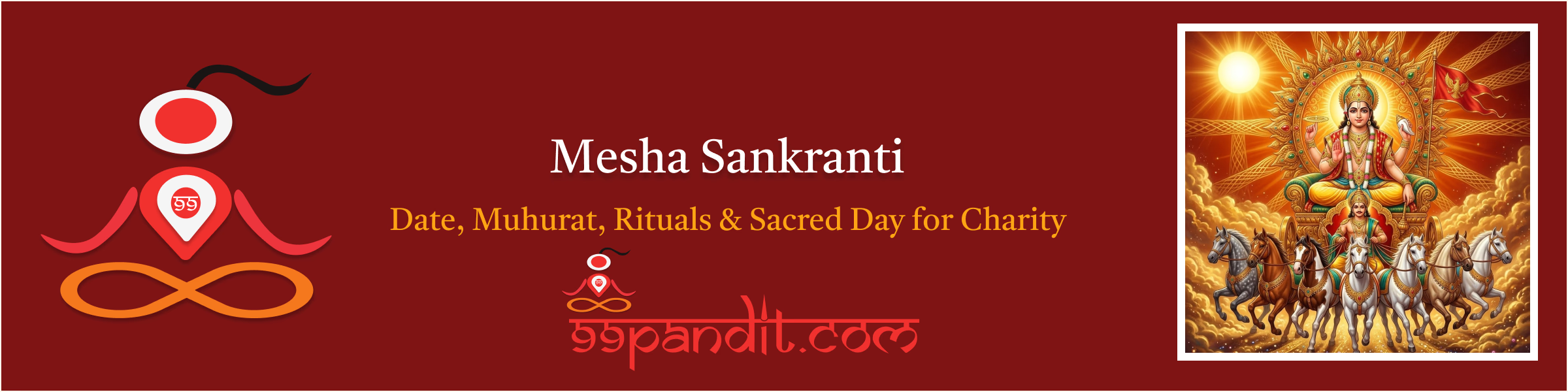


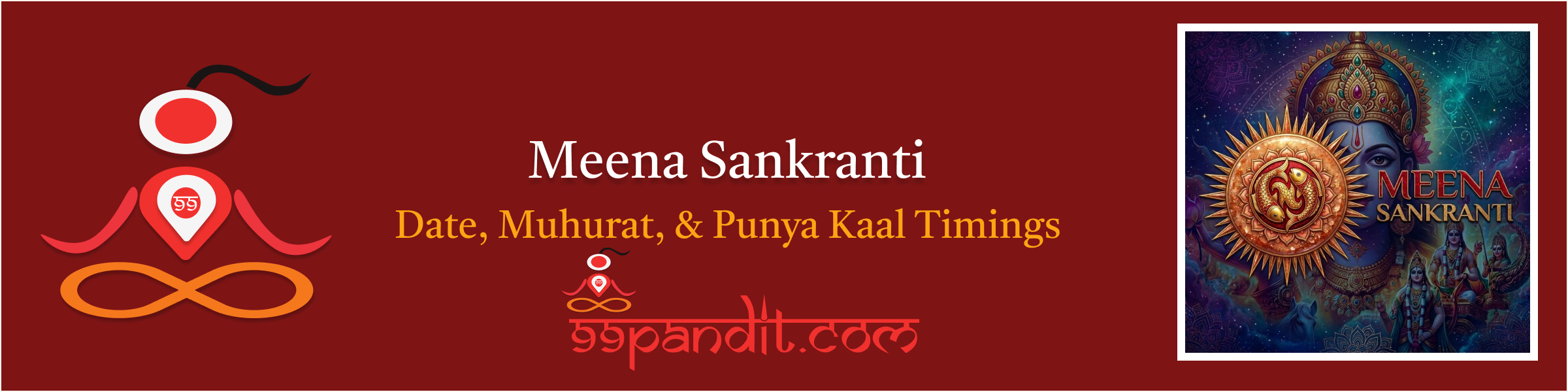
Mesha Sankranti 2026: Sankranti in Hindu mythology is an auspicious solar event that arises when the sun transits from one zodiac sign to another.
It follows the solar calendar and occurs almost every month. When the sun moves from Pisces into Aries, it brings a clear shift of energy in the yearly cycle.
This phase marks Mesha Sankranti. It represents fresh energy and a renewed sense of direction.
This is the auspicious day for bathing, charity, sun worship, and setting new goals. Mesha Sankranti 2026 is the day that marks the beginning of the new year with regards to the Hindu lunisolar calendar.
It comes in the Vaishakha month, which generally falls on the 13th and 14th of April every year on the Gregorian calendar.
According to Vedic astrology, when the sun enters Aries, it’s the most powerful transition of the year. This is why ‘Solar New Year’ is a spiritual and physical game-changer.
The sun reaches its exaltation in Aries, which means it is at its peak powers. The king on the throne means the fire sign ruled by Mars, and the sun gives the highest clarity, authority, and health.
At its peak energy, 10 degrees of Aries, solar energy is important for manifesting wishes.
The swift Sun shows the end of Karmas, the inappropriate month where big life events are stopped for some time.
To start performing auspicious activities, on April 14, 2026, it will open for weddings, housewarming, and new business ventures.
We move from the dreamy, watery energy of Pisces into the active, decisive heat of Aries.
The 2026 placement mainly improves leadership skills and physical recovery. This is the main time for promotions or launching bold projects.
It’s a good time to begin a fitness regime or recover from chronic illness as the sun is at its highest force.
To help you with planning the rituals and donations, these are the most suitable timings for Mesha Sankranti 2026.
Offering Arghya or Charity during these times is considered to multiply spiritual benefits.
| Detail | Date | Weekday | Time or note |
| Mesha Sankranti date | 14 April 2026 | Tuesday | Sun enters Aries |
| Sun enters Mesha Rashi | 14 April 2026 | Tuesday | 02:58 PM |
| Punya Kaal | 14 April 2026 | Tuesday | 02:58 PM to sunset |
| Maha Punya Kaal | 14 April 2026 | Tuesday | 02:58 PM to around 04:45 PM |
Why are these timings important? Punya Kaal: One of the general windows for taking a holy dip and offering prayers.
Maha Punya Kaal: It’s the ‘Golden Hour’. The most important time of the day for crucial charitable activities and beginning new spiritual practices.
Pro Tip: As the sankranti time arises in the afternoon (02:58 PM), the forces are at their peak. Make sure you complete the key rituals before Maha punya kaal ends for the highest alignment with the sun’s transit.
Mesha Sankranti is not only a heavenly phenomenon but a cosmic collision of energies of the sun, as this is the first sign of the zodiac, i.e., Mesha Rashi (Aries).
This historic event marks the beginning of the new solar cycle, which is the timeless motif of time (Kala Chakra), the dance of eternity of creation, nourishment, and transformation.
The Sun, the god, Surya Deva, the god of light and illumination of truth and of consciousness, ascends to his exalted position, and diffuses all his inexhaustible vitality and good omen.
This shift is glorified in the Scriptures as the restoration of cosmic order, in which the divine power of the Sun cleanses life, sending away ignorance, stasis, and karmic sins.
It is a holy coincidence between the material and the spiritual world, and it provides an opportune moment of self-transcendence, spiritual resurgence, and inner awakening.
Every region performs the Solar New Year with unique flavours, ancient rituals, and deep-rooted cultural pride.
The heartbeat of Punjab, Vaisakhi, marks the beginning of the Rabi Harvest. Apart from agriculture, it celebrates the birth of the Khalsa Panth by Guru Gobind Singh in 1699.
The celebration is filled with the beats of Dhol, energetic Bhangra performances, and Langar in Gurudwaras.
In Tamil Nadu, the celebration of the New Year starts with the concept of ‘Kanni’ (the first sight).
Many families make a tray with gold, silver, jewelry, betel leaves, and three Mubkani (Mango, Banana, Jackfruit).
There is a belief that waking up to witness the auspicious items first in the morning assures the rest of the year is filled with abundance and prosperity.
Kerala commemorates Vishu Kani, similar to Tamil Nadu. This is the celebration of the arrangement of flowers, gold, and mirrors viewed at dawn.
The most-awaited celebration of Vishu Kaineettam for children, where elders give coins or money as a symbol of sharing wealth and assuring financial security for the younger generation.
The festival is also called Maha Vishuvu Sankranti; the day marks the beginning of the summer transition in Odisha.
People make ‘Pana’, which is a refreshing summer drink made of wood apple, yogurt, and spices.
The Tulsi ritual is performed with a small pot with a small hole that hangs over the Tulsi plant.
It allows water to drip slowly – a beautiful tradition showing the need to nourish nature during summer.
Bengalis celebrate the beginning of the new financial year (Haal Khata). Streets light up with Mangal Shobhajatra – a colorful cultural parade that shows hope and unity.
Assam commemorates the celebration of Bohag Bihu for seven days. During the celebration, folk songs, traditional dances, and deep respect for cattle mark the true spirit of new beginnings.
Among the different legends connected with Mesha Sankranti, the main story is that of Lord Surya’s exaltation in Aries, showing the divine renewal of cosmic energy and the dawn of a new solar cycle.
The legend highlights the supreme force of Surya deva and his role as the supporter of life, cosmic order, and spiritual illumination.
As per Vedic cosmology, the sun undergoes a big change as it moves into Mesha Rashi, a sign of exaltation, showing the most suitable time for cosmic placement and spiritual cleansing.
Scriptures tell that when Surya Deva transits into Aries, he achieves his highest strength, adapting supreme energy, vitality, and divine brilliance, assuring prosperity, renewal, and the occurrence of higher consciousness in the universe.
The celestial change is considered to manage the force of nature, rejuvenate the earth, and introduce a new phase of dharma and righteous action.
To cater to your physical and spiritual vibrations with the exalted sun, traditional Vedic wisdom advised these four important rituals to perform:
The move of the Sun is a phase of cleansing. Taking a holy bath is considered to remove past sins or the lethargy of the previous year.
Preferably, the followers visit holy rivers such as the Ganga or the Yamuna. If you are not able to travel, just add a few drops of Ganga jal (sacred water) to your regular water at home. This practice is believed to seek the purification of the seven sacred rivers.
As the sun is the main deity of the day, presenting Arghya during Punya Kaal is important.
Use a copper pot filled with fresh water. Add red sandalwood, red flowers, and a few raw rice.
Raise the vessel above your head by facing the sun side. Pour the water slowly while reciting the Surya Gayatri Mantra or ‘Om Suryaya Namaha’. It increases your soul power and enhances physical vitality.
When the sun moves in the fiery sign of Aries, the body requires ‘Sheetal’ or cooling elements to manage the internal heat.
As per ancient rituals, it consists of eating Sattu, Jaggery, and curd. A sattvic diet makes sure your body and mind stay calm and hydrated during summer heat.
Eating seasonal fruits such as mangoes, melons, and wood apples is advised to clean your body system.
As the sun is the key point, three important deities are traditionally worshipped on the day:
These are the key mantras for the Mesha Sankranti 2026 puja, devoted to Lord Surya:
Surya Mantra
This is the key mantra for offering prayers to the Lord Sun:
ॐ सूर्याय नमः। Om Suryaya Namah
Surya Gayatri Mantra
The Gayatri Mantra is an effective and universal prayer, and is recited while offering prayers to the Surya dev, which is highly sacred.
ॐ भूर् भुवः स्वः। तत्सवितुर्वरेण्यम्। भर्गो देवस्य धीमहि। धियो योनः प्रचोदयात्।
Om Bhur Bhuvah Swaha, Tat Savitur Varenyam, Bhargo Devasya Dhimahi, Dhiyo Yonah Prachodayat.
Aditya Hridayam Mantra
The Aditya Hridayam Mantra is chanted to receive the blessings of Lord Surya. It is taken from the Aditya Hridayam hymn:
नमोऽस्तुते सर्वपापप्रणाशनाय। नमः सूर्याय शान्ताय सर्वरोगनिवारणाय। नमः कालात्मने शान्ताय सर्वशत्रुविनाशनाय।
Namostu te sarvapapapranashanaya, Namah Suryaya Shantaya, Sarvaroganivaranaya, Namah Kaalatmane Shantaya, Sarvashatravinashanaya.
The ancient literature narrates a saintly King called Shveta who greatly worshiped Lord Vishnu. He did numerous penances and was a person of justice.
This, however, was not the case after his death when, though he had reached the celestial realms, he experienced some weird form of hunger and thirst.
Mistaken, he questioned the Gods why he had the mortal inclinations to the sky. Gods, it turned out that the King had done numerous rituals to his own soul, but he had forgotten doing the act of charity (Dana), i.e., giving water and food to the thirsty and hungry at the change of the Sun (Sankranti).
The king advised himself to return his consciousness to the essence of the sun’s shift into Aries.
He understood that when the sun reaches its highest energy, it opens the gates of charity.
Donating cooling items like water, umbrellas, and grains, one can satisfy the hunger of the soul and thirst of their ancestors.
The merit of charity on Mesha Sankranti is considered to become Akshaya (everlasting).
Hence, concluding the title, Mesha Sankranti 2026 is more than a seasonal transition; it’s your cosmic invitation to rise with the sun.
By catering with Maha Punya Kaal on 14th April, performing sacred rituals and heartfelt charity, you dive into a reservoir of peak solar energy that occurs for renewal.
When the sun enters its exaltation, use this fiery momentum to remove the old stagnations, reclaim your personal growth, and step into the New Year with a spirit of leadership and vitality.
Booking a pandit to perform a Vedic ritual on Mesha Sankranti assures you with authenticity, transparent pricing, and digital convenience.
Embrace the ‘solar reset’ to brighten your path for personal growth, guaranteeing your actions today shine brightly during the year ahead.
Table Of Content