Shravan Purnima 2026: Date, Time, Puja Vidhi & Importance
Shravan Purnima 2026 falls on Friday, August 28, 2026. It is the full moon day that marks the end of…
 0%
0%
 Book Griha Pravesh Puja Online
Book Now
Book Griha Pravesh Puja Online
Book Now

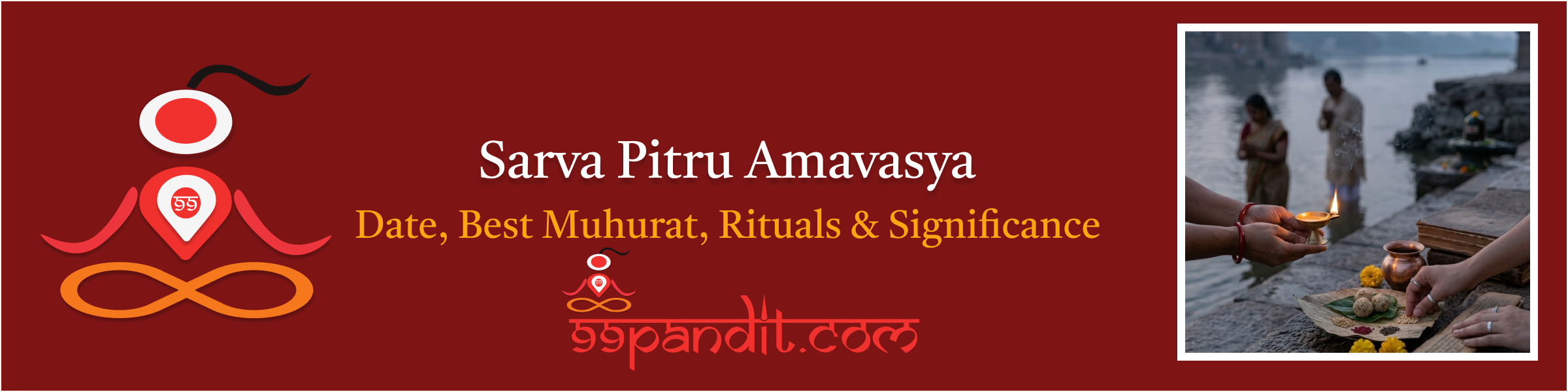


Sarva Pitru Amavasya 2026 is the new moon day that completes the Pitru Paksha. This is the single most potent day of the entire fifteen-day ancestral fortnight.
In 2026, it falls on Saturday, 10 October 2026. The day when the door between the living and the ancestral realm is opened wide, the accumulated energy of 15 days of prayer and ritual connects its highest points.
This is the day when every ancestor – known and unknown, remembered and forgotten, from family around the world.
The prayers can be reached through a single practice of sincere devotion, which is called Sarvapitra Moksha Amavasya, Mahalaya Amavasya, and Pitru Amavasya.
Unlike the earlier tithi of Pitru Paksha, which is for particular categories of ancestors, Sarva Pitru Amavasya belongs to all deceased souls without exception.
If you are performing sharadh on every pitru paksha tithi, the amavasya shradh is still important – the grand summation.
If you can’t perform shradh on another day during the fortnight, Amavasya shradh alone can include the entire obligation.
Sarva Pitru Amavasya in 2026 will be celebrated on Saturday, 10 October 2026. The day is the last day of Pitru Paksha, which started on Saturday, 26 September 2026, with purnima shradh.
The 15-day sacred fortnight completes on this new moon day. The sacred timing for Amavasya shradh follows the same time as all pitru paksha sharadhs – the Aparahana kala, the afternoon period.
The particular ritual muhurat within aparahan are:
| Sarva Pitru Amavasya | Date And Time |
| Amavasya Shraddha Date | October 10, Saturday, 2026 |
| Kutup Muhurat | 12:03 PM to 12:48 PM |
| Rohina Muhurat | 12:50 PM to 01:37 PM |
| Aparahna Kaal | 01:35 PM to 03:57 PM |
During Amavasya in particular, one also has the practice of Tarpan during the hours in the pre-dawn, before the sunrise, as another period of propitiation.
Other families complete the Pind Daan ritual during Aparahna Kala all day on the same day to include a pre-dawn Tarpan at the river.
The entire ritual of sourcing, preparing and offering as a whole day observance of Sarva Pitru Amavasya.
Experts of the 99Pandit have the services of the ritual that the Triveni Sangam would have on Sarva Pitru Amavasya 2026. During the early mornings, it will be at its full capacity up to Aparahna Kala.
Since this is the biggest day of Pitru Paksha, and thousands of families gather in Prayagraj, on this particular day, we highly suggest you book your ritual date early enough, preferably, a few weeks before October 10.
The name Sarva pitru amavasya mean as ‘the new moon of all ancestors’. Sarva means all, pitru means ancestor or forefather, and amavasya means the new moon day.
This is the darkest night of the lunar month, when the moon is invisible and subtle energies between worlds are most passable.
Unlike ordinary amavasya, the amavasya comes at the end of pitru paksha, which is very sacred.
During the year, this is the right time for ancestral offerings because many Hindus make tarpan offerings on every monthly new moon.
However, the power of the Pitru Paksha Amavasya, which takes place during the two weeks when the entire cosmic structure leans towards the ancestral domain, is exponentially more powerful.
The ritual equates it with a radio station playing on full blast – anything presented on this day is received with perfect clarity by the receiver.
The chief classes of ancestors on whom Sarva Pitru Amavasya Shradh is particularly discharged are:
These are the reasons why this amavasya is important to please ancestors:
1. Universal Liberation (The ‘Master Key’):
Sarva Pitru Amavasya in Hinduism is the ultimate spiritual safety gateway. Many shradh rituals require knowing the accurate death anniversaries, but this is a ‘one-size-fits-all opportunity.
It offers to ancestors whose death dates are not known or those who died untimely. The ritual compensates for any missed days during the 15-day pitru paksha phase.
2. The Mahalaya Connection (Gateway to Navratri):
It marks the transition from the ‘fortnight of ancestors’ to the ‘fortnight of the goddess’.
It’s considered that the divine mother only comes once the ancestors are satisfied and sent back to their realm.
It connects the world of the departed with the world of divine energy, which is most spiritually charged 24 hours of the year.
3. Resolving Karmic Debt (Pitru Rin):
The Vedic tradition is that we enter the world with an obligation to our ancestors called Pitru Rin.
The failure to pay this debt may be in the form of Pitru Dosha- unaccounted hindrance in career, marriage or health.
By providing Tarpan and Pind Daan on this day, it is like a sort of karmic audit to clear up past debts and convert the disturbance of the ancestors into a fortification barrier.
Happy ancestors bestow Santati (progeny), Sampatti (wealth) and Soukhya (peace) blessings.
The complete Sarva Pitru Amavasya vidhi, which is the most detailed ritual observance of the complete Pitru Paksha. These are the full steps to follow:
The day before Amavasya, a number of families light a sesame-oil lamp and keep it near the threshold of the home.
This is a greeting signal to the ancestors, seeking them to be present during the ritual. Maintaining silence and devotion are appreciated.
Rising before sunrise on Amavasya and going to the nearest place for an early tarpan is believed to be highly meritorious.
Many families like to take a holy bath in a sacred river in the sunset darkness on the day. It is supplemental, not a replacement for the formal aparahna kala ritual.
The performer practices all the purity of Amavasya day, not eating anything non-sattvic on the last night, bathing before sunrise, wearing white or light-coloured clothes, no TV and entertainment, no mind preoccupied with anything but the cause of the day, the remembrance and gratitude of the ancestors.
The most comprehensive and all-inclusive of all the Pitru Paksha is the Sankalp of Sarva Pitru Amavasya.
It mentions all three generations of fathers, all three generations of grandfathers, all three generations of great-grandfathers, all other relatives who may have died without due rites, and specifically to all universal, as she says:
May this offering reach all the departed souls of our ancestors, known and unknown, those whose names remain in memory and those whose names are lost in time.
Pindas are offered to the ancestors on Sarva Pitru Amavasya. Typically, seven to fourteen pindas are made for complete paternal and maternal lineages.
The immersion of pindas in the holy river is believed to be one of the most powerful parts of ancestral liberation available to a living person.
Offer water with black sesame seeds, kusha grass, and barley for each named ancestor and then in a comprehensive universal offering for all unnamed deceased souls.
The names of all paternal and maternal generations. The names of all paternal and maternal generations are chanted.
The final tarpan of pitru paksha is offered with a heartfelt prayer for the complete moksha of all souls in the family line.
Brahmin Bhojan is the greatest on Sarva Pitru Amavasya. Family members who can afford it will invite several Brahmins to have a full meal.
The kind of dakshina that is given on this day is customarily the most liberal of the Pitru Paksha.
Clothing, rice or anything can also be donated to Brahmins by some families on this day.
The five-part food offering to crows, cows, dogs, ants, and all living beings is made before the family eats. On Sarva Pitru Amavasya, the kak bali (crow feeding) is mainly seen.
If a crow eats from the offering, it’s believed to be a sign that the ancestors have accepted the ritual and received peace.
When the evening of Amavasya comes, a lamp is lit up – traditionally a sesame-oil lamp in an earthen diya – and is kept at the main door of the house or at a tulsi plant.
It is the lamp of parting ways of the ancestors, at the end of the Pitru Paksha, and the souls came back to their worlds.
As traditionally the eldest son or the head of the family performs the ritual, Sarva Pitru Amavasya is an inclusive day for anyone who feels a sense of gratitude or a ‘Karmic pull’ for their lineage.
It’s the last opportunity of the year to offer salvation, settle ancestor debts, for those who have missed specific shradh dates earlier in the fortnight.
Who Should Perform These Rituals?
Performing these remedies is more effective in cleaning karmic blockages.
The Power of the South: Deep Daan – South is the direction of Yama and the pitrus. Lighting a lamp on this evening is a sign ‘torch’ to lead the souls back to their realm.
Sacred Mantras for Ancestral Peace: Reciting these mantras is a way to align your energies with your lineage.
Sarva Pitru Amavasya 2026 is not merely a ritualistic date; it is a great chance to celebrate a path that supports your current existence.
You will cross the boundary between physical and spiritual worlds by completing those rites on October 10 and making sure that the heritage of your family is still alive and blessed.
Such an unselfish offering of thanks not only restores tranquillity to the dead but also the karmic cycle itself.
Make your journey to heaven clear and free of disruptions by the divine power of Navratri.
When we celebrate those who have gone before us, we are reinforcing the invisible strands of love and care that hold a family together between generations.
Table Of Content
 Number.

Enter the OTP sent to
Chat with verified astrologers on 99Pandit and receive personalized guidance for every stage of life.

 Ontime Service
 Certified Pandit
 Transparency