Moti Dungri Temple Jaipur: Timings, History & How to Reach
Moti dungri temple known as a revered spiritual landmark in Jaipur, Rajasthan. The temple is dedicated to Lord Ganesha, the…
 0%
0%
 Book Griha Pravesh Puja Online
Book Now
Book Griha Pravesh Puja Online
Book Now

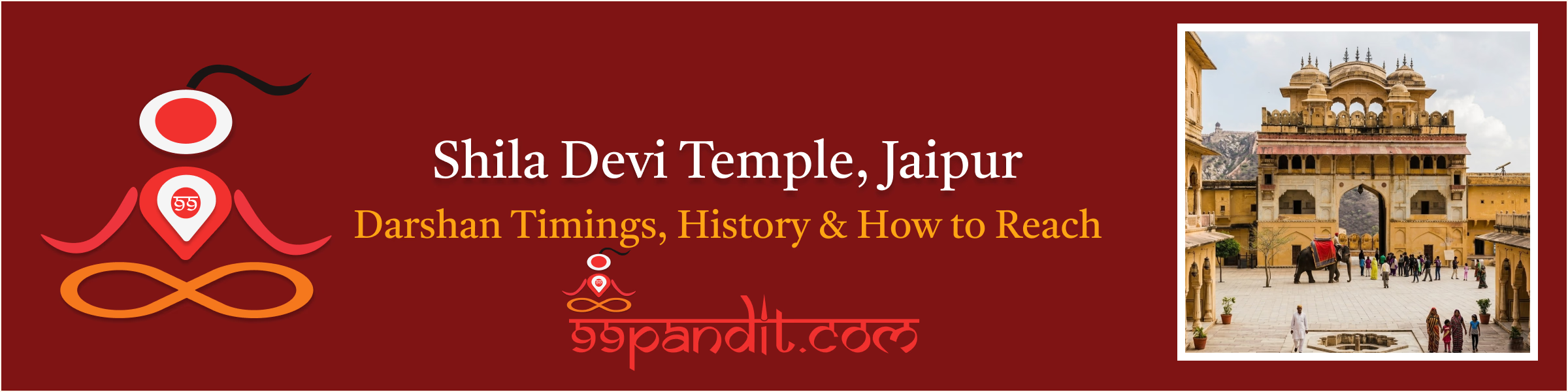


Shila Devi Temple, Jaipur, is the house of the famous idol of Goddess Durga located in Amber Fort.
There is a belief that Maharaja Mansingh brought the idols of the Goddess from Jessore, Bangladesh, in 1604.
Many stories say that a deity appeared in his dreams and asked him to retrieve her statue lying under the sea in Jessore and install it in a temple.
Following the orders, the idol was founded from the sea in the form of a shila. It was brought to Amber Fort, where it was purified and installed.
The result of the process was the deity that is present today. So, it is named Shila Mata, which took ten long years to construct the temple.
Why does she worship as the guardian of the Amer fort? Read the complete guide to learn more details.
Situated on the top of the Aravali hills, made within the honey-hued sandstone walls of Amer fort, resides the key guardian of Jaipur’s royal heritage:
Goddess Shila Devi. For ages, she has been the Kuldevi of the Kachwaha Rajput clan.
To local people, she is not an idol, but the living energy that has safeguarded the kingdom through wars, droughts, and shifting tides of history.
When you pass through the ornate Ganesh pol and enter the silver-plated doors of the sanctum, the air thickens with the fragrance of incense and rhythmic recitation of pandits, marking a spiritual heart that beats in a military fortress.
When you stand before the Goddess, you will see something strange and slightly unsettling: the tilted neck of the deity to the right.
Local people share a chilling reason. It’s believed that in the early days, the goddess asked for a human sacrifice daily.
When the royal family eventually replaced this with a symbolic animal sacrifice (legends say, a pumpkin), the deity was so displeased with the change in devotion that she turned her face away from the followers.
From that day, her neck remains permanently inclined – a silent, stony sign of a divine understanding from a bygone era.
Why was a Bengali deity there in the desert of Rajasthan? Following a series of defeats in battles against King Kedar in modern-day Bangladesh, Raja Man Singh I is said to have received a vision from God.
Goddess assured him that he would be victorious if he retrieved her idol from the sea.
After his victory, he took the heavy slab of stone (Shila) more than 1500 kilometres to Amer, where she has been ruling ever since.
Read Also: Moti Dungri Temple Jaipur: Timings, History & How to Reach
Devotees who are planning a quick visit, here are the details of everything you need to know before visiting Shila Devi Temple.
| Feature | Details |
| Primary Deity | Goddess Shila Devi (An incarnation of Durga/Kali) |
| Location | Jaleb Chowk, Amer Fort, Jaipur, Rajasthan |
| Established | 1604 AD by Raja Man Singh I |
| Architectural Style | Traditional Rajput & Mughal Fusion |
| Temple Entry Fee | Free (Note: A ticket is needed to enter the Amer Fort complex) |
| Photography | Restricted inside the inner sanctum |
| Best Time to Visit | Ideal to visit from October to March (Winter) & during Navratri |
| Major Festivals | Chaitra & Sharad Navratri (Huge celebrations) |
Important Note: As there are no individual charges for the temple, you have to buy an Amer Fort ticket at the main entrance.
The temple is established in the first main courtyard, which makes it accessible when you enter the fort.
Want to visit the temple? But unaware of the right time. Don’t worry, the temple follows a strict traditional schedule.
Whether you want to experience the soul-stirring morning Arti or a calm evening prayer, these are the official timings:
But there are different times for bhog, arti, and darshan in the temple.
| Timing | Rituals |
| 6:00 a.m. | Darshan, Bal Bhog (10 min.). |
| 7:00 a.m. | Jal Bhog (Dahi and Patasha). |
| 8:00 a.m. | Poojan, Bhog of Gunji (name of a sweet dish) and seasonal fruits. |
| 10:00 a.m. | Aarti (5 minutes). |
| 10:30 – 11:00 a.m. | Rajbhog (visitors can not enter during Rajbhog). |
| 12:00 noon – 4:00 p.m. | Shayan (Rest or sleeping hours of the deity, so the temple becomes closed). |
| 4:00 p.m. – 8:00 p.m. | Darshan (Temple opened for visitors). |
| At the time of sunset | Sandhya Aarti and Bhog (schedule kept changing occasionally as the time of sunset changed). |
| 8:00 p.m. | Shayan Aarti. |
| 8:00 p.m. – 5:00 a.m. | Shayan (Rest). |
Pro Tip: During Rajbhog break, please note that temple doors remain closed usually between 10:30 AM and 11:00 PM.
Hence, accordingly, plan your climb to the fort to avoid waiting in the heat during this 30-minute closure.
The temple goes through magnificent changes during the Chaitra and Sharad festivals.
Read Also: Sri Senpaga Vinayagar Temple, Singapore: Timings, History & All Details
The Shila Devi Temple’s history is an amazing blend of military conquest and divine interference. This is how the Bengali deity became the saviour of the Rajput land.
The Legendary general of Emperor Akbar, Raja Man Singh I, was sent to Bengal in 1604 AD to stop King Kedar’s revolution.
After multiple attempts to defeat him, Man Singh worshipped Goddess Kali to grant him success.
Goddess came in his dream that night, and promised him victory, but on one condition.
He should find her idol, which was cast into the sea by attackers, and install it in his place.
Getting a win over King Kedar, Man Singh discovered a big stone slab from the water of Jessore and brought it 1,500 Km away to his Amer fort.
The Shila Devi name literally means the goddess of the Stone Slab. This was unlike the traditional idols that were cut into particular shapes before transportation; the Goddess was transported to Jaipur in a single block of uncut stone (Shila).
Only when it was transported to America was the complex shape of the Goddess cut out of this same slab, making the temple bear this particular name.
The nine forms of Shakti or Maa Durga, i.e., Shail Putri, Chandra Ghanta, Skand Mata, Brahmacharini, Maha Gauri, Siddhi Datri, Katyayani, ChandraGhanta, Kooshmanda, and Kaal Ratri, along with ten Mahavidyas called Kali, Tara, Dhumawati, Baglamukhi, Maatangi, Shodashi (Tripur Sundari), Bhuvneshwari, Bhairvi, Chinnmasta, and Kamla, are beautifully designed on the silver doors of the sanctum.
The design of the temple is a beautiful dialogue between Rajput grandeur and Bengali aesthetics, showing the journey of the Goddess.
The Magnificent Silver Doors: When you enter the sanctum, your eyes will be drawn to big doors encased in pure embossed silver.
These are not only barriers, but they are also a visual scripture. Looking closely to see the ten forms of the Goddess beautifully designed into the silver panels.
The door also has the nine forms of Durga, representing exquisite metalwork that has stayed lustrous for ages.
The Rare Coral Ganesha: Before entering the main premise, see the entrance arch. You will see a small but beautiful, rare idol of Lord Ganesh.
This is made from typical stone or marble, and Ganesha is designed from a single piece of red coral. Lord Ganesha is the remover of obstacles, and placing him at the entrance assures a pure and successful pilgrimage for all.
The Fusion of Marble & Style: The unique architecture of the temple bridges two distant regions of India.
Its curved pillar and specific Chala style show the Bengali traditional architecture.
High-quality white marble used for floral carvings and fortress-like integration into Amer are classic hallmarks of Jaipur’s royal buildings.
Read Also: Char Dham Yatra in Hindi: चार धाम यात्रा का महत्व तथा सम्पूर्ण जानकारी
The unconventional offering of the Shila Devi Temple is one of the most interesting features of that temple, which is known as Pucca Prasad.
Unlike the typically vegetarian sweets that can be seen in most of the Hindu shrines, this temple was a centuries-old practice of offering the Goddess Alcohol, specifically in the form of ginger-infused wine or liquor.
The tradition is based on the Shakti traditions of Eastern India, in which the terrible image of the Divine Feminine is pacified with powerful offerings.
Presently, the devotees are oftentimes given two different selections: the Mitha Prasad, which is composed of customary Indian confectionery and sugar drops, and the Pucca Prasad, which is the offering of liquid.
Although the contemporary laws and sensibilities have curbed the practice, the duality of the prasad is a curious reference to the duality of character of the Goddess, as the mother goddess and as a warrior.
Getting to the Shila Devi Temple is a beautiful journey through the historic lanes of Amer. These are the best ways to get there:
Read Also: Veerabhadra Temple, Lepakshi: Timings, History & How to Reach
To make your visit to Shila Devi Temple as smooth as possible, follow these tips in mind:
The Shila Devi Temple is not merely a worship place but is a kind of living channel connecting the royal history of Rajasthan and the mystic traditions of Bengal.
It is a visit here whether you are lured by the beauty of its silver doors, the myth of the tilted neck or a mere need to meditate spiritually.
The bells ringing against the Aravalli hills background will make you realise that the “Guardian of Amer” is still a spell, which she casts every time a traveller passes through her gates.
Table Of Content
 Number.

Enter the OTP sent to
Chat with verified astrologers on 99Pandit and receive personalized guidance for every stage of life.

 Ontime Service
 Certified Pandit
 Transparency