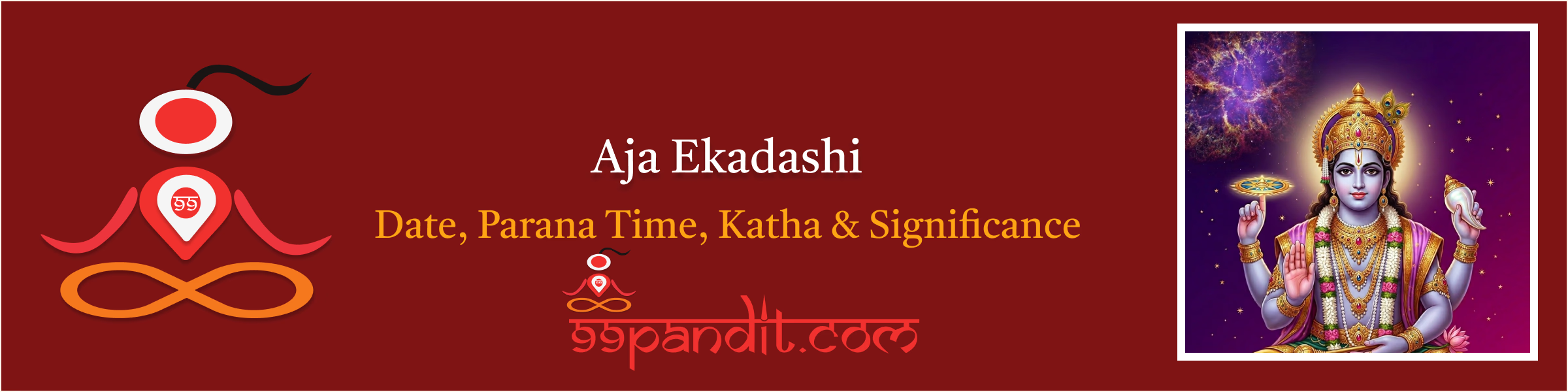
Aja Ekadashi 2026: Date, Parana Time, Katha & Significance
The most sacred Ekadashi is coming in September. Aja Ekadashi 2026 will be commemorated on Monday, September 7, 2026. Following…
 0%
0%
 Book Griha Pravesh Puja Online
Book Now
Book Griha Pravesh Puja Online
Book Now

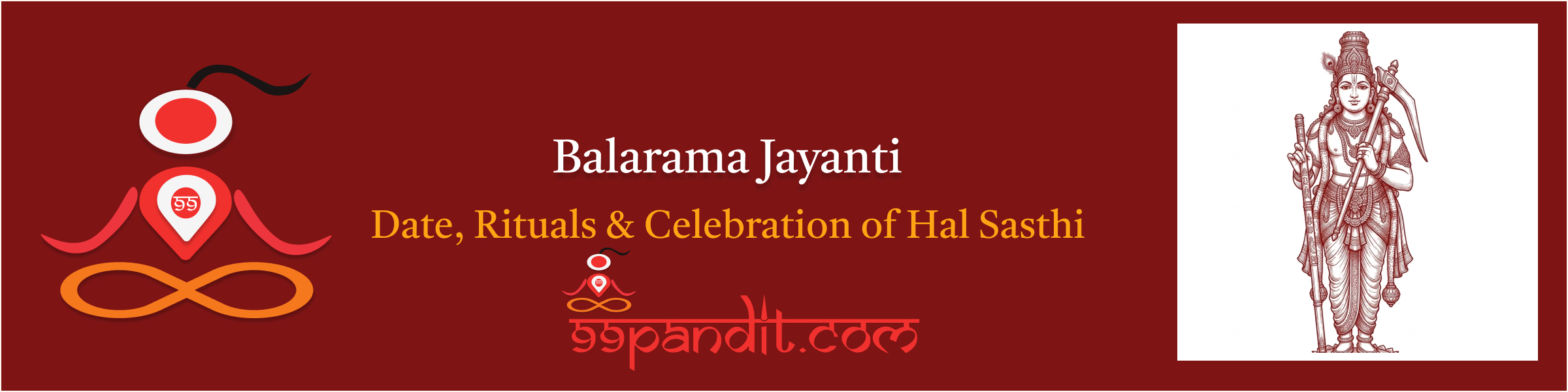


Balarama Jayanti 2026 is a sacred festival in the Hindu calendar that falls on the full moon day of Shravana month.
It is a time to mark the birth anniversary of Lord Balarama, the elder brother of Lord Krishna.
Being known as the symbol of power and bravery, this day brings hope and luck to the lives of millions of believers.
Although it is popularly known as Balarama Jyanati, it is also observed as Balarama Purnima, Hal Sasthi or Baldev Chhath, depending on the region and local custom.
In addition to that, it is also referred to as Shashti or Lalahi Chhath on the northern side. In 2026, this auspicious day will fall on Friday, August 28, 2026.
It is a special chance for you to seek the divine grace of “Haldhar”, the divine wielder of the plough.
Hal Shahsti is mainly observed by the farming communities and mothers who pray for their child’s overall well-being.
Whether you observe this day as Balaram Jayanti or Sasthi, the spiritual significance remains the same.
Continue reading this blog to know about Balaram Jayanti 2026 date and muhurat, simple rituals, and significance.
Looking to observe this festival? Then it is vital to know the exact date and tithi timings.
In 2026, the date of celebration differs based on whether you follow the Purnima (Full Moon) or the Sasthi (6th day) tradition.
Balarama Jayanti 2026 is commonly observed on Friday, August 28, by the followers of the Vaishnava tradition and ISKCON.
It coincides with the Shravana Purnima and the same day as Raksha Bandhan. Here’s the exact tithi timing for Balaram Jayanti 2026:
| Tithi | Date & Timing |
| Primary Date | Friday, August 28, 2026 |
| Purnima Tithi Begins | August 27, 2026, at 09:08 AM |
| Purnima Tithi Ends | August 28, 2026, at 09:48 AM |
| Nakshatra | Swati |
| Month | Shravan (Purnima) |
As the Purnima tithi is active during the Udaya tithi (sunrise) on August 28, it is an ideal day to keep fast and offer prayers to Lord Balaram.
In North India, Lord Balarama’s birth anniversary is observed on Bhadrapada Krishna Shasthi as Hal Sashti or Lalahi Chhath. It will fall on:
| Detail | Information |
| Festival Name | Hal Sashti / Lalahi Chhath / Baldev Chhath |
| North India Date | September 16, 2026 |
| Tithi | Bhadrapada Krishna Shashthi |
| Nakshatra at Birth | Swati |
| Month | Bhadrapada |
If you are also thinking, why does Balarama Jayanti have two different dates? Here’s why:
1. The Shravan Purnima tithi is followed in some parts of West India and South India. They witness the birth of Lord Balarama on the full moon day of the Shravan month.
2. Lord Balarama is said to have been born on Shukla Shashthi of Bhadrapada month, as written in Hindu scriptures.
That’s why in many north Indian places like the Braj region, Bihar, UP, and MP, his birth is marked on the Bhadrapada Krishna Shashthi.
Both dates are equally auspicious and offer the best spiritual results.
Lord Balaram is a divine deity in the Hindu mythology representing power and protection.
He is the seventh child of Mata Devaki and Vasudev. On this day, he is adored as an embodiment of Adishesha, the serpent on which Lord Vishnu lies.
Because of his numerous personalities, he is referred to in a variety of names such as Baladeva, Balabhadra and Halyayudha.
Unlike other warriors, the primary weapon of Lord Balram is the Hal (Plough). This is why he is lovingly known as Haldhar. But this tool carries deep meaning:
His connection with the plough makes him the God of Agriculture. Therefore, the farmer communities pray to their tool to thank the Lord for a good harvest in the Balarama Jayanti.
In Vedic tradition, Lord Balaram is believed to be the “Adi-Guru” or first teacher.
That’s why worshipping him on the Balarama Purnima blesses devotees with good health and spiritual strength (bala) required to reach the supreme.
Without his blessings, one cannot understand the teachings of Lord Krishna entirely.
While Balarama Jayanti is widely celebrated across India, the festival of Hal Sasthi holds its own unique traditions.
As Lord Balarama is known as “God of the Plough,” the day is highly important in rural and farming communities.
In many households, women are the main participants of this festival. Mothers often offer special prayers and observe a fast.
It is particularly done to seek the blessings of Lord Balaram for their child’s happy, healthy, and long life.
The rituals performed during the Hal Sasthi are very different from those celebrated in Hinduism. Let’s explore some of the generally followed strict rules:
1. No Ploughed Grains: To show respect to Mother Earth and the tool of Lord Balaram, devotees avoid eating any grains or vegetables grown using a plough.
Instead, they eat wild rice (Pasai Dhan) or vegetables like Chhibri that grow naturally.
2. The “No Cow Milk” Rule: Since Lord Krishna is the protector of cows, cow milk and curd are strictly avoided on this day to honour his elder brother. Hence, devotees use buffalo milk for their prayers and meals.
3. Worshipping the Plough: Farmers clean and decorate their ploughs with flowers and vermillion (tilak). If a plough is not there, families often draw a small symbol to offer prayers.
4. Artificial Pond: In many parts of India, women dig a small hole in their courtyard and fill it with water, creating a small pond.
Later worship it while representing the fertility and life-giving power of the Earth.
Ready to bring the spiritual strength to life by performing the simple rituals of Balarama Jayanti at your home?
Here’s a simple step-by-step guide for you:
Start with cleaning your home and puja area. Collect some fresh flowers, Tulsi leaves, and all other required puja samagri in a single place to avoid any last-minute hassle.
It is a ceremonial bath offered to the deity as a sign of respect.
The Hal Sasthi Vrat Katha is a very popular story that highlights the power of a mother’s love, truth, and devotion.
Long ago, there was a woman who was a milkmaid and was near her delivery date. She was worried about her milk being spoiled before she could sell it.
Driven by greed, she went out into a village to sell it. On her way, she goes through an intense labour pain and gives birth to a son under a Jharberi (wild berry) bush.
Even after that, she wants to sell her milk. She mixed cow’s milk with buffalo milk and lied to villagers about the milk as pure buffalo milk.
Though she knows that on this day it is Balaram Jayanti and cow’s milk is generally avoided in certain rituals.
When she was selling milk, a farmer accidentally struck her child with his plough and the child died.
At the time when she returned, she saw her dead child and realised her sins to the village women and confessed her lies to everyone.
Impressed by her honesty, the village women blessed and prayed collectively for her. When she returned to the bush, she found her son alive.
Since then, on the day of Hal Sasthi, mothers observe a fast and offer prayers for their long life and well-being.
The way the birth anniversary of Lord Balarama is marked across India varies from state to state.
From the grand temple of Mathura to the fields of Bihar, here’s how the “Lord of the Plough” is honoured:
In the janambhoomi of Lord Krishna, the celebrations are done on a grand level. The Shri Dauji Maharaj Mandir in Mathura serves as the main attraction point for devotees.
In the cities of Odisha, like Ganjam and Puri, Lord Balaram is worshipped with deep reverence and faith.
In cities of Gujarat, the day is widely known as Randhan Chhath.
The day is widely famous as Hala Chhath in Bihar and several parts of Nepal.
Chanting a certain mantra dedicated to Lord Balarama helps devotees seek spiritual and physical strength. Here are some of them:
1. The Balarama Maha-Mantra:
“Om Namo Bhagavate Vasudevaya”
2. The Hal Sasthi Mantra (For Mothers):
“Haldharaya Namaha”
3. The Balarama Pranati Mantra:
“Namaste Tu Halagrama, Namaste Musalayudha, Namaste Revati-Kanta, Pahi Mam Purushottama.”
Keeping a fast on the Balarama Jayanti is a great way to purify both soul and mind. Devotees observing a partial fast or strict Hal Sasthi Vrat, here are the key points to keep in mind:
The Timing of the Fast:
Many devotees observe a “Half-Day fast.” It means you break the fast after the evening aarti by consuming the prasad.
What can you eat, and what to avoid?
| Allowed | Avoid |
| Fresh fruits like Apples, bananas, grapes, and more | Wheat, Rice, Corn, and Oats |
| Fresh milk, Curd, Buttermilk (only Buffalo) | Lentils (Dal), Beans, and Soy |
| Almonds, Walnuts, Cashews, and other dry fruits | Onion, garlic, and non-vegetarian food |
| Coconut water and Sattvik food like Singhara atta, rajgiri, Sabudana and makhana | Normal salt and root vegetables |
Strict Prohibition: If you are observing Hal Sasthi, avoid eating vegetables and grains grown using a plough.
Rather, consume wild rice (Pasai Dhan), naturally grown greens, and buffalo milk.
Balarama Jayanti 2026 is not just about rituals, traditions, and fasting. It is a reminder for devotees to gain inner strength (Bala) required to navigate life challenges with dharma and grace.
Just like Lord Balarama uses his plough to clear the earth for new life, observing this day helps us remove all the weeds of ego and greed from our lives.
Hence, it led to the creation of a new room for kindness and peace. The festival is mainly celebrated by farming communities for healthy crops, and women to seek blessings for their children’s good health.
Moreover, the Balarama Jayanti is marked by different names and days across the diverse regions.
Whether you are observing it as Hal Sasthi, Baldev Chhath, Lalahi Chhath, or Balaram Jayanti, it teaches to stay on the path of dharma and truth.
Just simply observe the vrat, chant the mantra, and offer prayers to deities with utmost faith and devotion to bring divine blessings to your doorsteps.
We hope you find everything about Balrama Jayanti 2026 in this article. For more such interesting blogs, visit our site 99Pandit.
Table Of Content