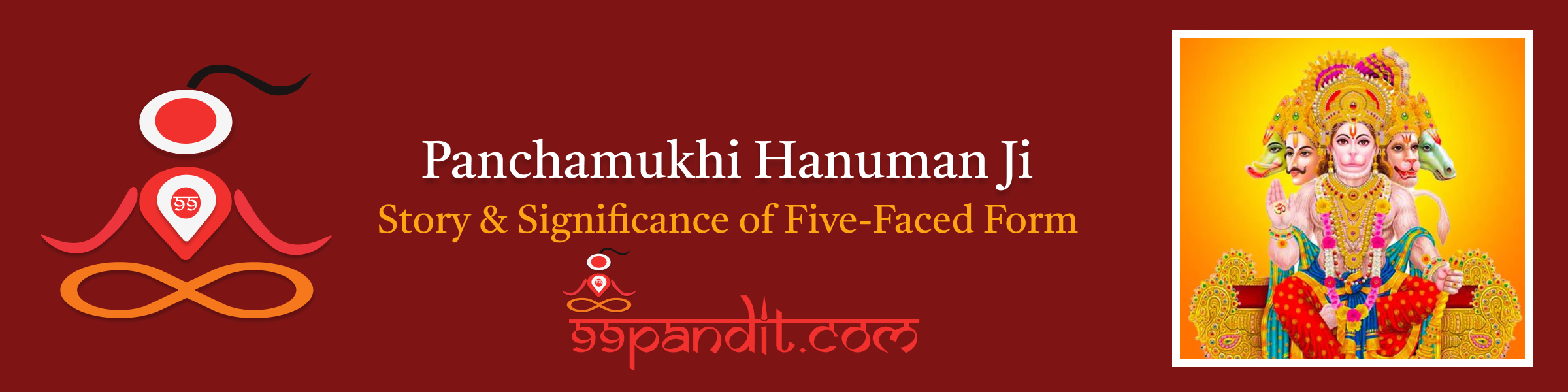
Panchamukhi Hanuman Ji: Story & Significance of Five-Faced Form
Lord Hanuman is one of the most revered deities in the Hindu mythology. Panchamukhi Hanuman Ji is one of the…
 0%
0%
 Book Griha Pravesh Puja Online
Book Now
Book Griha Pravesh Puja Online
Book Now



When we talk of sacrifice and duty, the first person whose name flies up is Bhishma Pitamah. His existence was a relentless struggle against various choices, and he was very energetic in his commitments.
Even at his young age, he made up his mind to stick to the truth. He gave up love for his people so that they could have a nice and thriving life.
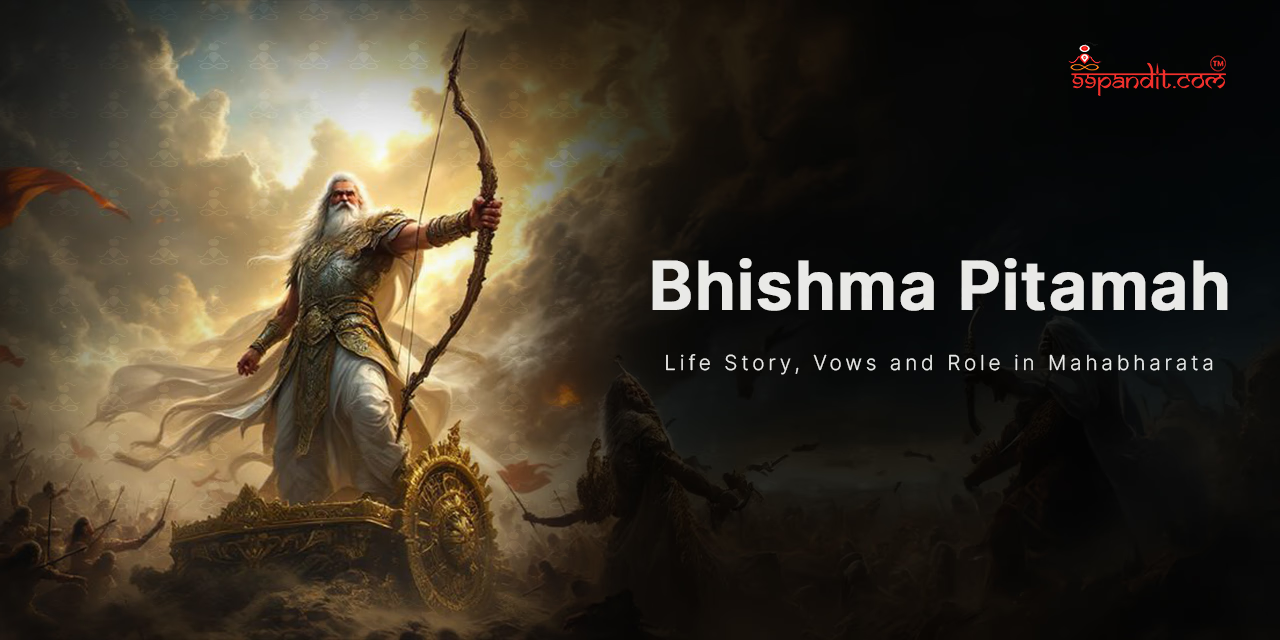
Moreover, Bhishma Pitamah was not just a great warrior. He became a leader, a father, and a face of integrity. Kings trusted his words. The brave followed his strength. The foes even admired his morality.
His saga is not only in the past. It is a lesson. It instructs us that one person has over the whole life. He was deeply and widely involved in the Mahabharata.
Here, you get to know about his life, his well-known oaths, and the reason why, even now, people still pay respect to Bhishma Pitamah.
Before the world knew him as Bhishma Pitamah, his name was Devavrata. His arrival in this world was far from being typical.
He was the son of King Shantanu, the ruler of Hastinapur, and Goddess Ganga. Many stories declare that the river became his mother.
It is said that when Devavrata was born, people could feel that he was going to be a great one. Goddess Ganga brought him up with love and strictness.
She imparted to him truth, patience, and most of all, respect for duty. These teachings became the foundation of his lifetime.
Devavrata’s childhood was full of learning. He did not waste time playing alone. He trained his body and his mind every day.
Great teachers taught him archery, sword fighting, and the use of weapons. He also learned the Vedas, morals, and the rules of kingship.
He listened carefully and practiced hard. He had been the pride of his teachers. In fact, even in his childhood, he was notable for his composure and sagacity.
It was widely thought that he would grow up to be a benevolent and mighty ruler. One day, life tested Devavrata in a big way.
King Shantanu wished to marry again. But there was a condition. Devavrata had to give up his right to the throne.
Without fear or doubt, he agreed. He also took a shocking vow to never marry. This promise was made only for his father’s happiness.
From that moment, Devavrata was called Bhishma Pitamah, meaning the man of a powerful vow. His life became a shining example of sacrifice, duty, and strong promises.
One of the most famous promises in the Mahabharata is the Bhishma Pratigya. It was the promise that made Bhishma Pitamah a legend.
This vow was not forced upon him. On the contrary, he chose it bravely. He knew very well that it would change his life completely.
However, he didn’t back down. By this pledge, he revealed not only his affection for his father but also his admiration for the obligation.
Nowadays, people still remember Bhishma just because of that one fearless act.
The promise consisted of two separate parts. Bhishma was one to definitely give up his claim to be the king of Hastinapur.
In addition, he committed that he would not marry even once in his life. This meant no wife. No children. No personal happiness.
It was a very hard promise. But Bhishma believed that words once spoken must be kept forever. That is why his vow became famous as a strong and unbreakable promise.
Bhishma took this vow for his father, King Shantanu. The king wanted to marry Satyavati. But her family wanted her son to become king.
This made the king sad. Bhishma saw his father’s pain. He decided to remove it. So he stood in front of everyone and made his vow. He chose his father’s happiness over his own future. This act showed true sacrifice.
This single vow was like a turning point. New kings came to the throne. The stories of new kings started.
Although Bhishma did not marry, he took it upon himself to be the protector of Hastinapur. He guided the kings. He defended the kingdom.
His vow was the factor that determined the future of the Kuru dynasty. The life of Bhishma Pitamah is an example to us that one firm decision has the power to change history forever.
When the battle at Kurukshetra escalated to its next phase, it was Bhishma Pitamah who took the lead of the Kaurava army. Even though he was of advanced age, he definitely still had a lot of power in him.
Along with being a strong man, he was also seasoned in battle and in army management as well.
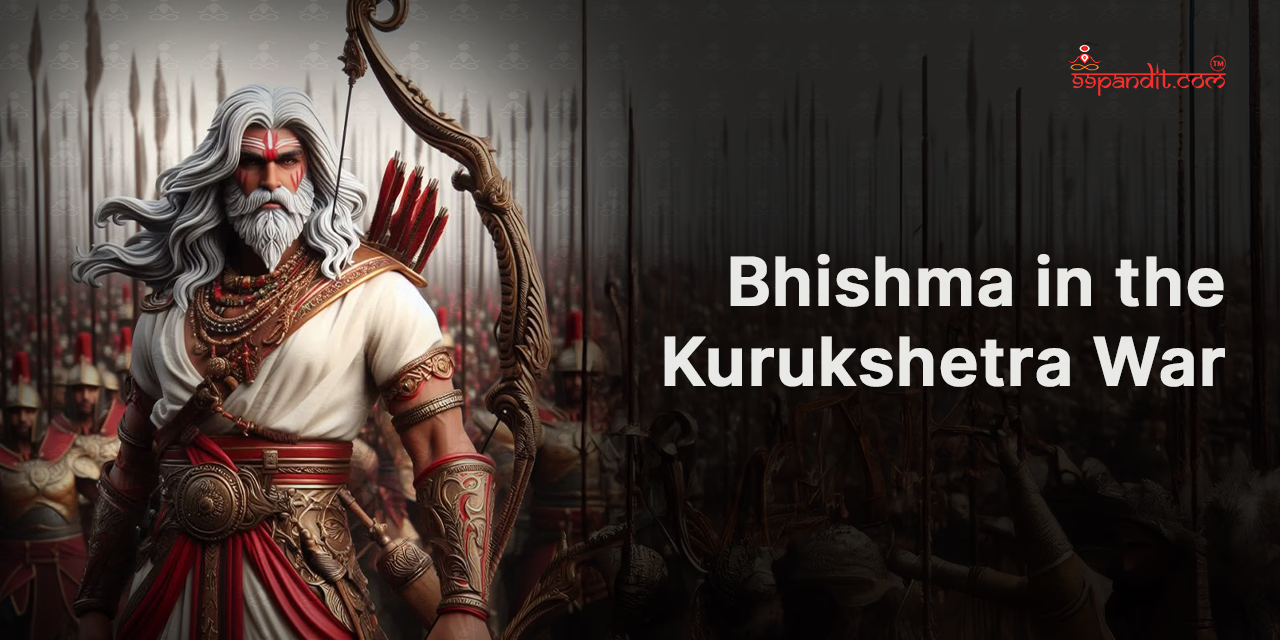
Soldiers trusted and believed in him. They got courage when he was at the front. The Pandavas also respected him.
They never considered him a foe. They regarded him more like an elder. No one wanted to fight with Bhishma directly.
Bhishma loved the Pandavas dearly and took care of them as if they were his own kids. In his loving gesture, he made an extremely significant promise.
He marked the Pandavas as the people he would not kill during the war. He only battled because he was loyal to the Kaurava throne until the very end.
On several occasions, he kept his control. The war could have ended very quickly, but he controlled himself.
Therefore, he played the role of a sufferer. His love was between the two – the one for the Pandavas and the other for his duty. However, he kept on with his promise.
Bhishma could not be defeated easily. So Krishna made a plan. Shikhandi stood in front of Bhishma. Bhishma did not raise his weapons. Arjuna then shot many arrows. Bhishma fell to the ground.
The arrows formed a bed under his body. He did not die at once. He waited calmly. Even in pain, Bhishma Pitamah stayed peaceful and strong.
From the start of his life, he had been looking after Hastinapur. He was the one with whom kings consulted.
He was the tutor of the princes. When the kingdom faced bad days, it was he who was the pillar of the kingdom.
People trusted him immensely. When People used to treat the words of Bhishma as the final court when he spoke.
Bhishma did not follow one ruler but the power of the throne of Hastinapur. Kings changed, but Bhishma stayed. He believed the throne represented the kingdom and its people.
Even when wrong decisions were made, he did not leave his duty. He stood by the crown because his promise mattered more to him than comfort or opinion.
Bhishma hid his pain inside the deepest part of his heart. He knew what was right. He even understood Dharma very well. In many instances, his duty restrained him from taking steps. This made his life miserable.
He saw the wrong things happening and kept his mouth shut (during the Kurukshetra War). His heart longed for justice, but his vow was against it. This internal war made Bhishma a mortal. It demonstrated that the burden of duty is very hard.
The story of Bhishma Pitamah is a lesson that faith in one’s promise can be one’s greatest power, even when it brings sorrow.
One of the great and memorable Bhishma teachings is that he kept on sharing his knowledge with humanity even during his very painful and unfortunate situation, i.e., when he was lying on the bed of arrows.

The passing of Bhishma Pitamah was not ordinary. He was not death-afraid, at any point. A long time ago, he got a unique boon, which was called Ichchha Mrityu. He could separate himself from his body at any hour of the day.
After the war, Bhishma was lying on the bed of arrows. His body was hurting, but his mind was peaceful. Why was he waiting for so long?
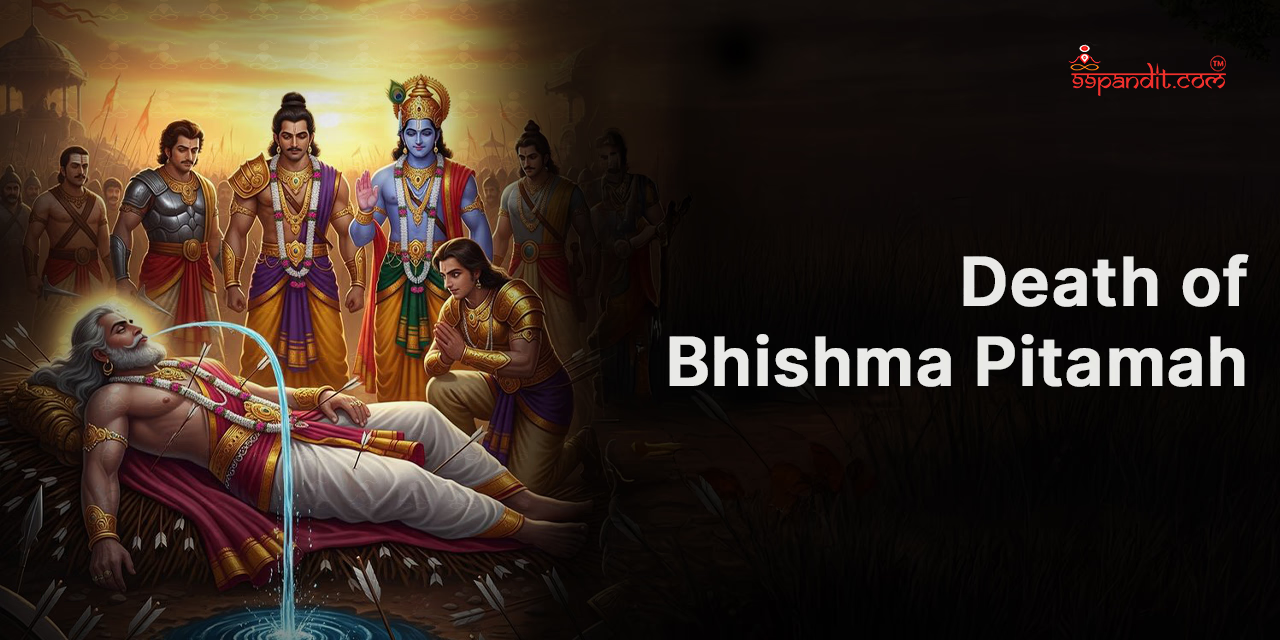
Bhishma lived till he saw Uttarayan, the good time when the sun changes its course to the north.
As per Hindu philosophy, dying at that time results in freedom for the soul. Even in suffering, Bhishma showed patience and control.
He spent his time teaching Dharma, guiding kings, and sharing wisdom. Everyone gathered around him to listen. His words carried truth and clarity.
When Uttarayan arrived, Bhishma closed his eyes. He remembered Lord Krishna. With peace in his heart, he left his body. His soul found liberation. The life of Bhishma Pitamah ended, but his wisdom lives on forever.
Bhishma Pitamah is one of the most prominent characters in the Mahabharata who can be referred to as the embodiment of Dharma. His lifetime provides an experience that defines what it means to be dutiful.
Rather than joy of his own, he chose to keep the promises. This made his journey difficult, but at the same time, it was significant.
His life exemplifies sacrifice and loyalty to the extent that he is the purest one. He relinquished the throne and family life for the sake of others.
He was loyal to Hastinapur to the very end. Even in his suffering, he uttered wisdom and led others.
Bhishma Pitamah is still remembered as an eternal hero because his morals never change. The case of his life still motivates people to be honest, brave, and dutiful.
His life is like a lamp that lights the way to truth, courage, and selfless service, the real greatness.
Table Of Content