Balarama Jayanti 2026: Date, Rituals & Celebration of Hal Sasthi
Balarama Jayanti 2026 is a sacred festival in the Hindu calendar that falls on the full moon day of Shravana…
 0%
0%
 Book Griha Pravesh Puja Online
Book Now
Book Griha Pravesh Puja Online
Book Now

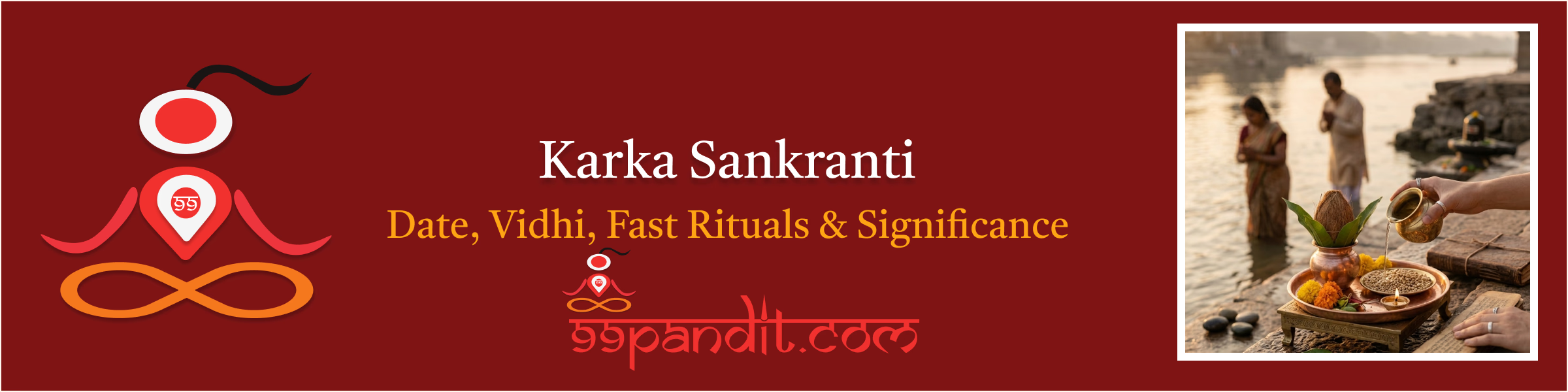


Karka Sankranti 2026 marks the movement where the Sun moves out of Gemini (Mithuna Rashi) and enters the sign of Cancer (Karka Rashi).
In the Hindu solar calendar, every time the Sun shifts from one zodiac to another is called Sankranti, which simply means transit.
It is one of the most spiritually significant of them all. The day will be observed on Thursday, July 16, 2026.
The day marks the beginning of the Dakshinayana, which is the Sun’s six-month southward movement. Simply, it is the opposite of Makar Sankranti that starts the Sun’s northward journey.
At this phase, the monsoon is active, the earth becomes fertile, and the atmosphere shifts into a spiritually reflective period.
It is an ideal time for holy bath, charity, pitru tarpan, worship of the Sun, worshipping Lord Vishnu, and focusing on your inner self.
This guide will help you explore more about Karka Sankranti, the exact date and timing, puja vidhi, and spiritual significance of this day. Let’s begin!
If you are looking to observe this day, knowing about the exact date and timing can help you get the most spiritual benefit from the day.
In 2026, Karka Sankranti will fall on Thursday, July 16. This is exactly when the Sun completes its stay in Gemini.
Unlike other Sankranti festivals, where the holy window falls after the Sun moves, this Sankranti is unique.
The most auspicious period mainly starts 30 Ghatis (roughly 12 hours) before the Sun officially enters Cancer.
| Event | Date | Time (IST) |
| Karka Sankranti Moment | July 16, 2026 | 12:37 PM |
| Punya Kaal (Auspicious) | July 16, 2026 | 12:37 PM – 07:15 PM |
| Maha Punya Kaal (Best) | July 16, 2026 | 05:15 PM – 07:15 PM |
What is Punya Kaal? Think of it as a “spiritual power window.” It is believed that the positive energy you earn by doing good deeds, prayers, and charity in this period multiplies.
Pro Tip: While these are the general timings for India, the timings of sunrise and sunset can vary by city.
We always suggest checking your local Panchang for the precise muhurat as per your location.
Karka Sankranti is the day the Sun leaves Gemini and enters Cancer. As the Cancer zodiac sign is known as Karaka Rashi, this Sankranti is called Karka Sankranti.
The Sun begins to move into the southward phase, which is called Dakshinyana. In Vedic tradition, this shift carries a deeper meaning.
The day becomes shorter, rain starts, and the world turns inward. While there are twelve Sankranti in a year, this Sankranti belongs to the Ayan type.
It makes Karka Sankarti one of the two most powerful seasonal shifts. The day invites inward, silent, and reflective energy.
In many parts of Southern India, you will find this day celebrated as Karka Sankramana. Here’s a quick overview of Karka Sankranti:
As the ruling planet of Cancer is the Moon, the day is deeply linked with our emotions, homes, and how we nurture ourselves and others.
It is believed that “energy of the world” during this period cools down, ideal for the season for meditation and closer to our roots.
Karka Samkranti is not just a mere festival. It is a profound shift of the energy that affects our spiritual lives, ancestors, and nature as well.
In Vedic tradition, the six months of Dakshinayana are believed to be the “nights of the gods.”
It is a period when the god enters into a resting stage, while marking the start with Dev Shayani Ekadashi that closely coincides with Karka Sankranti.
Rather than starting any new venture or weddings, it is time for inner prayers, worshipping Lord Vishnu, and meditation.
Another inportant aspects that makes Karka Sankrati significant is its link to our roots. Dakshinayana is the period when the gates to the Pitru Loka (ancestral world) are open.
Many families on this day perform Pitru Tarpan, that include offering water and prayers to ancestors’ souls.
It is believed to bring peace to the souls who have passed away. On the other hand, the Karka Sankranti is also celebrated as the arrival of the monsoon.
As the summer fades, Mother Earth becomes more fertile, and farmers offer gratitude to God Sun for the rains to nourish the crops.
This occasion is a major turning point in the agricultural cycle, where the hard work of planting actually starts.
By observing Karka Sankranti, you can align yourself with the Dharma (righteousness) and spirituality.
To observe the Karka Sankranti, it is important to go through the few steps strictly following them with devotion and sincerity.
Here’s the full puja vidhi to observe Karka Sankranti at your place:
You should wake up before sunrise (some 1.5 hours before dawn). Punaya Kaal is also open, as this is the most spiritually charged section of the day.
Start with a cleansing ritual by taking a bath using a few drops of Gangajal in your bathing water. It is claimed to cleanse the mind, soul and body to start the day on an optimistic note.
Now, fill a copper vessel with clean water and add a pinch of vermilion (kumkum) with some flower petals into it.
Stand facing the Sun and pour water slowly while chanting a Surya Mantra (Om Suryaya Namaha) or Gayatri Mantra to seek good health and strength.
As Lord Vishnu enters his divine rest (Yoganidra) during this period, he is considered the primary deity of the day.
Light up a ghee diya in front of the idol. Offer fresh flowers, fruits, and tulsi leaves and chant the Vishnu Sahasranama or Stotra to gain his divine grace.
It is a good day to conduct rituals to honour ancestors to ensure a peaceful departure.
It usually involves the presentation of Pind Daan (rice balls) or food donation to Brahmins.
A simple act of charity during the Punya kaal is a very auspicious act. You can donate food, water, an umbrella, or clothes to the needy or poor people. When you do it with pure intention, the merits of this multiply.
A large number of followers observe fast on this day. You keep the whole fast or the partial fast according to your strength since it makes your mind concentrated, and cleanses your body.
At the end of the day, one should light a lamp before the Tulsi plant and Lord Vishnu. And also offer simple prayers to thank the rains and the richness of the land.
Like every other festival, doing a fast on Karka Sankranti is a powerful way to align your body energies. The fast is dedicated to Lord Vishnu to seek his protection and blessings.
You can choose between a full fast with just water or a partial fast where you eat a simple meal.
To get the most merits out of this Karka Sankranti Vrat, here’s the fasting guide for you:
Keeping a fast on this day is said to wash away all the past sins and bring clarity to your thoughts. It also helps you prepare your mind for a season of spiritual growth and reflection.
Across India, Karka Sankranti 2026 is celebrated with unique local traditions. While the Sun’s transit is the same, the rituals vary from religion.
This period follows the famous Raja festival. As the agricultural year kicks into high gear, households focus on Pitru Tarpan (ancestral rites) and Sun worship. It is an ideal time for farmers to return to the fields for a good harvest.
In the states of Karnataka and Andhra Pradesh, the day is celebrated as Karka Sukramana. The temple organizes special rituals like Surya Archana and Homams (fire ceremony).
Families come along to listen to the Panchangam to mark the beginning of the Sun’s southern journey.
When you move towards the north side, the day is associated with the Dev Shayani Ekadashi. It is the official start of Chaturmas, which is four months for extra devotion.
In many Vishnu temples, a special prayer and rituals are performed as the Gods enter Yognindra.
In the western part of India, the centre of the day is fasting and doing charity. Women and elder member of the family perform a Surya Puja at their home to step into the rainy season with spiritual cleansing and positive energy.
Now that we have learned everything about Karka Sankranti, let’s quickly go through some traditional guidelines you must follow while observing this day:
1. Wake up and take a holy bath during the Brahma muhurta to cleanse the mind and body.
2. Devotees should offer the Arghya to the rising Sun and perform the Lord Vishnu puja to seek the divine blessings.
3. Donate items like clothes, food, and monsoon essentials to the needy or poor people during the Punaya kaal to multiply the merits of the day.
4. Perform Pitru Tarpan to offer gratitude and peace to your ancestors.
5. Reading holy scriptures or doing some spiritual practice during this period is considered highly auspicious.
1. Avoid a big life event like weddings, housewarming, Griha Pravesh puja or starting a new business venture during this period.
2. On the Karka Sankranti, try to avoid eating non-vegetarian food, onion or garlic.
3. Do not indulge in any arrangements and avoid saying any harsh words to others.
4. Don’t miss the Punya Kaal window, which falls before the transit to perform the rituals.
Karka Sankranti 2026 goes far beyond just a solar transit on a calendar. The day acts as a bridge between the outer worlds and the inner spiritual self.
With the Sun stepping into Cancer on July 16, 2026, it’s time to slow down, turn inward, and live a life with greater intention.
The day also helps devotees align their energy with the Sun’s southern journey or Dakshinayana by performing simple rituals like Surya Arghya, observing a fast, doing charity, and worshipping Lord Vishnu.
Whether you’re doing a Pitru Tarpan for your ancestors’ peace or simply offering water to the rising Sun, the day is not just for a grand celebration.
It is a silent invitation to honour the natural change in the cycle of the season. Every simple act you perform on this day carries its own weight.
We recommend that you always verify the timing as per your local Panchang. That’s all for this blog. We hope you find it informative.
To explore more such guides in Mithuna Sankranti, Dev Shayani Ekadashi, and others, simply visit our site 99Pandit.
Table Of Content