10th House in Astrology: Career Meaning, Lord & Significance
In Vedic astrology, the 10th House stands as the pinnacle of ambition – your celestial career guide. This is known…
 0%
0%
 Book Griha Pravesh Puja Online
Book Now
Book Griha Pravesh Puja Online
Book Now

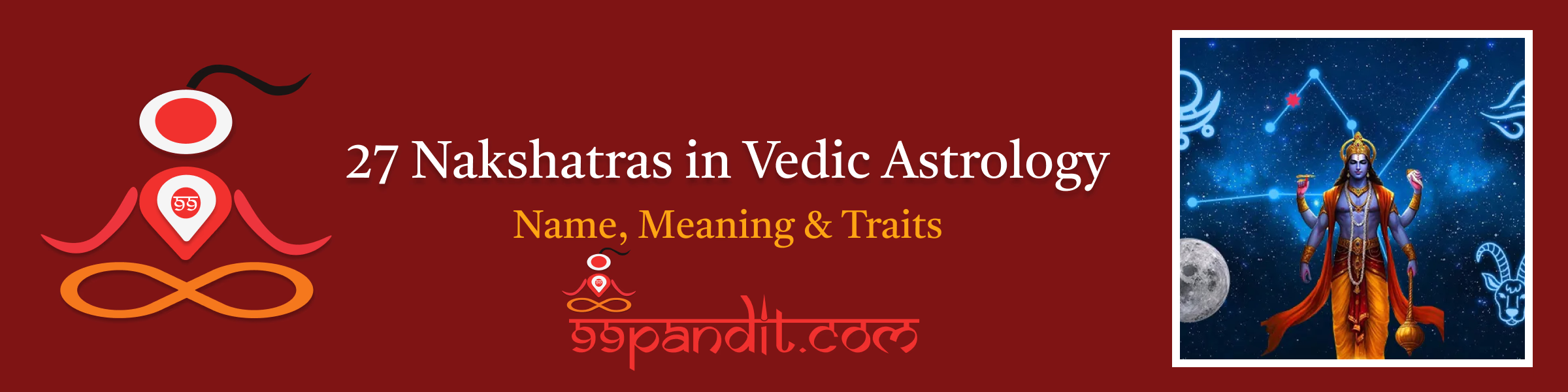


In Vedic astrology, the 27 Nakshatras in Vedic Astrology describe the lunar mansions that shape a person’s emotions, behaviour and life path.
Your zodiac sign shows the broader picture, but the Moon’s exact position in a Nakshatra offers deeper insight into your personality and natural tendencies.
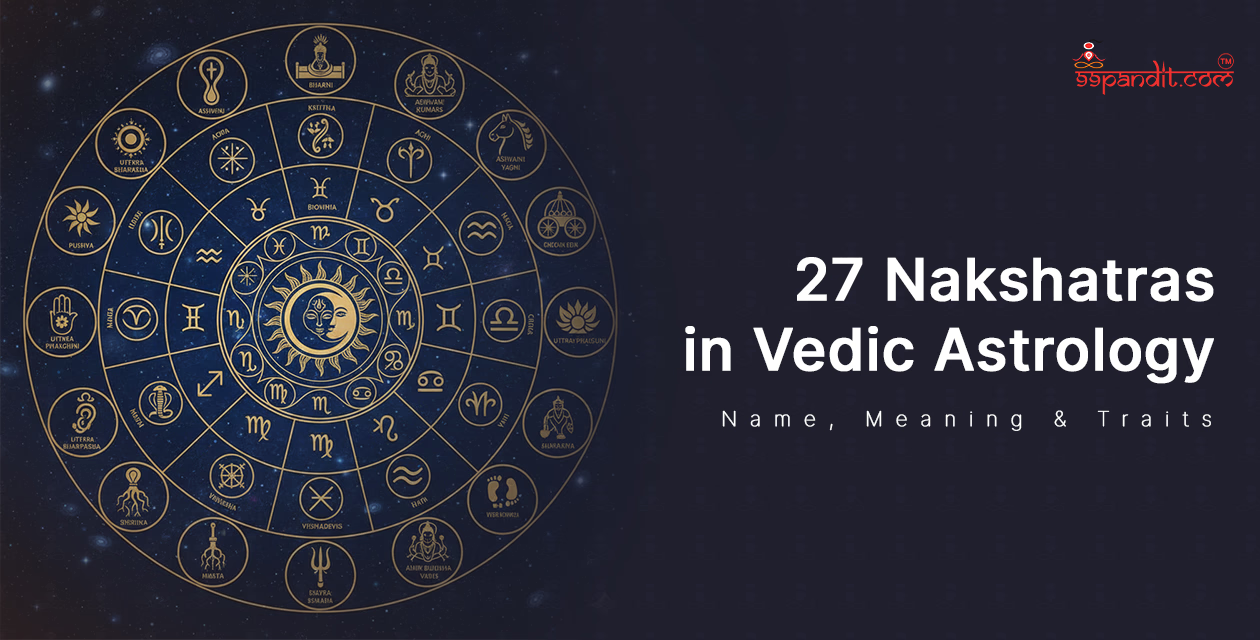
Each of the 27 Nakshatras carries its own energy, ruling planet and deity, which is why they play a central role in understanding how you think, feel and respond to life.
These lunar constellations work like familiar neighbourhoods in the sky. As the Moon moves through each Nakshatra, spending a little over two days in every one, it subtly shapes how you think and feel.
When you understand what each Nakshatra stands for, their meaning, energy and traits, you get a clearer picture of your own nature. It becomes easier to see your strengths, patterns and the direction your life is moving in.
Get accurate guidance on love, career, marriage & life — your first chat is FREE on the 99Pandit App.
A Nakshatra is one of the most fundamental aspects of Vedic astrology. It is a tiny section of the sky that the Moon spins around in its course of 27 days around the Earth.
Known as lunar mansions or constellations, each one spans 13°20′ of the zodiac. The term Nakshatra is derived from a Sanskrit word.
“Nakasha” means sky or map, and “Tra” means to protect. Therefore, demonstrating how the Nakshatra are celestial cosmic signs that tell the feelings, fate, and character of a person.
According to the mythology, these 27 Nakshatras are described as the 27 wives of Chandra, or Moon, and the daughters of Daksha Prajapati.
The movement of the moon with each of its wives presents the cycle through the 27 houses of the stars in 27.3 days. It connects the person’s life with the cosmic energy.
This close association with the Moon makes the Nakshatra an accurate indicator of an individual’s inner nature as per astrology.
Get accurate guidance on love, career, marriage & life — your first chat is FREE on the 99Pandit App.
The 27 Nakshatras in Vedic astrology are not just stars but celestial beings. As per the ancient scriptures, there are 27 daughters of Prajapati Daksha, a son of Brahma.
He wedded all his daughters to Chandra Dev, or the moon. He was tasked to treat each of his wives with the same love and devotion.
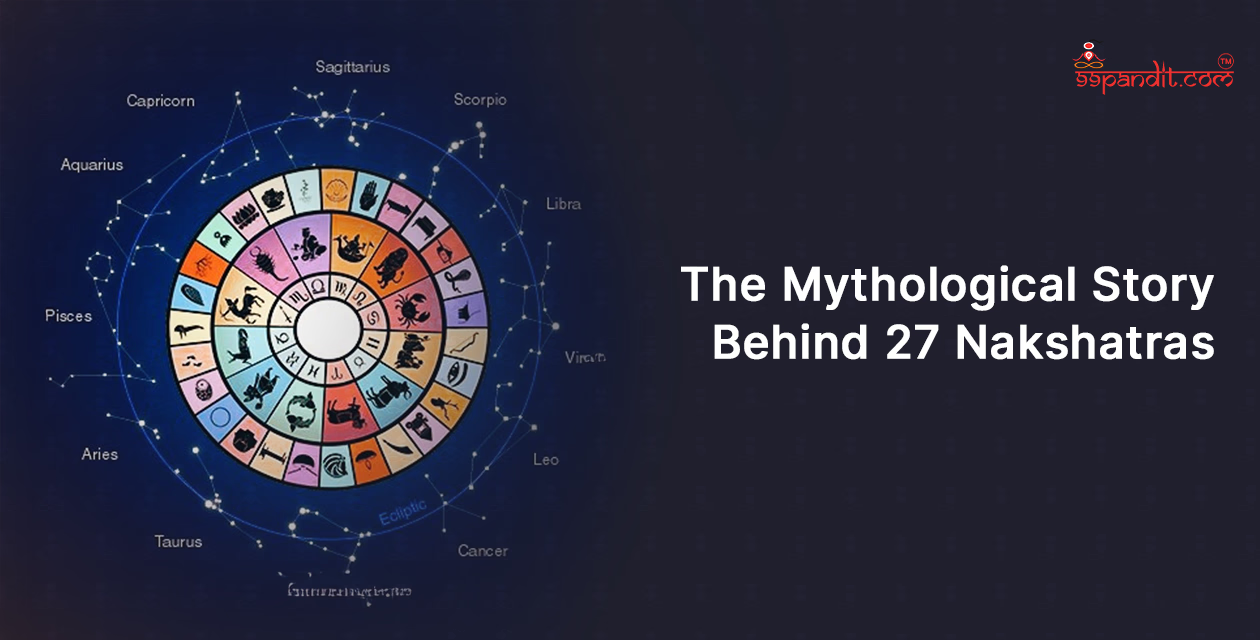
However, his love for his wife Rohini is much more and leads to neglecting the other 26 sisters. All of them went to their father and complained.
Listing all this, Prajapati Daksh becomes angry and curses Moon to lose his radiance. As a result, the light of the moon began to dim and create an imbalance in the world.
To get relief, Moon prayed to Lord Shiva to get rid of the curse and gain back his wax. Lord Shiva grants him his light back on the condition of loving all his wives at the same level.
Since then, Moon started spending one day with each of the Nakshatra, completing his 28-day cycle.
These different phases of the Moon show different states of emotions and personality traits associated with each Nakshatra.
Get accurate guidance on love, career, marriage & life — your first chat is FREE on the 99Pandit App.
|
Nakshatra |
Nakshatra Lord or Presiding Deity |
Ruling Planet |
|
Ashwini |
Ashwin Kumara | Ketu |
| Bharani | Lord Yama |
Venus |
|
Krittika |
Agni | Sun |
| Rohini | Brahma |
Moon |
|
Mrigashira |
Soma | Mars |
| Ardra | Rudra |
Rahu |
|
Punarvasu |
Aditi | Jupiter |
| Pushya | Brihaspati |
Saturn |
|
Ashlesha |
Sarpas or Nagas | Mercury |
| Magha | Pitrs or forefathers |
Ketu |
|
Purva Phalguni |
Aryaman | Venus |
| Uttara Phalguni | Bhaga |
Sun |
|
Hasta |
Saviti or Surya | Moon |
| Chitra | Tvastar or Vishwakarma |
Mars |
|
Swati |
Vayu | Rahu |
| Vishakha | Indra and Agni |
Jupiter |
|
Anuradha |
Mitra | Saturn |
| Jyeshtha | Indra |
Mercury |
|
Mula |
Nirti | Ketu |
| Purva Ashadha | Apah |
Venus |
|
Uttara Ashadha |
Visvedevas | Sun |
| Shravana | Vishnu |
Moon |
|
Dhanishta |
Eight Vasus | Mars |
| Shatabhisha | Varuna |
Rahu |
|
Purva Bhadrapada |
Ajikapada | Jupiter |
| Uttara Bhadrapada | Ahir Budhyana |
Saturn |
|
Revati |
Pushan |
Mercury |
Get accurate guidance on love, career, marriage & life — your first chat is FREE on the 99Pandit App.
Now, let’s have a look at the detailed overview of the 27 Nakshatra in Vedic astrology, their meaning, traits, linked zodiac sign, and much more.
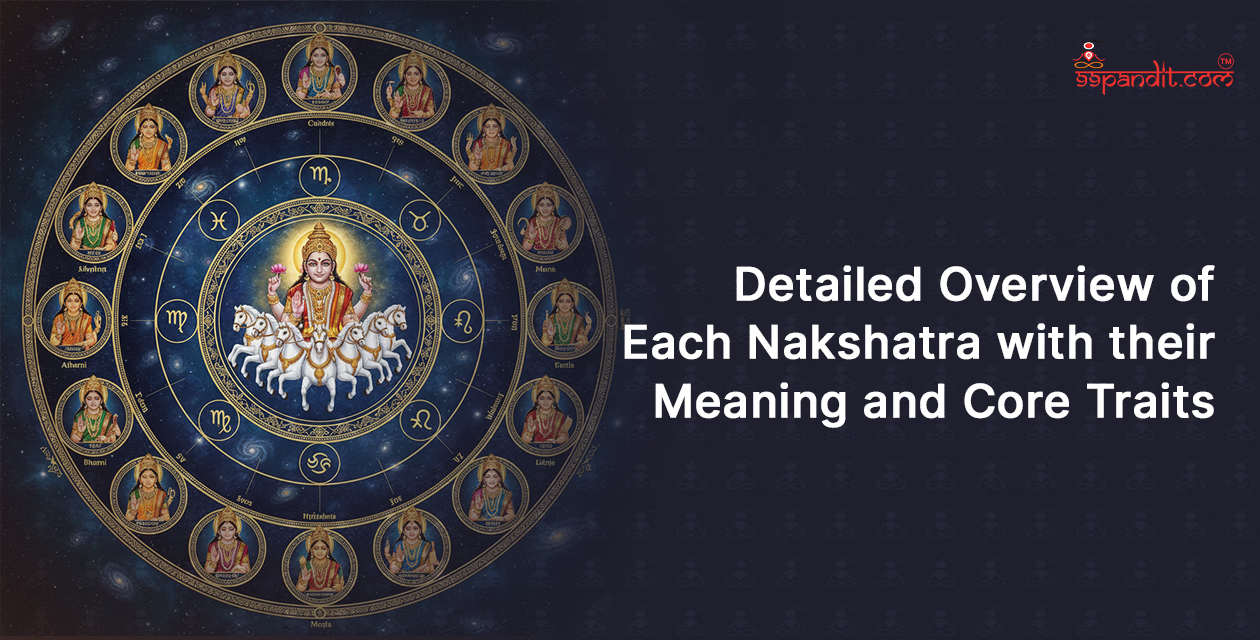
This comprehensive list of Nakshatra will make it easier for you to learn their importance in each lunar mansion.
Get accurate guidance on love, career, marriage & life — your first chat is FREE on the 99Pandit App.
The 27 Nakshatra of the Vedic astrology are classified into various parts according to their nature, energy, and nature.
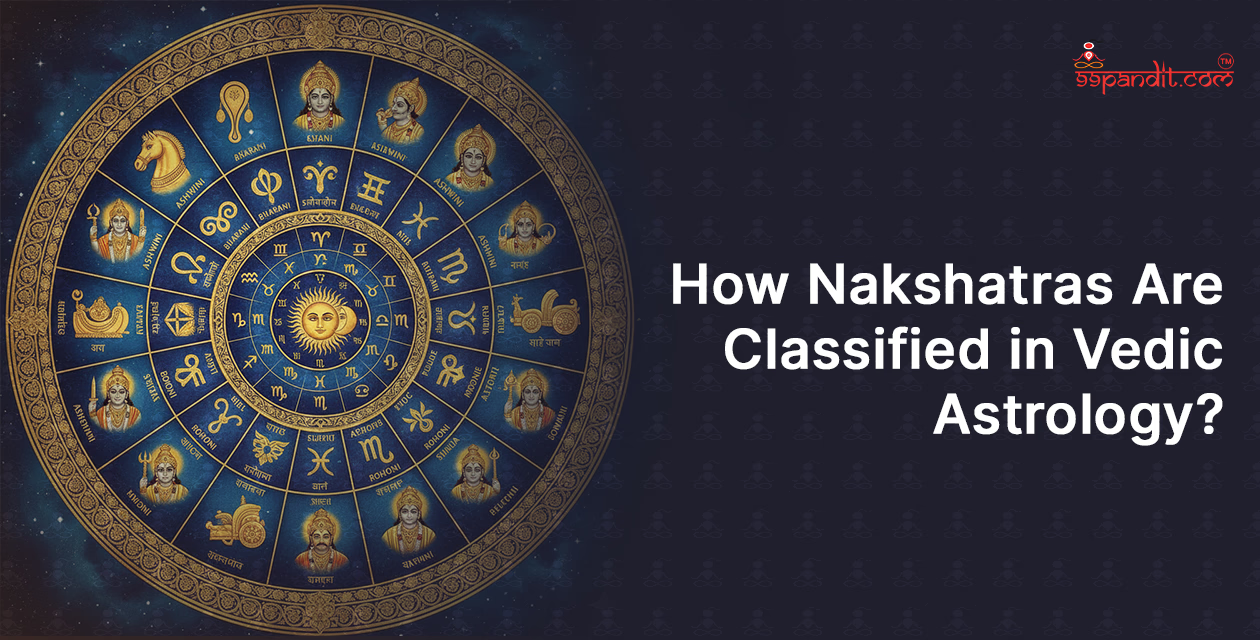
It helps astrologers and priests to easily understand compatibility, personality, and habits.
Deva (Divine Nature): Individuals with Deva Gana are very gentle, helpful, calm, and passionate towards their work.
Manushya (Human Nature): These individuals are more practical, social, and balanced.
Rakshasa (Strong-Willed Nature): Natives of this nakshtra are usually passionate, domineering, and intelligent.
Knowing this, Gana helps in understanding the relationship compatibility and emotional behaviour.
The Nakshatra is further separated into two broad categories: Male and Female.
Male Nakshatras: They tend to be more rapturous and expressive. It consists of Bhranu, Uttara Phalguni, Uttarashadha, Jyeshta, and Ashwani.
Female Nakshatras: It is more oriented towards nurturing and intuitive, which also embraces nakshatras like Krittika, Purva Phalguni, Punarvasu, Chitra, Mrigashirsha, Hasta, Shatabhishak, and Revati.
They do not show the physical gender but a type of energy.
Every Nakshatra is linked with a Guna, which means the quality of nature. Here are some of them:
Sattva: It brings freedom, calmness, and the definition of transcending materialism. It includes nine nakshatras and holds Sagittarius, Aquarius, Pisces, and Capricorn.
Rajas: The guna signifies active and igniting energy. The four zodiac signs, like Aries, Cancer, Taurus, and Gemini, along with Nakshatra, fall in this quality.
Tamas: It represents material-focused and grounding energy. The nine Nakshatras also carry zodiac signs such as Scorpio, Libra, Virgo, and Leo.
Constellations and animals in astrology are believed to be closely linked with each other. It helps in determining instinctive behaviour and compatibility. For example:
Get accurate guidance on love, career, marriage & life — your first chat is FREE on the 99Pandit App.
To conclude, just knowing about 27 Nakshatras gives a better understanding of the mechanism of Vedic astrology.
It is similar to the universe bridge that bridges the distance between the heavenly world and human life and interprets life patterns, character, dilemma, and strong suits.
With each nakshatra governed by a ruling planet and having its own unique energy, it provides valuable insights into a person’s profession, choices, and relationships.
Despite what you are looking for, just a simple guidance in career or relationship, studying the Nakshatras offers a meaningful roadmap.
They make it easier to find individual nature, marriage compatibility, and career choices.
Additionally, the classification of 27 Nakshatras based on gunas, elements, and yoni can give a deeper understanding of how the cosmic energy manifests in one’s life.
They are not just stars but mirrors that reflect our inner selves and guide us in every aspect.
Table Of Content
 Number.

Enter the OTP sent to
Chat with verified astrologers on 99Pandit and receive personalized guidance for every stage of life.


 Ontime Service
 Certified Pandit
 Transparency