
Ashwin Purnima 2026: Date, Puja, Vrat Katha & Significance
When the cool autumn breeze replaces the monsoon air, we welcome the most beautiful and spiritual nights of the year,…
 0%
0%
 Book Griha Pravesh Puja Online
Book Now
Book Griha Pravesh Puja Online
Book Now



Ganga Saptami 2026 is expected to fall on Thursday, April 23, 2026, on the Saptami Tithi of Shukla Paksha in Vaishakha month.
This sacred festival celebrates the descent of the holy Ganga River from heaven to earth, symbolizing purification, devotion, and spiritual renewal.
In this article, you’ll learn everything about Ganga Saptami 2026, the exact date and auspicious timings, the significance of this festival, rituals to perform and the importance of bathing in the Ganga.
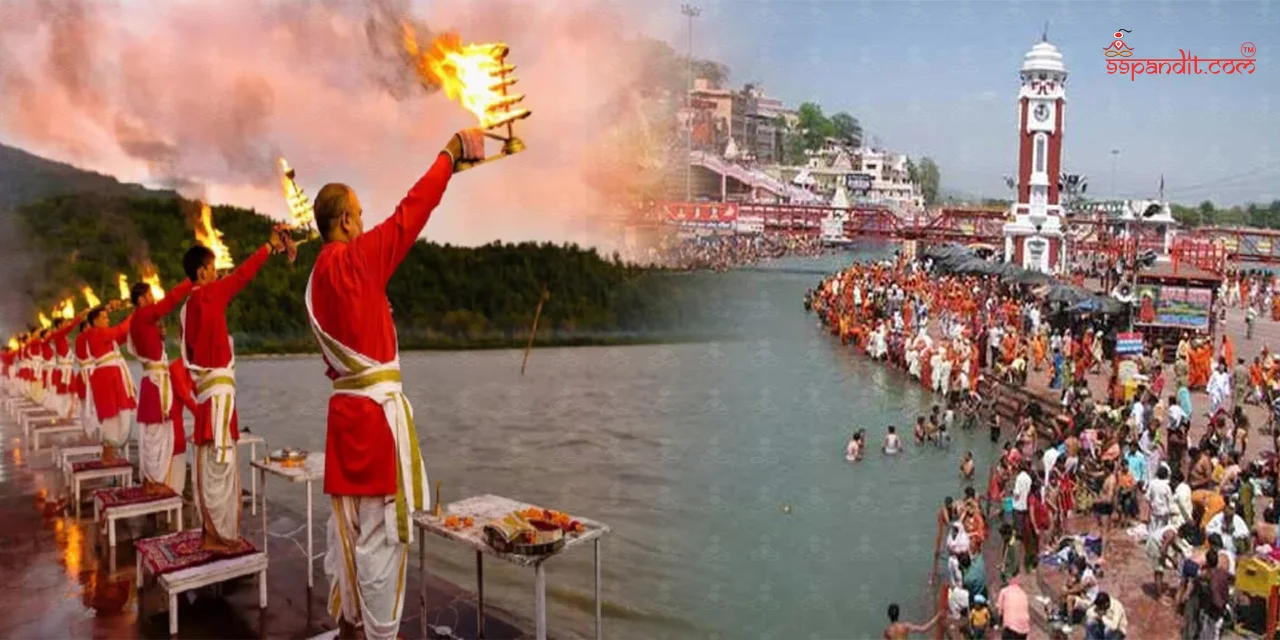
We’ll also cover puja vidhi and mantras if you’re celebrating at home or planning a pilgrimage to the Ganga ghats.
The Ganga River holds a unique place in Hindu tradition; it’s considered not just water, but a divine mother who cleanses sins and grants blessings to her devotees.
For those who can’t travel to the Ganga, worshipping the river at home with Ganga jal (holy water) is equally powerful.
Many people also perform special pujas and offer prayers to Mother Ganga, seeking her blessings for health, prosperity, and liberation.
Whether you’re planning a trip to Haridwar, Varanasi, or Rishikesh, or observing Ganga Saptami at home, this guide will help you understand and celebrate this beautiful festival with complete devotion.
According to the Vedic calendar, the festival of Ganga Saptami is celebrated every year on the Saptami Tithi of the Shukla Paksha of the Vaishakh month.
This year, Ganga Saptami 2026 will start on Apr 22 at 10:49 pm and end on Apr 23 at 08:49 pm.
In such a situation, you do not need to be confused because you can worship on April 23. The right time for worship is from 11:21 am to 1:53 pm.
This is the same time when the virtue of worshipping Maa Ganga, bathing and donating is multiplied.
Ganga Saptami has special significance in Hinduism. According to the Vedic calendar, the festival of Ganga Saptami 2026 is celebrated every year on the Saptami tithi of the Shukla Paksha of the Vaishakh month.
According to the Hindu scriptures, Goddess Ganga appeared on this day. The belief was that Lord Brahma kept the water in his Kamandal after washing the feet of Lord Vishnu.
Maa Ganga was born from this water. On this auspicious occasion, devotees worship the most virtuous goddess, Ganga, by bathing and meditating in holy rivers, including the Ganga.
Ganga Saptami is also called Ganga Jayanti. This day is celebrated like a festival because, on this day, the Mokshadayini, the holy and divine river Maa Ganga, was born.
It is said that on this day, Maa Ganga descended from heaven to earth and merged into the locks of Lord Shiva.
According to mythological scriptures, on the seventh day of the Shukla Paksha of the month of Vaishakh, Maa Ganga reached the locks of Lord Shiva from heaven.
Therefore, this day is celebrated as Ganga Saptami. The day on which Ganga originated is known as Ganga Jayanti (Vaishakh Shukla Saptami), and the day on which Ganga descended on earth is known as Ganga Dussehra (Jyeshtha Shukla Dashami).
On the occasion of Ganga Saptami, taking a dip in the river, Ganga washes away all the sins of man, and man attains salvation.
Although bathing in the river Ganga has its importance, by bathing on this day, one gets rid of all sorrows. For this festival, special prayers are offered at Ganga temples as well as other temples.
It is said that by taking a bath in the Ganga River, ten sins are washed away, and one finally attains salvation. On this day, charity and good deeds have special importance.
It is mentioned in the scriptures that one attains salvation by taking a bath in the life-giving Ganga, by visiting the holy river Narmada and by merely remembering the Mokshadayini Shipra.
There are many mythological stories associated with Ganga Saptami, which tell how Goddess Ganga took the form of a river in the form of water, that is, how she was born as a river.
According to a mythological story, once Brahma ji was engrossed in meditation and then Lord Vishnu reached there.
Seeing Lord Vishnu, Brahma ji picked up his kamandal and washed the feet of Lord Vishnu with the ordinary water kept in the kamandal.
Then Brahma ji filled the water touched by the feet of Lord Vishnu back in the Kamandal. That water was so powerful that a goddess was born from it, whom Brahma ji named Ganga.
The birth of that goddess created an energy that started destroying the negative powers present in all the worlds, including Brahma Lok.
Then, Lord Vishnu blessed Goddess Ganga to be worshipped as a mother in the creation. Since then, this day has been celebrated as Ganga Saptami.
According to another legend, the Ganga River was reborn on the day of Ganga Saptami.
When Maharishi Jahnu was doing penance, he was distracted by the gurgling sound of the flowing river Ganga. Due to this, Maharishi Jahnu got angry and drank the entire Ganga river.
Later, on the prayers of the gods and goddesses, he took out the Ganga river from his right ear, due to which Maa Ganga was reborn, but since then, the Ganga river has been known as Jahnavi.
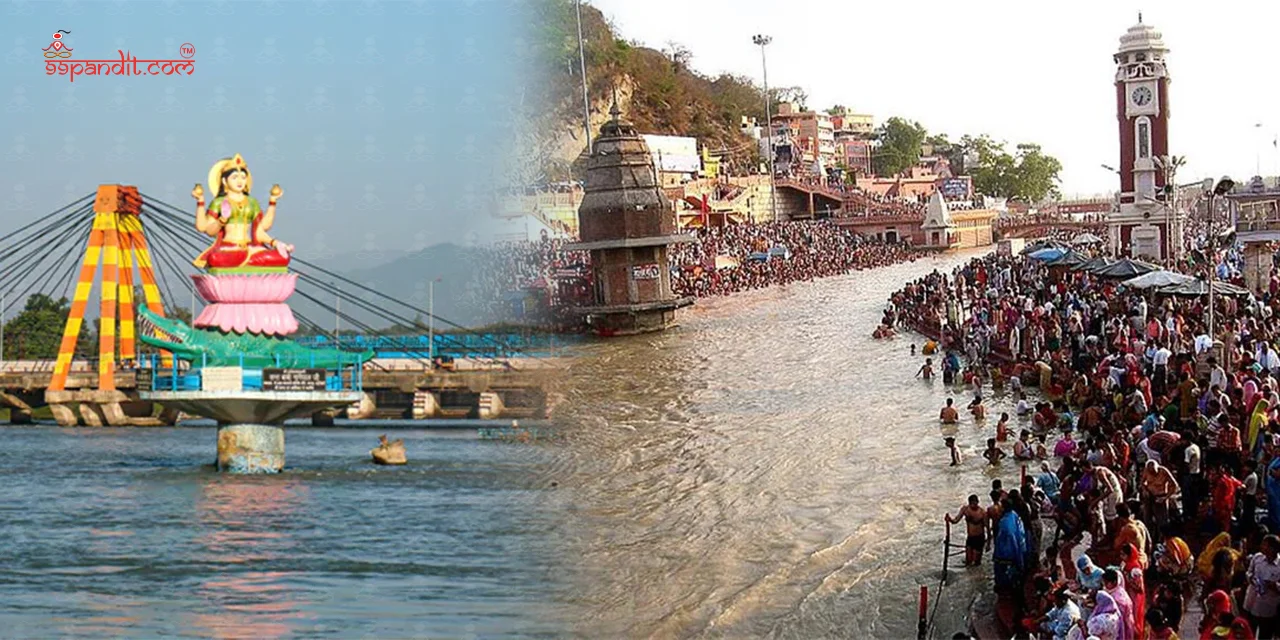
There are many mythological stories associated with the river Ganga, which define the complete meaning of Gangaji.
The river Ganga is the centre of faith of Hindus, and the importance of Ganga is mentioned in many religious texts.
According to another mythological story, Ganga was born from the water pot of Lord Brahma.
Another belief is that after freeing the world from the demon Bali in the form of Vamana, Lord Brahma washed the feet of Lord Vishnu and collected this water in his water pot.
According to another legend, when Lord Shiva sang in front of Sage Narad, Lord Brahma, and Lord Vishnu, the music caused Lord Vishnu to sweat profusely, which Lord Brahma collected in his water pot. From the water of the same water pot, Ganga was born.
1. Om Namo Gangayai Vishvarupini Narayani Namo Namah
(ॐ नमो गंगायै विश्वरुपिणी नारायणी नमो नम:)
2. Ganga Gangeti Yo Bruyat, Yojanaam Shatairpi. Muchyate Sarvapapaybhyo, Vishnu loke sa Gachchati
(गंगा गंगेति यो ब्रूयात, योजनानाम् शतैरपि। मुच्यते सर्वपापेभ्यो, विष्णुलोके स गच्छति)
What to do on Ganga Saptami
1. On Ganga Saptami, after taking a bath in Ganga, Mother Ganga should be worshipped.
2. According to one’s faith, one should donate things like food, clothes, money, etc., to poor people.
3. One must chant mantras while taking a bath in the Ganga.
4. Apart from this, reciting the Ramayana and the Geeta is beneficial.
What not to do on Ganga Saptami
1. One should not fight with anyone.
2. Elders and women should not be insulted.
3. One should avoid sleeping during the day while fasting.
4. Tamasic food should not be consumed.
To sum up, on Ganga Saptami 2026, special importance was given to bathing in the Ganga for liberation from sins committed due to ignorance.
If someone is unable to bathe in Ganga, then he should take a bath at home by mixing Ganga Jal in the water.
During Ganga Saptami, charity is also considered very important. By donating on this day, all sorrows are removed, and the path to attain salvation opens.
Worshiping Lord Shiva on Ganga Saptami also has special importance. On this special day, Lord Shiva should be anointed with rituals by putting Belpatra in Ganga water.
I hope you enjoyed reading this article. Follow us for more information. If you have any query related to Pandit booking, then feel free to contact the team of 99Pandit.
You can visit the platform of 99Pandit, book a Pandit of your choice, and conduct the puja at home, office, temple, or any other place.
Table Of Content