Galtaji Temple Jaipur: Timings, History & Seven Sacred Kunds
Do you know the Monkey Temple in Jaipur? This is the Galta Ji temple and one of the most interesting places…
 0%
0%
 Book Griha Pravesh Puja Online
Book Now
Book Griha Pravesh Puja Online
Book Now

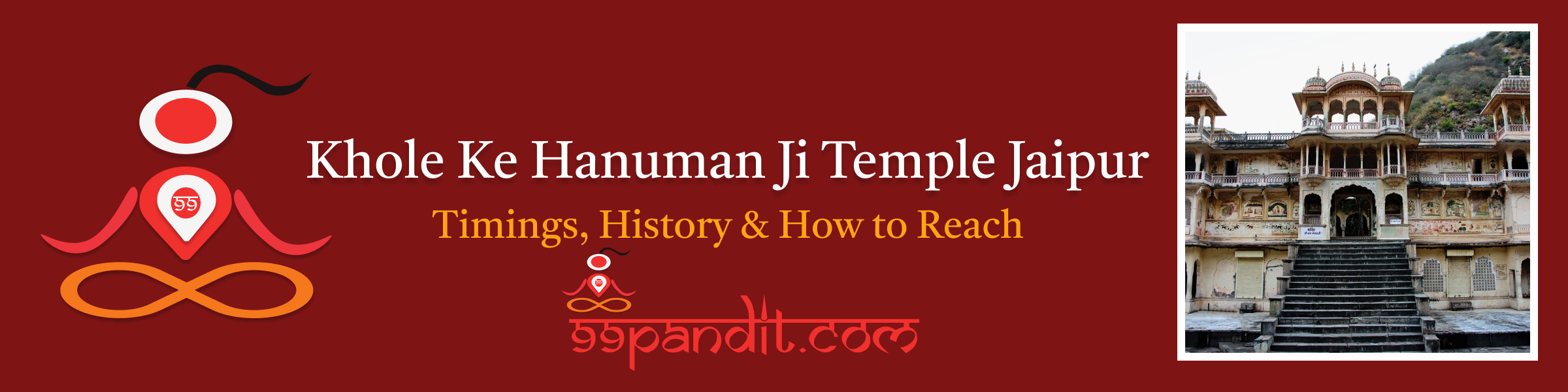


Surrounded by the scenic hills of the Aravalli Hills, the Khole Ke Hanuman Ji Temple is among the most visited and spiritually powerful temples in the Pink City of Jaipur.
This famous temple is dedicated to Lord Hanuman and is beloved for its interesting history. Devotees have to walk around 1 km to experience a 360° view of the Aravalli hills and the attractive entrance archway.
Many locals also call it the “Wish-Fulfilling Temple” as it is believed that sincere prayer here fulfils all the wishes and brings divine blessings.
The temple holds huge spiritual significance and attracts thousands of worshippers, especially on Tuesday and Saturday.
The Khole Ke Hanuman Ji Temple is a perfect combination of faith, the beauty of nature, history and divine power for devotees and travellers who love to explore religious places.
This guide will take us through this holy temple while covering its rich history, a common festival and methods of accessibility of this temple.
Planning to visit the Khole Ke Hanuman Ji Temple? Here’s some helpful updated 2026 temple timing, aarti schedule, and best darshan time to make your experience more spiritually enriching.
The temple remains open every day of the week. Below is the generally followed schedule in the Khole Ke Hanuman Ji temple:
Note: Timing can vary during special events or festivals.
To honour Lord Hanuman, the aarti is performed as follows:
To avoid the long queue and peaceful darshan, you can consider these timings:
At the time of major festivals like Hanuman Jayanti, the temple attracts a huge number of devotees across India.
Special pujas, extended darshan hours, and additional arrangements are done to manage the crowd.
The history of Khole Ke Hanuman Ji Temple revolves around faith and discovery. In the year 1960, a man named Pandit Radhe Lal Choubey was generally just exploring the deserted valley.
During this, he found a natural rock carving of Lord Hanuman in a unique lying position. He then cleans all the wild bushes and rocks from it and shares this religious site with the world.
Many visitors also wonder about the unique name. The name “Khole” is taken from the Rajasthani word Khola, which means a valley or a rainy stream.
Since it is built in a deep valley where rainwater once flowed down the hills, it naturally started being called “Khole Ke Hanuman Ji Temple.”
What makes this temple more sacred is that it is believed that, before the discovery of the 1960s, the area was a site for deep meditation.
As per legend, the saint Baba Nirmal Das lived and prayed in these caves. Many also believe that his spiritual energy still protects this valley.
However, the temple started with a 100-square-foot room in the 1960s, and is now transformed into a massive, multi-level marble complex.
Today, it contains multiple prayer halls, statues, and a huge space for a large number of devotees to gather.
Over the years, the Khole ke Hanuman Ji Temple has added various modern features to ease the visits of devotees and tourists.
One of the newest and existing additions to the temple is their roadway service. Rather than walking uphill to reach the main Vaishno Devi shrine, you can take a ropeway and enjoy the beautiful view.
To make the temple easily accessible, they also offer battery-operated vehicles from the parking to the temple entrance. Free and specially designed service for aged people and differently-abled visitors.
The Khole Ke Hanuman Ji Temple is not just a spiritually enriching place, but also famous for its unique architecture.
Built using Dholpur sandstone, the temple contains grand domes and beautifully carved pillars showcasing royal Rajasthani culture.
1. The Main Shrine:
This is the main area of the temple. When you enter this area, you will see a rare idol of Lord Hanuman covered with saffron in a unique lying position.
It has a capacity of 500 people and is filled with the rhythmic chanting of Hanuman Chalisa.
2. The “Laxman Dungri” Views:
The temple is on a hill about 445 meters high. From there, you will get a stunning 360-degree view of the Aravalli valley and the Jaipur skyline. It is the best location to watch the sunset and for photos.
3. A Complex of Many Temples:
The more beautiful shrines were introduced as the site developed. On the same complex, you will be able to visit:
4. The Famous “Sawamani” Tradition:
The unique aspect of this temple is its massive community kitchens (Rasios).
This famous Hanuman Ji Temple is located on the Jaipur-Delhi Highway (NH-21). The temple is well-connected by all means of transport, making it easily accessible for everyone.
The temple is easily accessible by private cars and local buses going towards the Galta Gate or Delhi Bypass.
From the highway gate, the temple is just 1.5 Km uphill; you can either walk or take an e-rickshaw from there.
If you want to avoid city traffic, reaching the temple using the Jaipur Metro is a good choice.
The closest stop from the temple is Chandpole Metro Station, which is approx 5 kilometres away. From there, you can book a cab or taxi to reach the main temple.
If you are travelling by train, the Jaipur Junction Railway Station is the nearest station at a distance of 11 km from the temple. It roughly takes 30 minutes to reach there using a cab or an auto.
The closest airport to the temple is Jaipur International Airport, which is about 18-20 km away.
Visitors can hire a taxi or a cab to reach the temple, and the drive can take up to 35-40 minutes.
Not just for its powerful spiritual energy, the temple is also known for its grand festive celebration.
During this, the whole temple comes alive with devotions, colours, lights, and prayers.
Below are some of the widely celebrated festivals in Khole Ke Hanuman Ji Temple:
1. Hanuman Jayanti Celebration:
This grand celebration is observed annually to mark the birth of Lord Hanuman. In 2026, Hanuman Jayanti will fall on April 2, when thousands of devotees become a part of the massive Lakkhi Mela and midnight prayers.
2. Annakoot:
Appearing just after Diwali, Annakoot Mahotsav is known for its massive preparation of holy prasad for over 2 lakhs of people. It includes the iconic Rajasthani Dal Baati Churma as well.
3. Diwali:
During this period, the entire white marvel temple is covered with thousands of oil lamps (diyas). The glowing temple between the hills of Aravalli attracts tourists and photographers around the world.
4. Weekly Tuesday & Saturday Devotion:
On every Tuesday and Saturday, the Sawamani tradition is followed in the temple. In this, families who get their wish completed host a large community feast to pay their gratitude to Lord Hanuman.
If you are visiting the Khole Ke Hanuman Ji Temple, then here are some of the other nearby destinations that you can cover to make your trip more memorable.
Situated 4 to 5 km away from the temple, these forts standing at the edge of the Aravalli Hills provide an aerial view of the Pink City.
For sunset and history lovers, it is must have to cover place in your itinerary.
Being 2.5 km away, it is a beautiful palace floating in the middle of the Man Sagar Lake. While boating to reach their destination is only available for some time, the lakeside walkway is perfect for a peaceful evening walk.
Situated around 7 km from the shrine, the fort is built to protect the Amber Palace. Javana is home to the world’s largest cannon on wheels and offers a rugged look into Rajasthan’s military history.
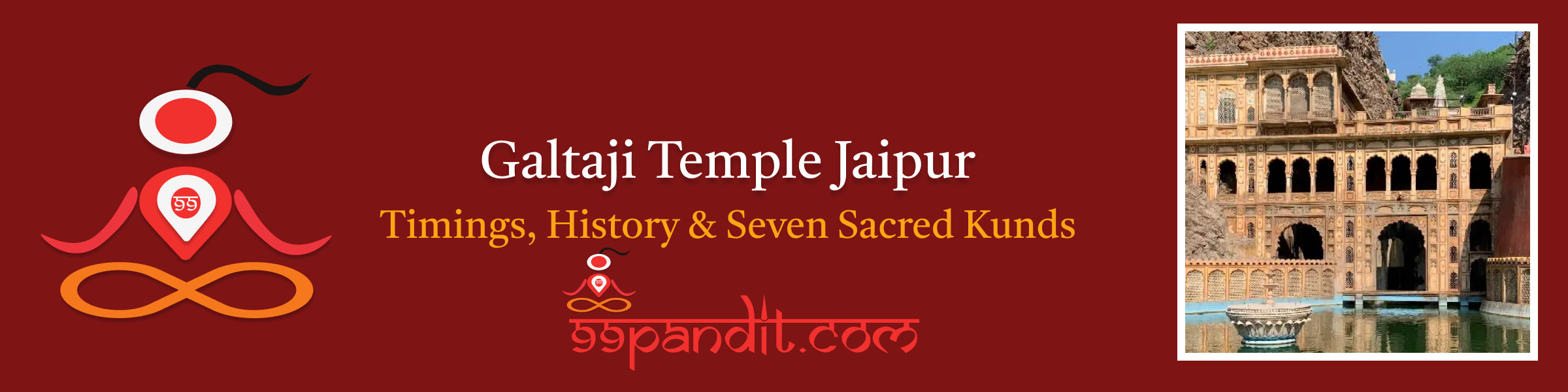
Just 2 kilometres away, this is an ancient Hindu pilgrimage site known for its large monkey population and holy springs. The temple features seven sacred water tanks and beautiful pavilions.
The Khole Ke Hanuman Ji temple is a sacred religious place with a beautiful blend of architectural beauty and spiritual tradition in Jaipur.
Apart from just being a religious site, the place enables you to experience the vibrant energy of Pink City along with the breathtaking view of the Aravali hills.
From Radhe Lal Choubey’s inspired history, a unique lying Lord Hanuman idol, to a wish-fulfilling space, the temple offers a perfect blend of faith, rich history, and natural beauty.
Over the years, the temple has remained among the popular pilgrimage sites where thousands of devotees come to seek the blessings of Lord Hanuman.
It also offers you to be part of the grand Sawamani feast, witness a breathtaking sunset, and taste authentic Rajasthani Dal Baati Churma.
Whether you’re a spiritual seeker or traveller, it is must have holy landmark in your Jaipur itinerary.
Table Of Content